The quarter north of the Gilão: from the bandstand garden across the squares to the hermitage chapels and the gilded interior of the Carmo church.
Chapter 1
The Bandstand That Came by Ship
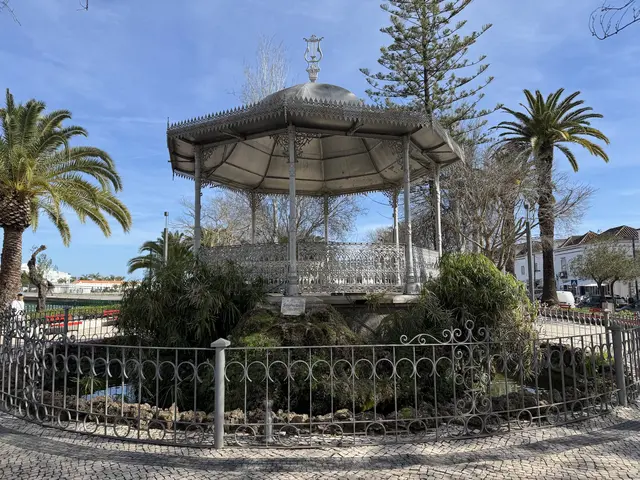
Tavira's oldest public garden opened in 1890 on ground that had served as naval workshops in the sixteenth century, under King Manuel I. Its centrepiece — an ornate cast-iron bandstand from Porto's Fundição do Ouro — arrived by ship, and on inauguration day the crowds were reportedly so thrilled that the town's cafés sold out of ice cream for the first time.
Since 1944 the bandstand has stood ringed by an ornamental lake, and the garden remains Tavira's living room: Sunday concerts, book fairs, first dates, and turtles basking in the pond.
- 220 m
Chapter 2
The Doctor's Garden
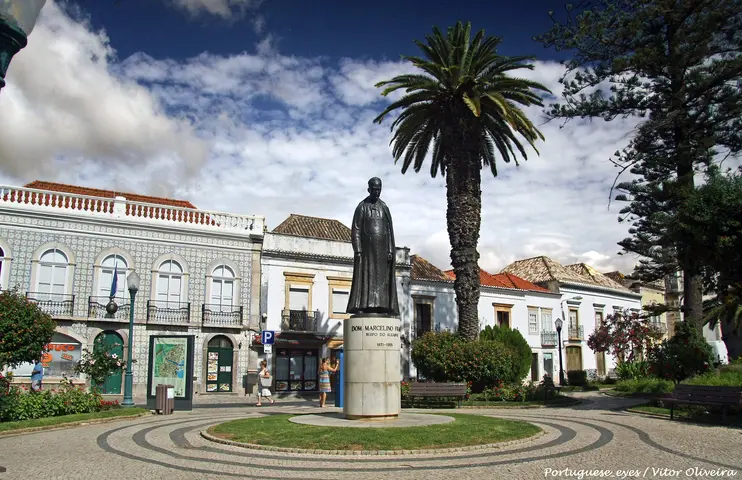
The name Alagoa — the lagoon — remembers the marsh that once lay here where the Gilão curves. By the fifteenth century the area had been drawn into Tavira's expansion across the river, and elegant tiled houses of the eighteenth and nineteenth centuries still frame the square.
The garden itself is Republican. In 1915, mayor Dr. António Padinha — a local doctor who is said to have planted the first tree himself — turned the bare square into the Jardim da Alagoa. He died the following year, and the square has carried his name ever since.
- 60 m
Chapter 3
As Plain as St. Paul's Altar
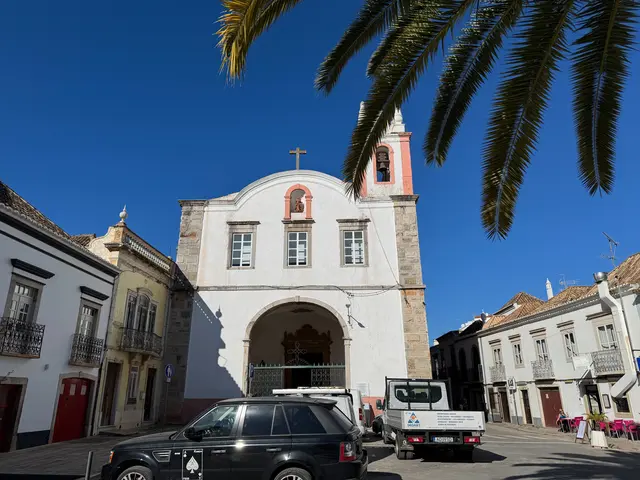
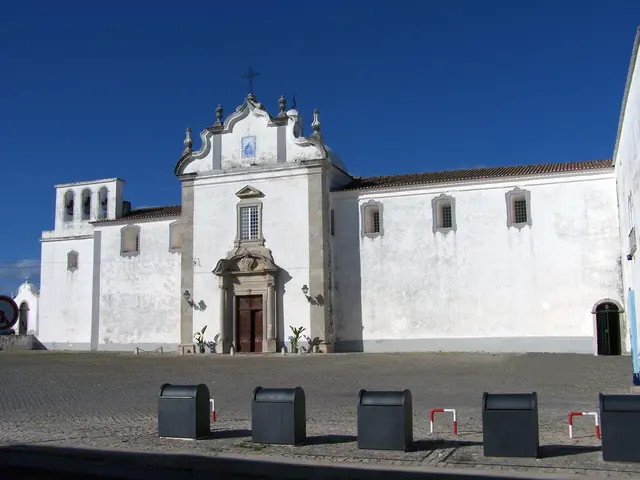
Founded in 1606 for the Hermits of St. Paul — their only convent in the Algarve — this church is a textbook of the Portuguese "plain style": whitewashed, restrained, built for sober communal worship. Its floor of red brick and Spanish ceramic tiles has survived unchanged for four centuries.
The seven wooden altarpieces were never gilded — misfortune and thin finances saw to that — giving rise to the local saying "as plain as St. Paul's altar". When the convent was dissolved in 1834, the lay Confraternity of Our Lady of Help stepped in and saved the church.
- 160 m
Chapter 4
Older Than Memory
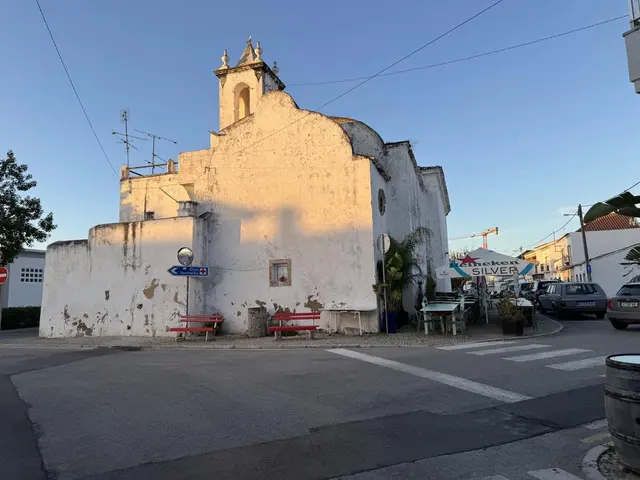
When inspectors from the Order of Santiago visited in 1518, they recorded that this chapel was already "so old that there is no memory of who built it". It probably rose soon after the Christian reconquest of 1242, and medieval graves beneath its floor and across the square testify to centuries of devotion.
The eighteenth century reshaped it in Baroque style — the bell tower carries the date 1727 — and after the earthquake of 1755, when the Governor of the Algarve moved his seat to Tavira, this humble hermitage served as his private chapel.
- 340 m
Chapter 5
A Shield Against the Plague
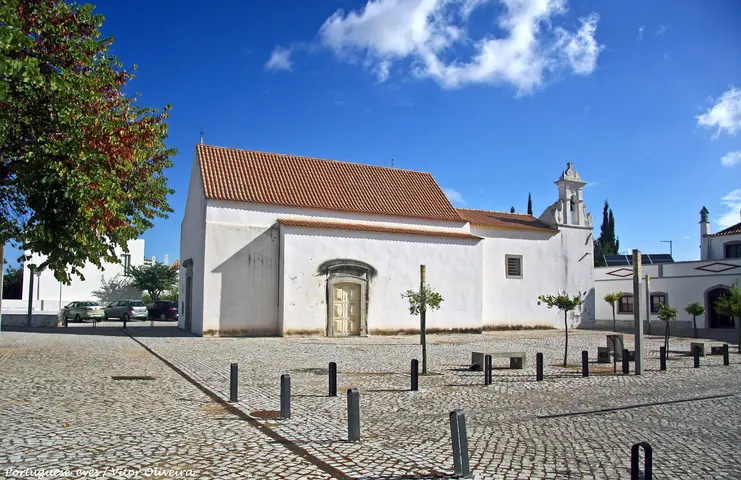
São Brás — Saint Blaise — was the healer of throats, and in the plague-haunted fifteenth century Tavirans raised this hermitage to him just outside the town walls: a spiritual shield meant to intercept disease before it reached the streets. A lay brotherhood kept it, and every third of February crowds came for the Blessing of the Throats.
The earthquake of 1755 damaged the chapel, and in the 1760s master stonemason Diogo Tavares de Ataíde rebuilt it, giving it the curved Rococo pediment seen today. The whole neighbourhood, Alto de São Brás, took its name.
- 130 m
Chapter 6
Gold Behind a Single Belfry
The Carmo church was built by laypeople: the Third Order of Carmo, who secured land near the Ermida de São Brás by notarial deed in 1737 and began building in 1744. Bishop Inácio de Santa Teresa was buried here in 1751, and the facade — with its single espadaña belfry instead of twin towers — was finished in 1792.
Inside waits the walk's great surprise: gilded Rococo altarpieces, illusionistic ceiling paintings and side chapels to Carmelite saints. Today the former convent wing houses Tavira's Ciência Viva science centre.
- 220 m
Chapter 7
Compassion by the River
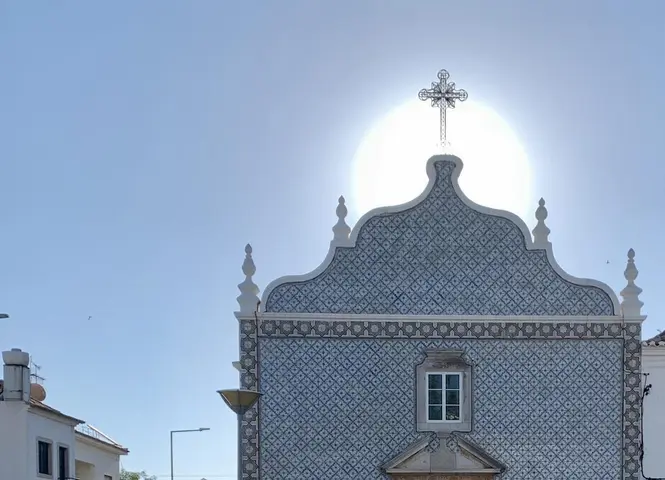
This chapel began, in the late fifteenth or early sixteenth century, as the church of a leprosarium — deliberately set outside town and dedicated to Saint Lazarus, patron of society's outcasts. When leprosy waned, the fishermen's Brotherhood of Our Lady of Deliverance rebuilt it in 1698 and filled it with ex-voto paintings of survival at sea.
In the nineteenth century the facade was clad entirely in blue-and-white azulejos. Most days the doors are locked, but the high oculus windows still offer a glimpse of three gilded Baroque altars.