Tavira
Igreja da Ordem Terceira de Nossa Senhora do Carmo
Modest outside, lavish rococo inside: the lay confraternity's church from 1747-89.
Periods
Tags
Introduction
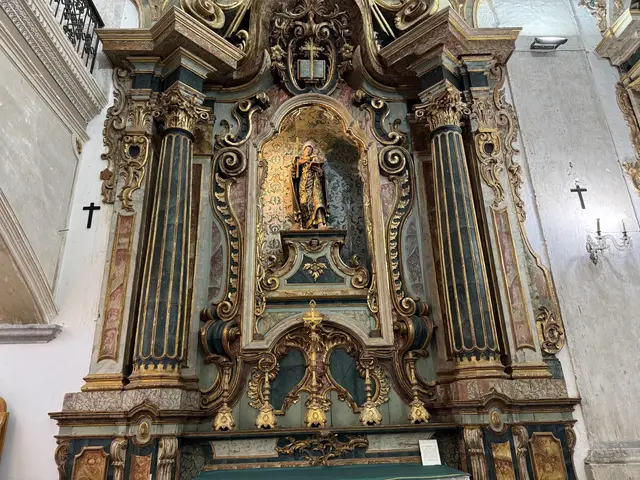
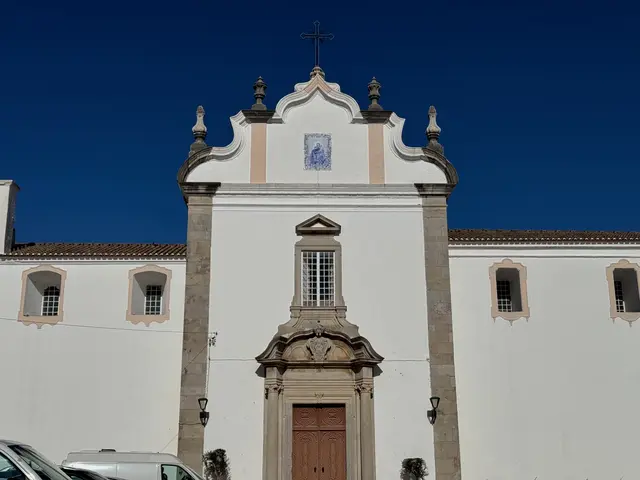
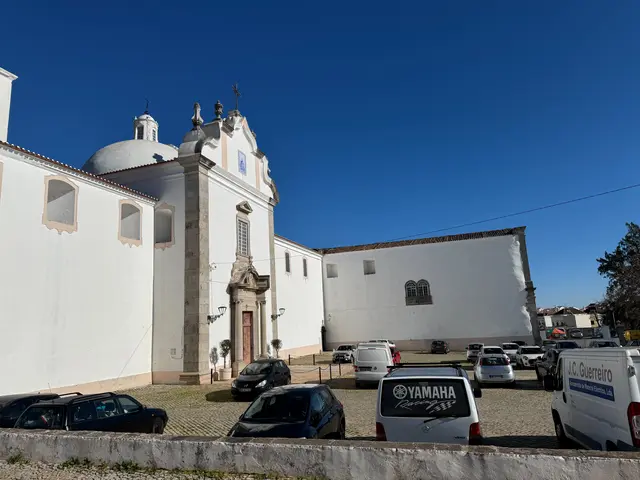
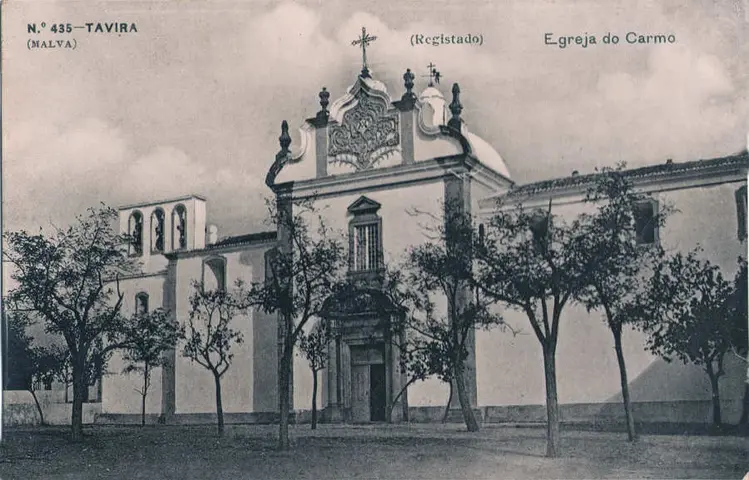
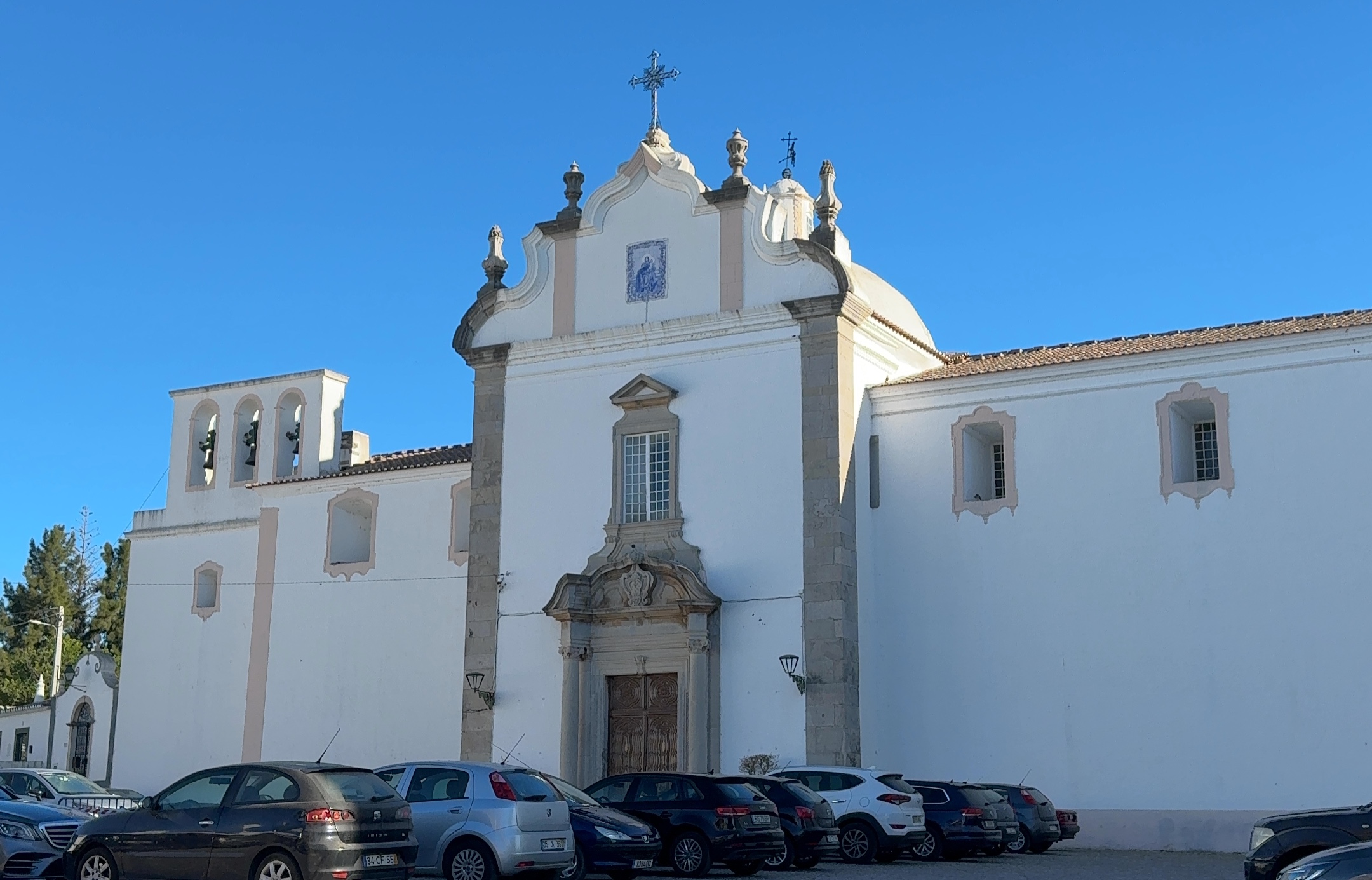
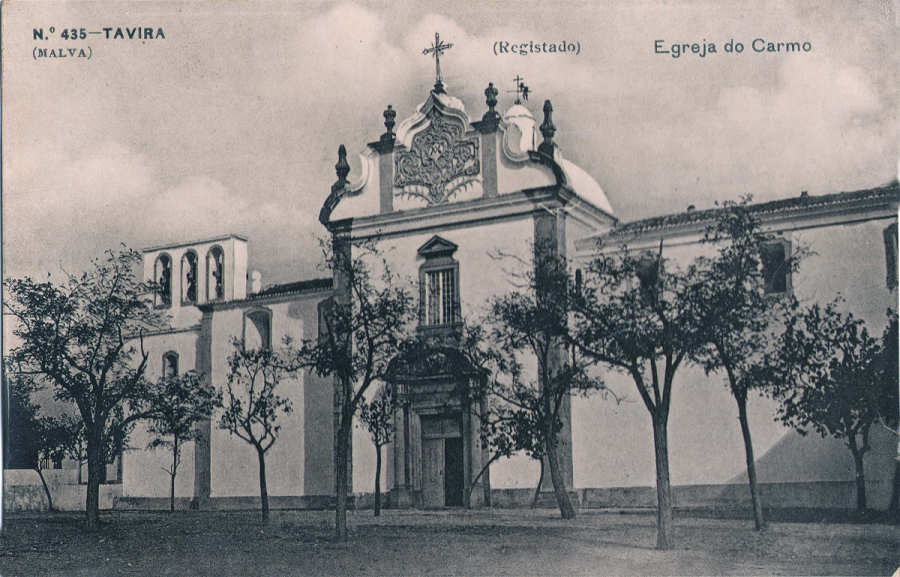
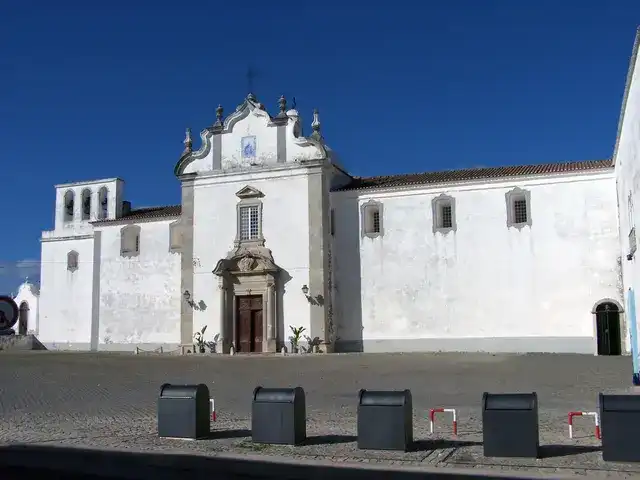
From the outside it is a modest church: a pale facade, a bell tower with three openings, an azulejo panel in the gable. Inside it holds something the national buildings inventory counts among the most lavish rococo in the Algarve. The church belongs to a lay confraternity, the Ordem Terceira do Carmo, which in 1747 began building it hard up against a Carmelite convent it had itself asked for ten years earlier. The church was finished around 1789. The convent never was. The high altarpiece from 1780-84 and the illusionistic painted ceiling above the chancel are the reason to go in. The confraternity still owns the church, and it is in use.
Historical highlights
From a chapel to a church of its own
The confraternity is older than the church. The Ordem Terceira do Carmo was a lay confraternity from the early 1700s, based in a chapel in the Pauline friars' Igreja de São Paulo. It wanted its own. In June 1737 the order asked the Discalced Carmelites to found a convent in Tavira, and by 1745 construction of the convent was under way on land at Alto de São Brás, given by Captain António da Costa Paiva. Two years later the confraternity marked out the plot for its own church right next door. The drawings came from the Carmelite friar Frei Manuel da Conceição in Lisbon, the facade from the Faro master mason Diogo Tavares e Ataíde.
Forty years of building
It took time. The church was finished around 1789, and the year 1792 is carved in a portal; whether it is the confraternity's own portal or the convent church's next door, the sources do not agree. It was the last large church building started in Tavira. The convent never got that far. When the religious orders were dissolved in 1834, it still stood unfinished. The bishop of the Algarve, D. Inácio de Santa Teresa, formerly archbishop of Goa, died in Faro in 1751 and at his own wish lies buried here, four years after building began. How that was done in a half-finished church, the sources do not say.
Rococo paid for locally
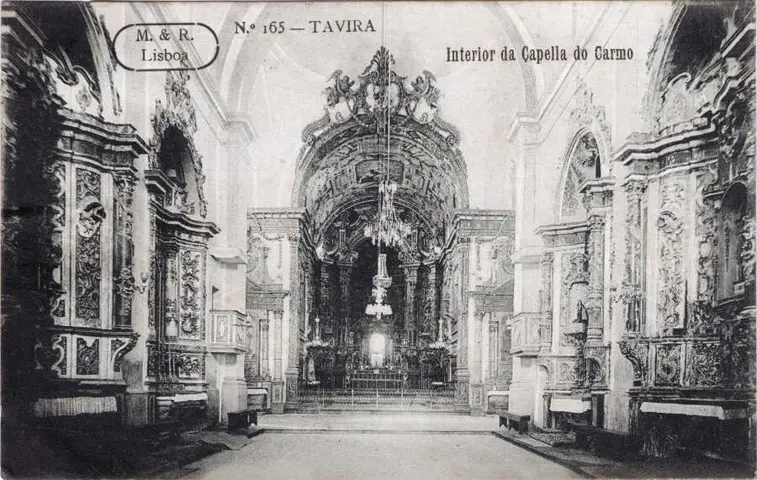
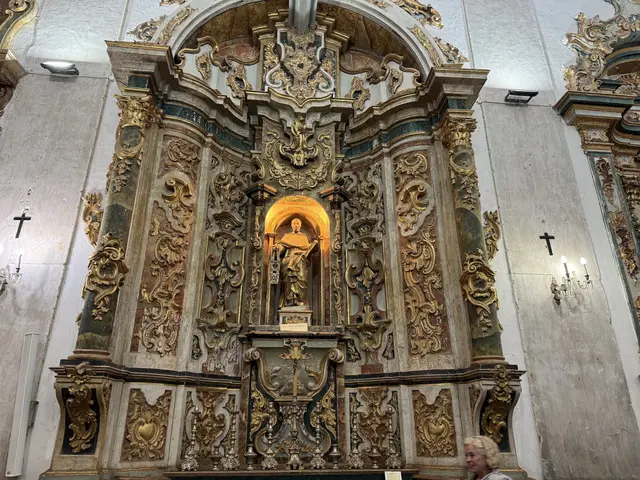
Latin cross, a single nave in four bays, a dome over the crossing. It is the woodwork people come for. The high altarpiece was carved in 1780 and gilded in 1784 by Domingos de Almeida and the Italian Patricio Malatesta; the municipality calls it a masterpiece of Algarve woodcarving. Six side altars with Carmelite saints such as Santo Elias and Santa Teresa. Above the chancel an illusionistic painted ceiling in which Nossa Senhora do Carmo hands the scapular to São Simão Stock; the sources attribute it either to José Ferreira da Rocha or to Joaquim José Rasquinho. In several places the gilding was paid for by the faithful of Tavira.
The dead, the living and a science centre
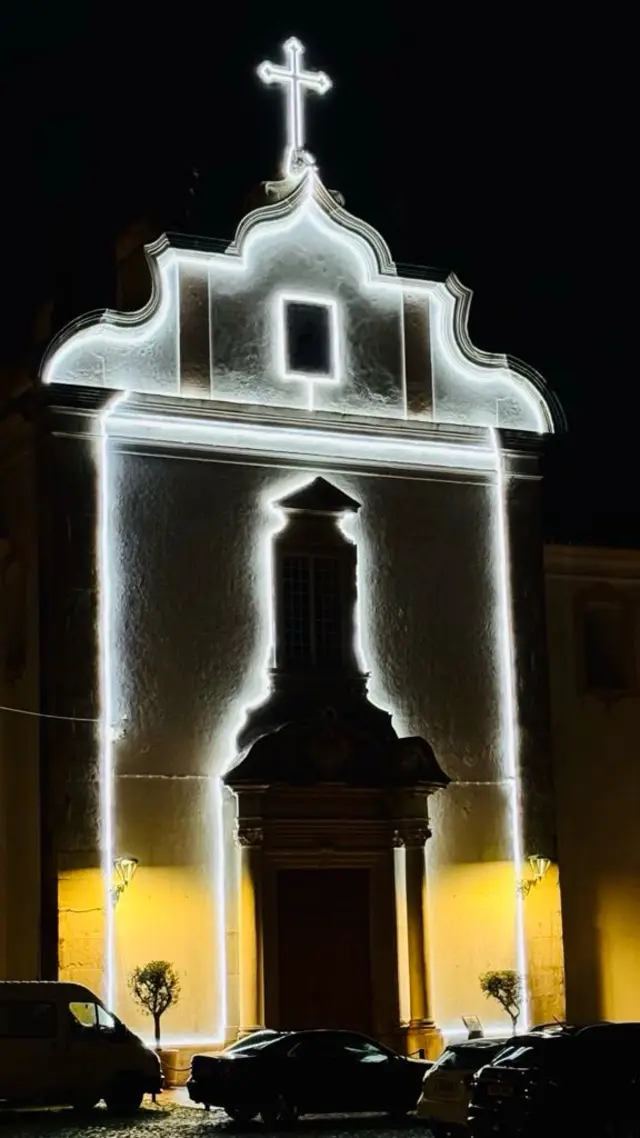
Membership carried the right to a grave. Until 1837 people were buried in the church itself, then in the confraternity's two cemeteries, the large and the small, in use until 1918. On Palm Sunday the Procissão do Triunfo still sets out from the church, organised by the municipality and the confraternity. The convent building went its own way: an orphanage from 1870, a fishing school from 1944, empty in 1980, and in 2005 the Centro Ciência Viva opened in the old convent church. The church is still the confraternity's. In September 2025 the municipality and the order agreed on urgent works to the portico and upper window section of the main facade, up to 36,900 euros.
Practical
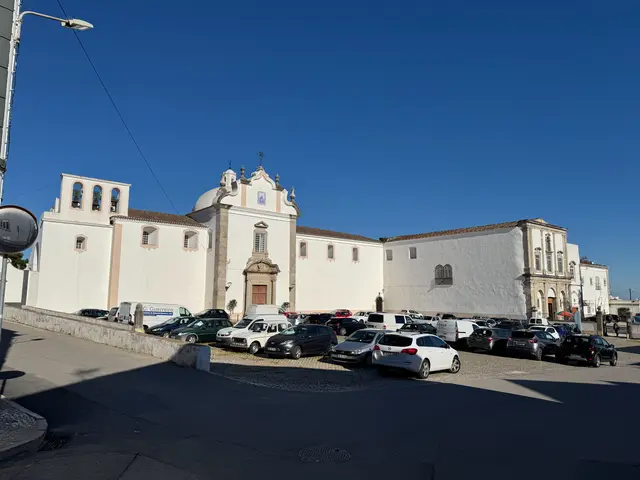
The visitors' entrance is the south portal in the transept, facing Terreiro do Carmo; the portal at the end of the nave faces the convent. Outside: the year 1792 in a portal, the azulejo panel in the gable, the Carmelite arms in the pediment above the door. Inside: the high altarpiece, the ceiling above the chancel and the four canvases of the miracles of Santo Elias on the chancel walls. The church is in use as a church. The municipality arranges guided tours from time to time, and the Centro Ciência Viva is in the convent next door.
Timeline and context
Timeline
- Early 1700s The lay confraternity Ordem Terceira do Carmo is founded, based in a chapel in the Igreja de São Paulo.
- 1737 The confraternity asks the Discalced Carmelites for a convent in Tavira; the year is inscribed on the convent's portal.
- 1745 Construction of the convent is under way on land at Alto de São Brás, given by Captain António da Costa Paiva.
- 1747 The plot for the confraternity's own church is marked out; drawings by Frei Manuel da Conceição, facade by Diogo Tavares e Ataíde.
- 1751 Bishop D. Inácio de Santa Teresa dies in Faro and is buried in the church at his own wish.
- 1780-84 The high altarpiece is carved and gilded by Domingos de Almeida and Patricio Malatesta.
- c. 1789 The church is finished.
- 1792 Year carved in a portal; the facade is completed.
- 1834 The religious orders are dissolved; the convent is still unfinished.
- 1837 Burials in the church end; the confraternity's two cemeteries are in use until 1918.
- 1870-1942 The convent building is an orphanage; from 1944 a fishing school.
- 2005 The Centro Ciência Viva de Tavira opens in the old convent church.
- 2012 Listed as Monumento de Interesse Público (Portaria n.º 722/2012).
- 2025 Municipality and confraternity agree on urgent works to the main facade.
Two churches on one square
What is unusual about Largo do Carmo is that two Carmelite churches stand side by side: the friars' convent church and the lay confraternity's own. The confraternity itself asked for the convent in 1737 and ten years later built its church against it. The friars never managed to finish theirs. The lay people did. Today the convent church is a science centre, and the confraternity's church is still a church. That says a fair amount about who had the money in Tavira in the 1700s.
What remains
The building is intact, and the interior with it. The high altarpiece, the side altars, the pulpits, the painted ceiling and the four Elias canvases stand where they were put. The national buildings inventory calls the church emblematic of Portuguese rococo, and the ceiling is one of the few of its kind in the Algarve. The facade is in need of care; the 2025 agreement on the portico and the upper window section says as much. Go in while the church is still open without scaffolding.