Tavira
Praça Dr. António Padinha
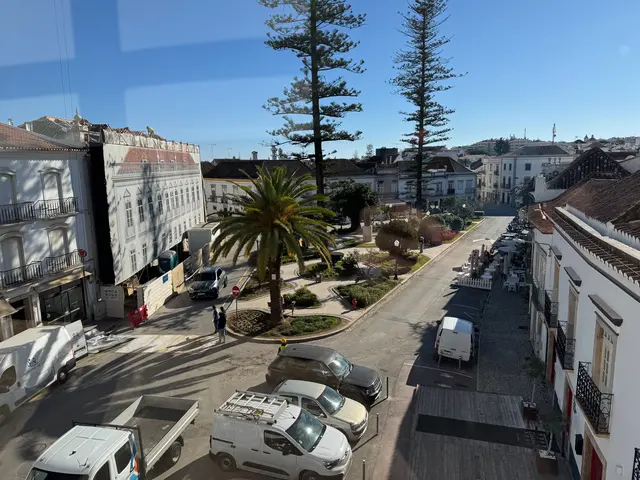
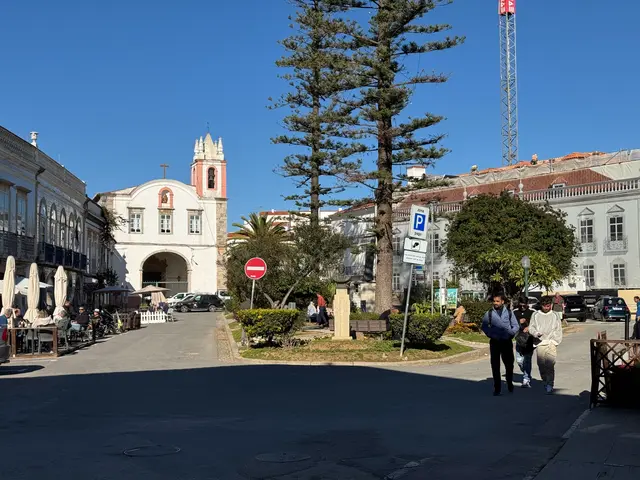
The square everyone calls Alagoa, the hollow on the left bank, with the São Paulo church at one end.
Periods
Tags
Opening hours
Freely accessible The site is in the public space and can be visited at any time.
Introduction
Everyone in Tavira says Alagoa. The official name is Praça Dr. António Padinha, but an advertisement from 1936 wrote "vulgo Alagoa", and so it remains. The name comes from the place itself: the hollow between the Santana and São Brás hills, where small streams ran together and the ground stood under water. Settlement here on the left bank of the Gilão began in the late 1300s. The convent church of São Paulo, which fills one end, is younger than the square, begun in 1606. The garden in the middle dates from 1915, laid out by the town's first republican mayor, the doctor António Padinha. 900 square metres, two bronze figures, and in 2024 a plan for a road straight through it that people did not want.
Historical highlights
The waterhole and the church
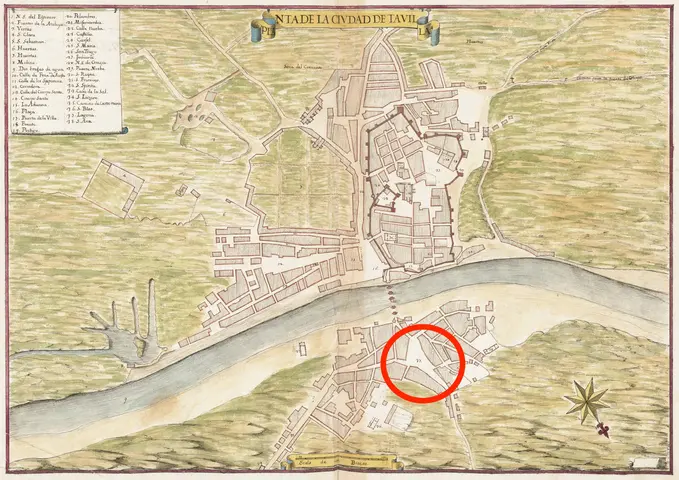
The square is an elongated triangle at the bottom of the valley between the two hills, with a way down to the river along Rua 5 de Outubro. Settlement on this side of the Gilão began in the late 1300s. The church came only in 1606, when the Hermits of Saint Paul started on their convent, the first religious house east of the river and the order's only one in the Algarve. The convent buildings were sold and demolished after 1834; the church stands, plain and whitewashed, with a Latin cross plan, rare in Tavira. Listed it is not. The council proposed it in 1983 and 2001, and the case lapsed in 2009.
The doctor who became mayor
António Padinha was born in Tavira in 1868, the son of a merchant who had himself been mayor. He studied medicine in Coimbra, and on 8 October 1910 he took office as the town's first mayor under the Republic. In the council minute book he wrote that the book was to "celebrar a Camara Municipal Republicana do concelho de Tavira". He died on 29 November 1916. When the town newspaper took stock twenty years later, the list read electric light, slaughterhouse, prison, cemetery, the A Tavirense cannery and the Teatro Popular. The garden is not on the list. It is still what the square is remembered for.
The garden of 1915
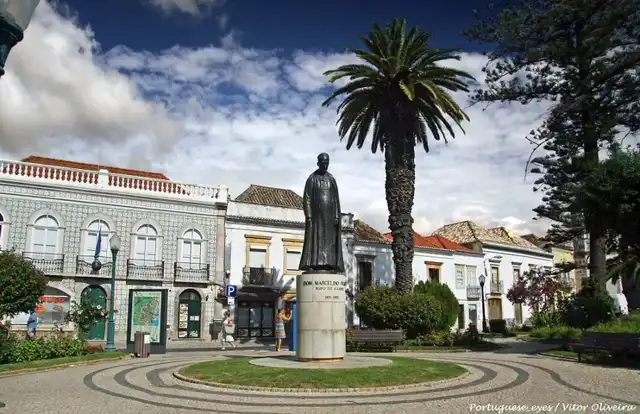
In the middle of the square lay a terreiro of beaten earth. In 1915 the council laid out a garden on it; according to the inventory of Portugal's historic gardens, it had received funds for urban improvements "as a demonstration of the benefits of the Republic", and Padinha set the work going. The plan was Carlos Peres': four raised beds with curving edges and a broad walk around them. The garden never got his name; it is still called Jardim da Alagoa. In 1986 came white calçada with black patterns and fifteen new beds with benches built into the edge. The trees come from five continents, among them Norfolk Island pine and Canary Island date palm.
Two bronzes
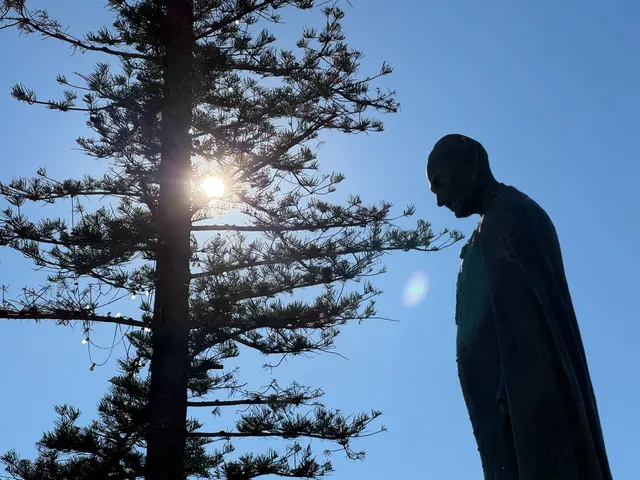
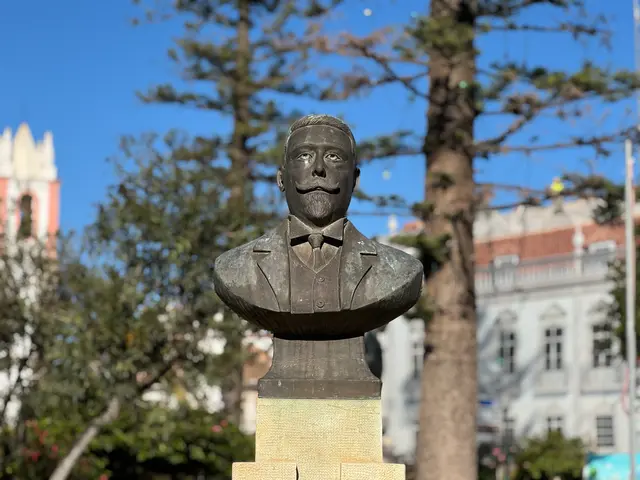
The bishop came first. Marcelino Franco was born in Tavira in 1871 and was bishop of the Algarve 1920-55. The newspaper Correio do Sul launched a subscription in 1968, the architect Gonçalo Lyster Franco designed the monument and pointed to this square, and the sculptor Branca de Alarcão modelled the figure. On 17 April 1971, the hundredth anniversary of his birth, the civil governor pulled off the cloth. The bishop stands in episcopal robes and looks towards the church. Padinha had to wait. In 1964 Povo Algarvio called for a bust of him; until then the tribute was the square's name and a memorial plaque on the house where he died. The bust came in 1982.
Practical
The church opens occasionally, among other things for guided visits arranged by the council; inside are seven altarpieces, none of them gilded. From outside you can always see the portal inscription "DOMUS DEI EST ET PORTA CELI" and the niche with the clay figure of Nossa Senhora da Ajuda. In the garden: look down at the black pattern in the white calçada, and sit on one of the benches built into the beds. The council uses the garden for markets, for instance the Feira da Dieta Mediterrânica in August.
Timeline and context
Timeline
- Late 1300s Settlement begins on the left bank of the Gilão, in Alagoa and at São Lázaro.
- 1606 The Hermits of Saint Paul start on the convent of São Paulo; the square is older than the church.
- 1730 The altarpiece of Nossa Senhora do Carmo, the largest in the church.
- 1834 The religious orders are dissolved; the church passes to a confraternity, the convent buildings are demolished.
- 1868 António Padinha is born in Tavira on 11 June.
- 1910 Padinha takes office on 8 October as the town's first republican mayor.
- 1915 Jardim da Alagoa is laid out to a plan by Carlos Peres.
- 1916 Padinha dies on 29 November; the square later takes his name.
- 1936 An advertisement writes "Praça Dr. Antonio Padinha (vulgo Alagoa)".
- 1964 Povo Algarvio calls for a bust of Padinha.
- 1971 The statue of Bishop Marcelino Franco is unveiled on 17 April, the hundredth anniversary of his birth.
- 1982 The bust of Padinha is set up in the garden.
- 1986 The garden is relaid with white and black calçada and fifteen beds.
- 2024 The mobility plan would put a road through the garden; citizens' groups protest in April.
Why the square lies in a hollow
Tavira grew across the river, and the new district on the left bank got its square where the ground was flat: at the bottom between Santana and São Brás, where the water collected. Hence the name. SIPA's urban inventory counts the square among the town's structuring elements, on the axis from Rua do Malforo to Rua da Porta Nova. The church is two hundred years younger and fitted itself into a shape that was already there. It is not the church that made the square. It is the square that got a church.
900 square metres as a cause
In 2024 the council put a mobility plan out for consultation. For this square it foresaw the garden being moved north and a carriageway running through between Rua Almirante Cândido dos Reis and Rua 5 de Outubro, with two tree-planted beds left. Two citizens' groups replied that it would destroy the garden and split the square in two; their proposal was to keep the garden as it is and close the square to cars. The remodelling of Jardim da Alagoa is still on the council's project list, and what became of the plan I do not know. A garden of 900 square metres from 1915 is not much. But it is the one people call Alagoa.