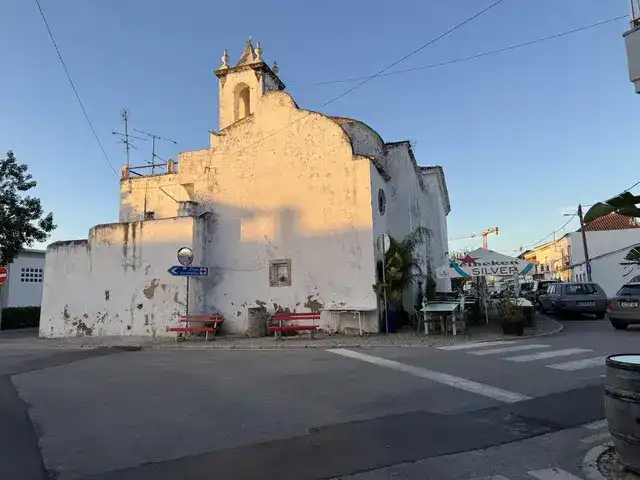
©Flemming Berthelsen (2025)
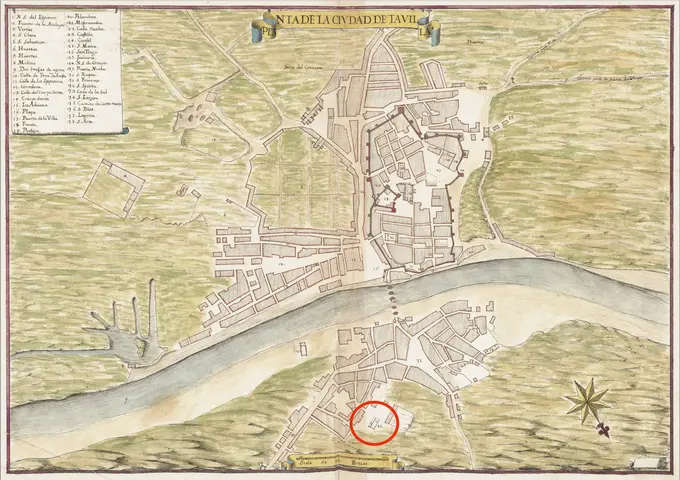
©Flemming Berthelsen (2025)
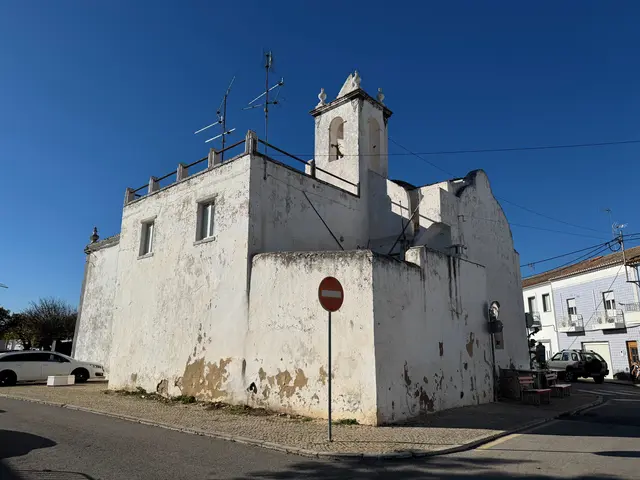
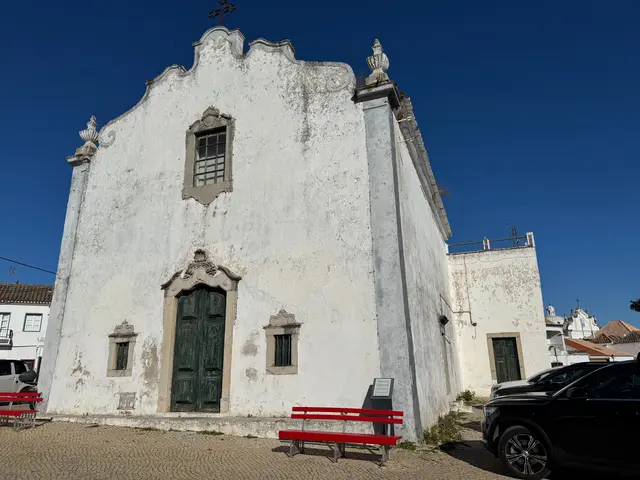
©Flemming Berthelsen (2025)
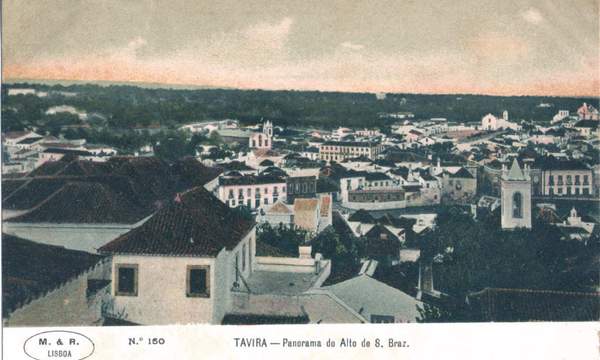
©Postal M. & R. (Lisboa) n.º 150 «Panorama do Alto de S. Braz», carimbo de 1909 · Col. A. Monge da Silva · Aveiro e Cultura – Arquivo Digital (1909)
Ermida de São Brás
Introduction
A small whitewashed chapel at the top of the hill on the far side of the river, with a rococo portal and a large window in dressed stone that are finer than the rest of the building. The municipality's church guide dates it to the 15th century, but with a question mark, and to a rebuilding in the 18th century that gave it the façade. Back then it stood outside the town, and it was the São Brás brotherhood that ran it. The Alto de São Brás quarter later grew up around the chapel, and by 1758 it was counted as lying inside the town. The door is usually locked. You come for the façade and for the way up the hill, which shows how this bank of Tavira came to be.
Historical highlights
A chapel outside the town
The chapel is late medieval, and it gets no more precise than that. The municipality's guide writes "15th century (?)", and the question mark is the guide's own. At the time it stood outside the town and was administered by the Confraria de São Brás, a brotherhood that no longer exists. The plaque by the chapel says popular devotion founded it; the guide says nothing about that. The building is a single nave and a chancel with the hermit's dwelling built on. According to a municipal text, there were three altars in the 16th century: São Brás in the middle, Santo António and Santa Bárbara on either side.
The hill that grew up around the chapel
What is interesting is less the building than what happened around it. According to SIPA's description of Tavira's urban core, the two hills on the left bank, Santana and São Brás, grew up around a chapel each, and in the 15th and 16th centuries both banks and the hills became one continuous town. At the east end of the bridge stood a town gate, the Porta de São Brás, until it was demolished in 1862. In 1758 the parish report for Santa Maria lists the chapel among those lying inside the town. The town had reached this far.
The façade from the 18th century
What you see today came with a rebuilding in the second half of the 18th century: the portal and the large window with rococo frames in dressed stone, and the curved gable above. The plaque attributes the work to the master mason Diogo Tavares de Ataíde, known from the rebuilding of São Sebastião in Tavira, and says that a side porch was removed and the nave lengthened. Another rendering of the municipal text says "or one of his followers", and the guide does not mention him at all. Tavares died in 1765. The earthquake of 1755 often gets the blame, but the parish report from 1758 mentions no damage here, and it does mention damage elsewhere.
The throat's saint
São Brás, Saint Blaise, is the saint Catholics pray to against throat ailments, and his day is 3 February, with the blessing of throats. Whether that custom has been kept here, no source consulted says. Nor is there any basis for calling it a plague chapel. The art historian Marco Sousa Santos' cordon of plague saints around Tavira is São Sebastião, São Roque and São Lázaro, and São Brás is not among them.
Practical
The chapel is usually closed, so count on the façade. The portal and the window are what is worth seeing, and the gable above them; inside stand two wooden figures, Nossa Senhora and São Brás, should the door one day be open. Walk up here from the bridge. The climb is the whole point of the place.
Timeline and context
Timeline
- 15th century (?) The chapel is founded outside the town; the municipality's guide itself puts a question mark on the century.
- 15th-16th centuries The hills of Santana and São Brás grow up around their chapels and become part of the town.
- 16th century Three altars in the chapel, São Brás, Santo António and Santa Bárbara, according to a municipal text.
- Early 18th century SIPA notes a remodelling of the "Igreja de São Brás"; unclear whether this is the chapel or the hospital's.
- 1745 Diogo Tavares de Ataíde rebuilds São Sebastião in Tavira.
- 1755 The earthquake; no source consulted mentions damage to São Brás.
- 1758 The Memórias Paroquiais list the chapel among the Santa Maria parish's chapels inside the town.
- Second half of the 18th century The rebuilding gives the façade its rococo portal and window; attributed to Tavares or his circle.
- 1765 Diogo Tavares de Ataíde dies in Lagoa.
- 1862 The Porta de São Brás at the east end of the bridge is demolished.
- 2022 The municipality's guided walk "A cidade Além da Ponte" crosses the Alto de São Brás.
Why the chapel is here
It stood outside the town, and it was later surrounded. SIPA describes Tavira's left bank as two hills that each got its chapel and then its houses. The chapel came first, the settlement afterwards. That is the reverse of what you expect, and it is the best reason to walk up here. The streets running down to the river are the town the chapel drew to itself. Why this particular hill was chosen, no source says.
What is not known
The sources are thinner here than for most places in Tavira. No heritage listing has been found, the monument record at SIPA could not be opened, and the master builder is an attribution. The 18th-century rebuilding is the only thing everyone agrees on. The rest, the century of foundation, Tavares' share, and whether throats were blessed here on 3 February, is either uncertain or unsupported. That makes the façade no less worth looking at, but most of what is written about the chapel online is guesswork.