Tavira
Ermida de Santa Ana
One of Tavira's oldest chapels, its builder already forgotten by 1518; the governors' place of prayer.
Periods
Tags
Opening hours
Limited access There are no regular opening hours. The site opens only for services, exhibitions or events – ask locally before counting on getting in.
Introduction
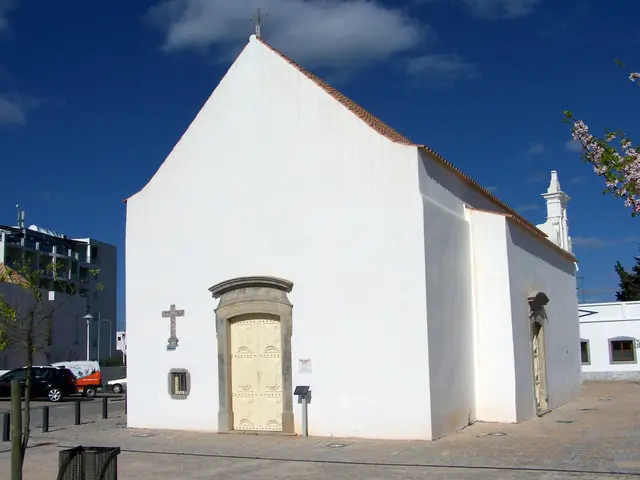
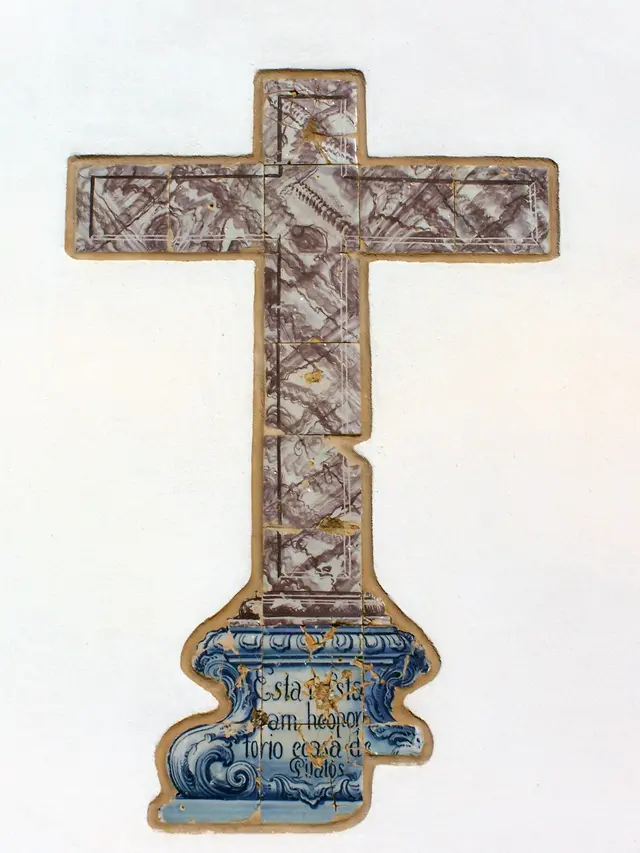
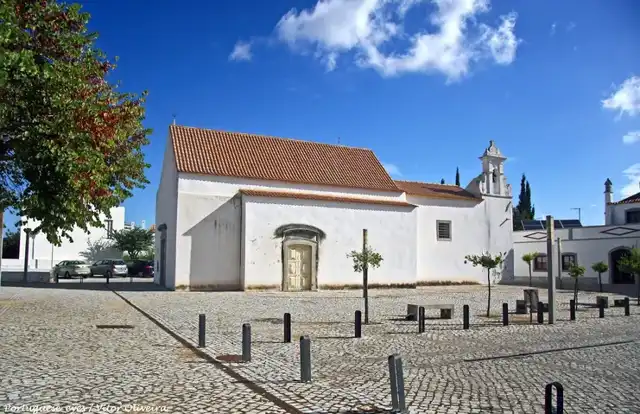
A small whitewashed chapel on top of the hill, with a cross of azulejos on the blind facade and a view over the river and the town from the square beside it. It doesn't look like much. But when the envoys of the Order of Santiago came by in 1518, they wrote that it was so old that no one remembered who had built it, and the national heritage register counts it among Tavira's oldest. The shape you see today dates from the 18th century, when the governor of the Algarve, after the earthquake of 1755, moved from Lagos to Tavira, built his palace hard up against the chapel and made it his private oratory. The palace is almost gone. The chapel stands.
Historical highlights
So old that no one remembers
When the chapel was built, no one knows. The museum says the early 14th century, and the excavations on the hill have found nothing older, nothing Islamic either. When two envoys from the Grand Master of the Order of Santiago made their visitation in 1518, they saw a single room with walls of stone and lime, a single altar made of one stone on four pillars, and behind a grille a Santa Ana with Mary and the child on her lap. They wrote that the chapel "hé tam amtigua que nom há hy memoria de quem a edificou", so old that no one remembers who built it.
The graveyard under the square
When the municipality relaid Largo de Santa Ana in 2003, the archaeologists came upon human bones and medieval gravestones. The square was the chapel's old forecourt, and in it lay a burial ground with discoid stelae as grave markers; the museum dates the burials to before the 18th century. One of the stelae, 52 by 35 centimetres, has a cross with broad arms on the front and a plough on the back.
The governor's chapel
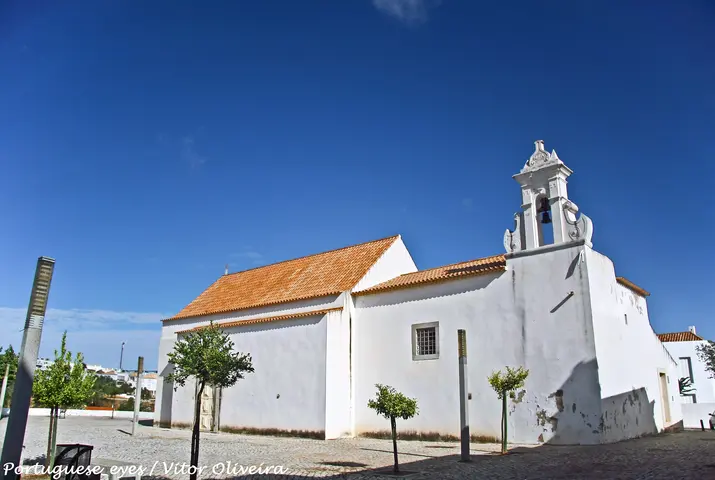
After the earthquake of 1 November 1755, the governor of the Algarve, D. Rodrigo António de Noronha e Meneses, moved from Lagos to Tavira and built his palace on the hill with the old chapel at its northern end. From 1756 it was the palace's private chapel. The governor's son was baptised here in 1773, and in 1780 the boy who later became the first Count of Mesquitela. In those years the chapel got its present appearance, with portal, bell tower and gilded main altarpiece. The tower bears the year 1727, the historian Marco Sousa Santos writes 1722, so something had been altered before the governor arrived.
From the army to the museum
The office was abolished in 1834, and the palace went to the army together with the chapel. In 1936 the municipality bought it, and soon after most of the military buildings were demolished; a south wing with the palace's main portal still stands. The chapel was listed in 1977, repaired after the earthquake of 1969, and in 2006 restored and made part of the Museu Municipal.
Practical
The chapel is used for the museum's events, so the door is not always open. Look for the cross of azulejos on the facade. If you get inside, it is the main altarpiece and the 16th-century painting of Nossa Senhora da Piedade, painted under the influence of Luis de Morales, that you should see. The viewpoint beside the chapel gives the best view over the river and the town. Palace and chapel appear on Sande Vasconcelos' map from the late 18th century in the app's time travel map. In late March the Judas trees on the square are in bloom, if those who have seen it are to be believed.
Timeline and context
Timeline
- 1200s or 1300s The chapel is built; no one can say more precisely.
- 1518 Visitation by the Order of Santiago: one room, one altar, and no one remembers who built it.
- Middle Ages to 1600s Burials in the forecourt, today's Largo de Santa Ana.
- 1722 or 1727 Rebuilding; the year 1727 is on the bell tower.
- 1755 The earthquake; governor D. Rodrigo António de Noronha e Meneses moves from Lagos to Tavira.
- 1756 The chapel becomes the private chapel of the governor's palace and gets its present appearance.
- 1773 and 1780 Children of governors are baptised in the chapel.
- 1834 The office is abolished; palace and chapel pass to the army.
- 1936 The municipality buys the chapel; most of the military buildings are demolished.
- 1969 Earthquake damage; the state repairs it the same year.
- 1977 Listed under Decreto 129/77 together with all its contents.
- 2003 Excavation finds the burial ground and the remains of the palace walls.
- 2006 Restored and made part of the Museu Municipal.
A chapel outside the town
The heritage register describes the hill as a place that once lay deserted and outside the town's limits. A small chapel to a saint, a burial ground in the forecourt, no neighbours. Only the governor's palace in the second half of the 18th century gave the chapel what the register calls its first urban setting. It was built as a lonely place, was for just under 80 years the governor's private chapel and ended up as part of a barracks. The palace tied it into the town, and the palace is gone.
What is left
The chapel itself, still one room as in 1518, now with chancel and sacristy. The rest is 18th century: altarpiece, portal, bell tower. Of the palace one wing stands, and the burial ground lies covered under the relaid square. The oldest thing on the hill is what has fared best, because it was small and could be used for something, first by the governor, then by the army, then by the municipality. In February 2026 the municipality called it one of the town's oldest chapels, with over 500 years of documented history. 1518 is the proof. The rest is older than that.