Tavira
Jardim do Coreto
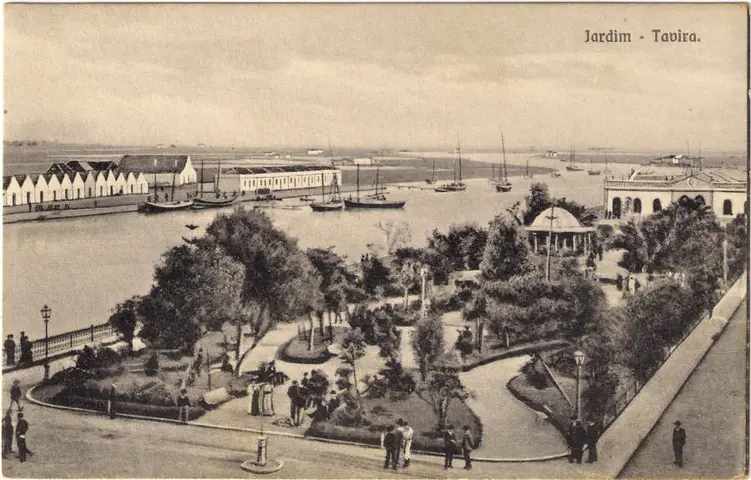
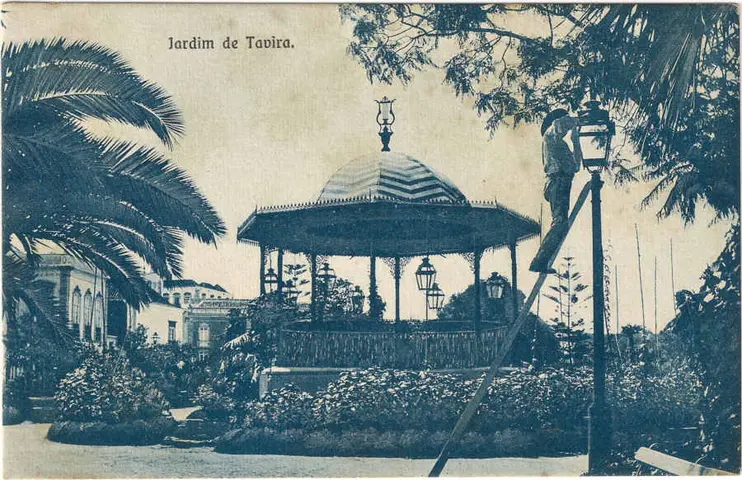
Tavira's oldest garden, from 1890, around a cast-iron bandstand from Porto.
Periods
Tags
Opening hours
Freely accessible The site is in the public space and can be visited at any time.
Introduction
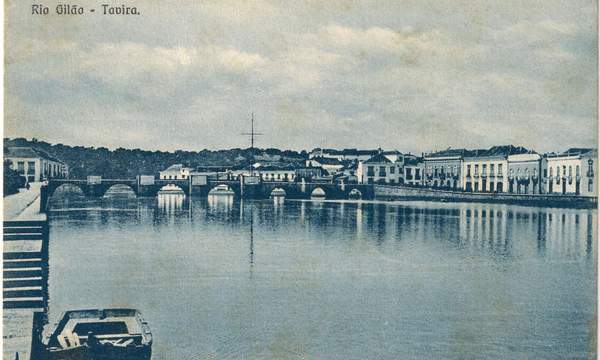
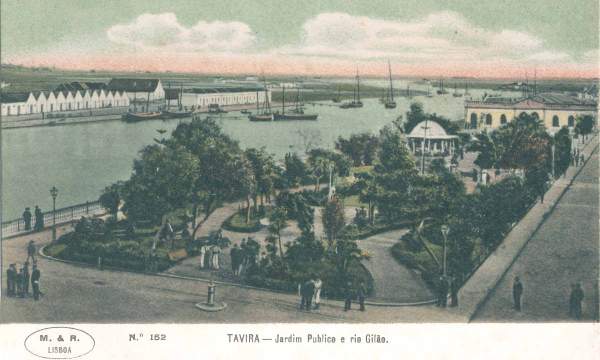
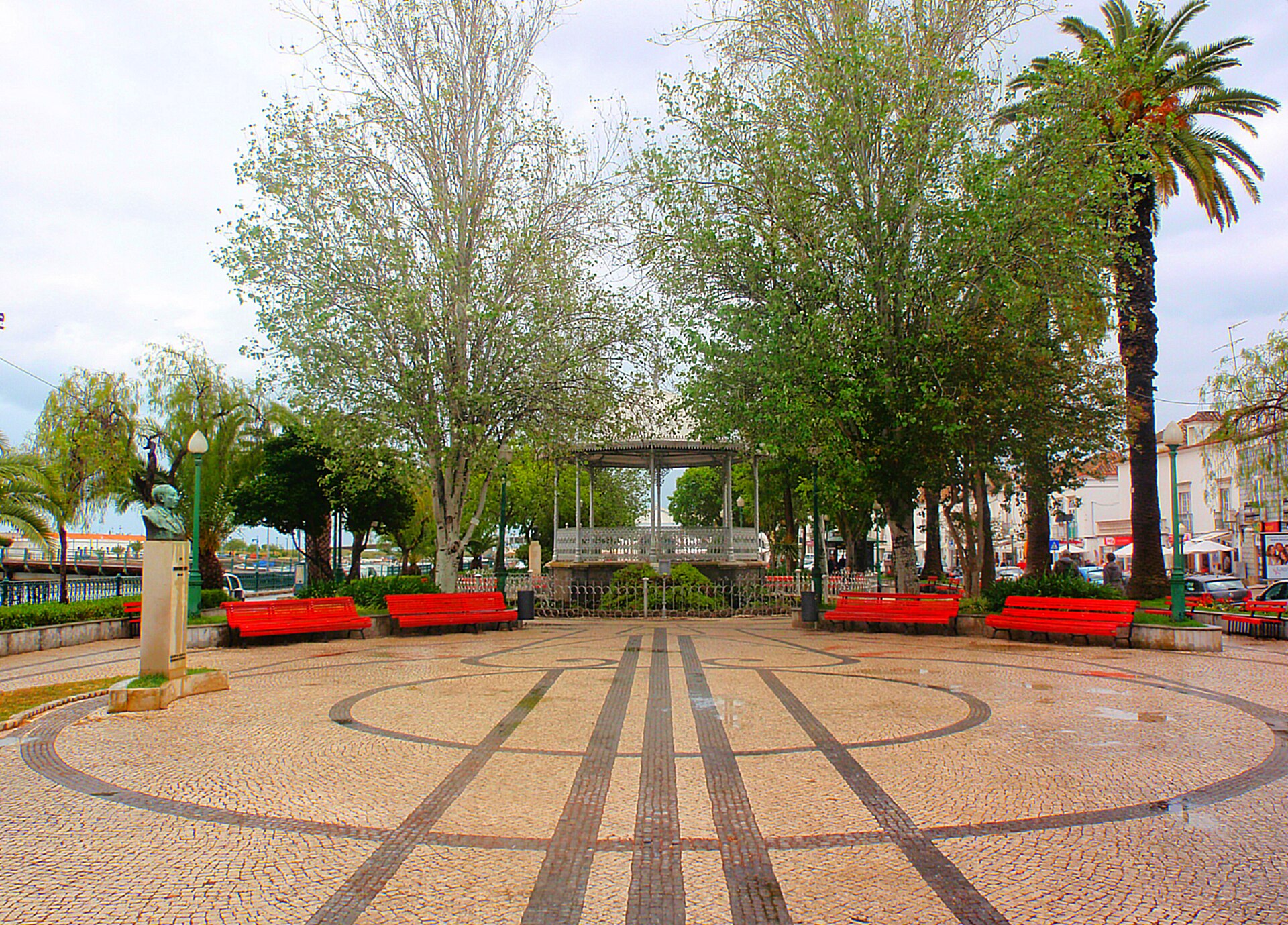
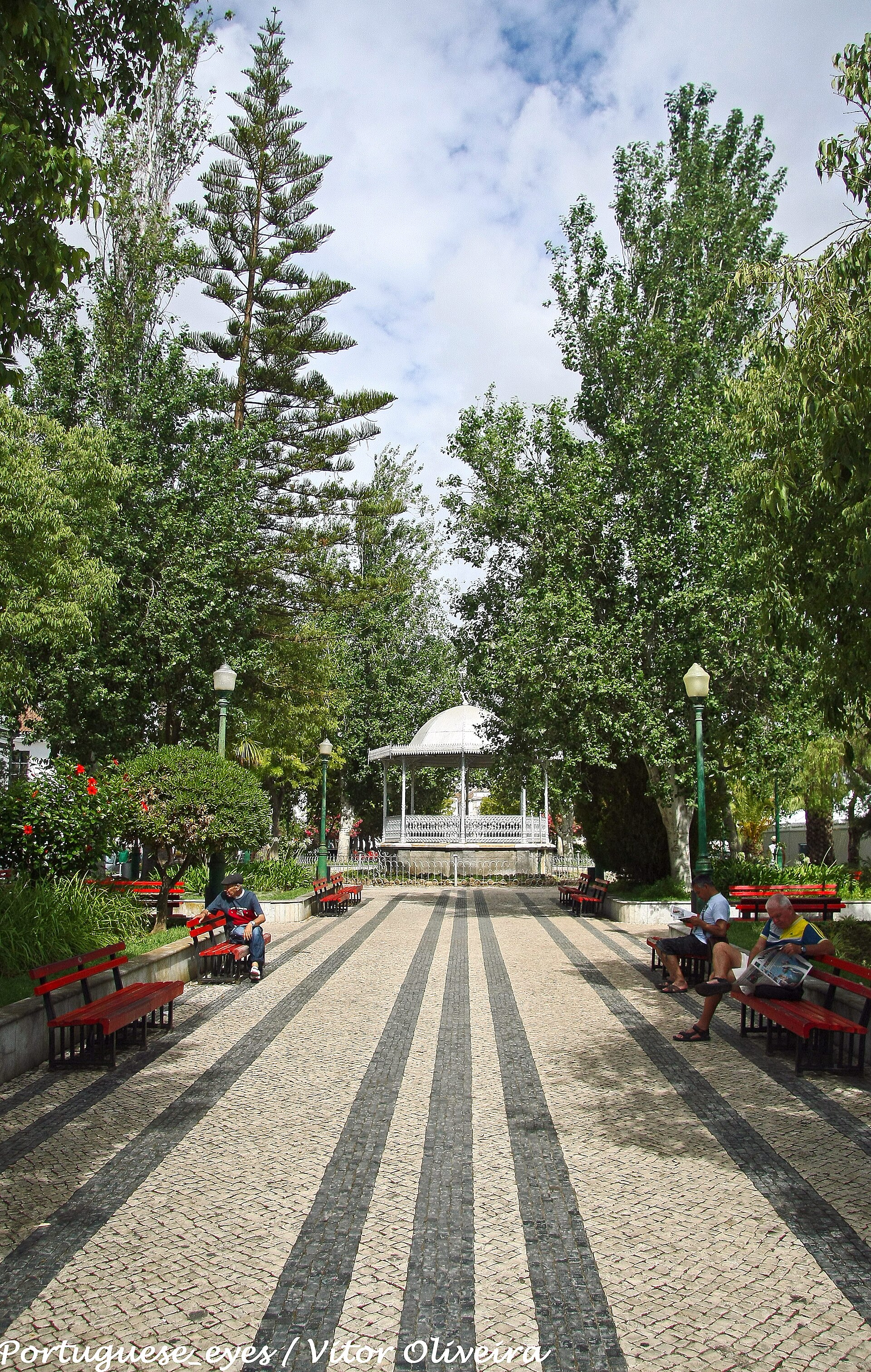
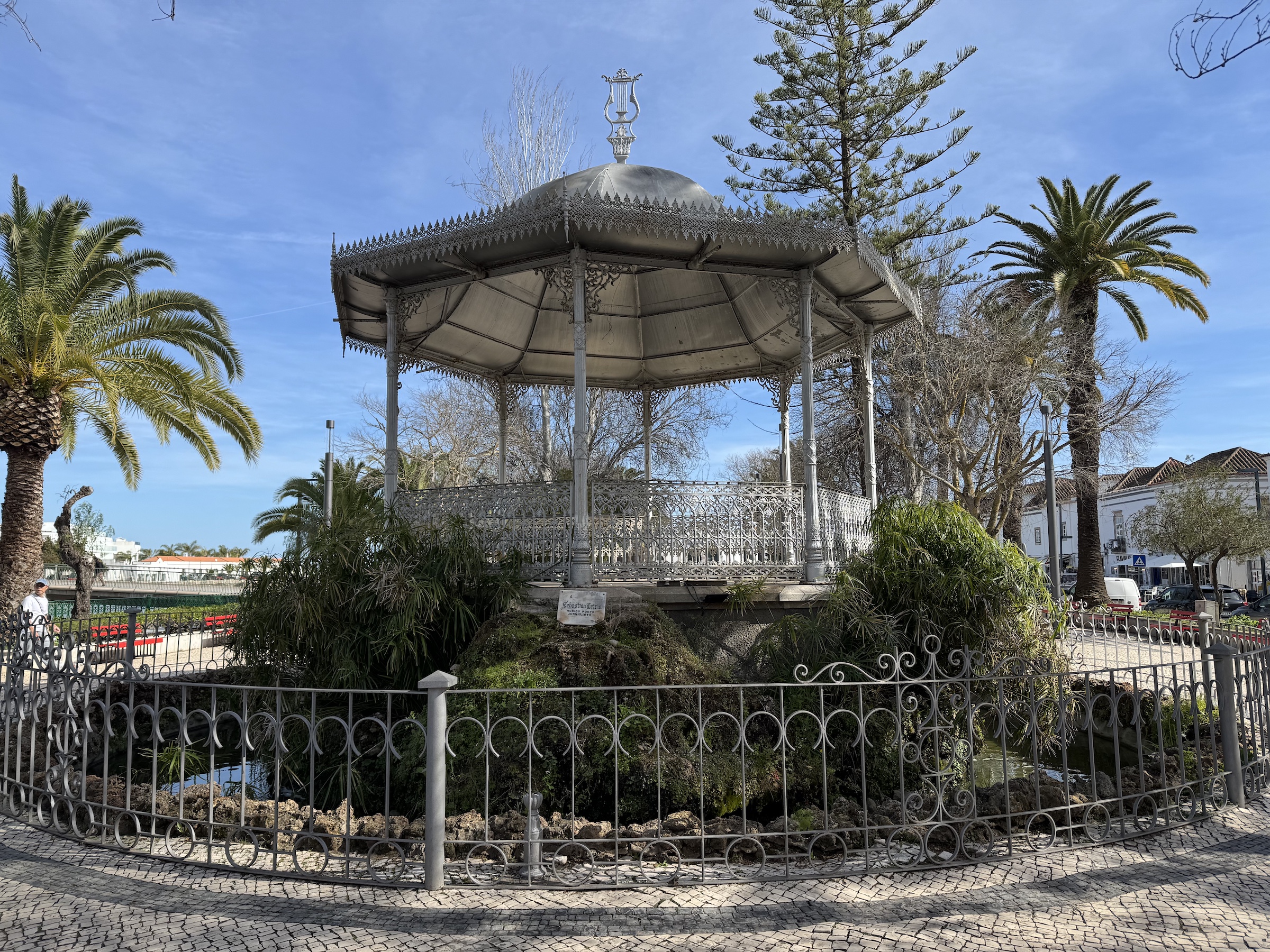
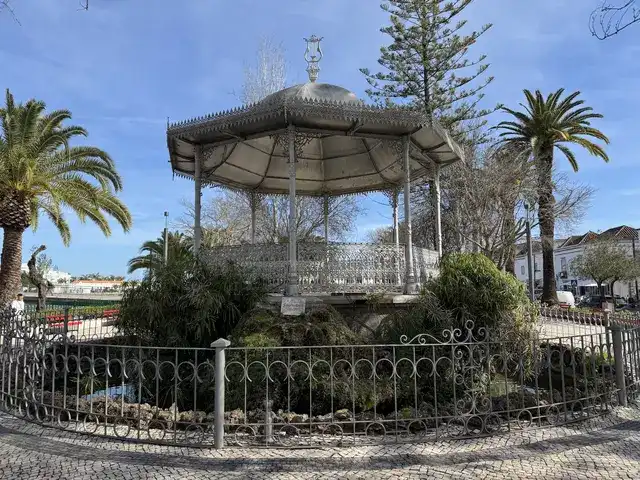
The bandstand in the middle of the garden is cast iron from Porto. The drawing dates from 1888, the iron pieces arrived by steamship in Olhão in January 1890 and were carted the last stretch overland, and the garden around them was inaugurated late the same year. It is Tavira's oldest public garden, laid out on the right bank of the river by the new market, in the years when the town also got a railway and walled riverbanks. The idea came from the mayor, José Pires Padinha, and the district was against it. Since 1944 the bandstand has stood in a small pond with fish and turtles, and the palms have given the garden its other name, Jardim das Palmeiras. Come for the fado in summer, or just for the shade.
Historical highlights
A merchant gets his way
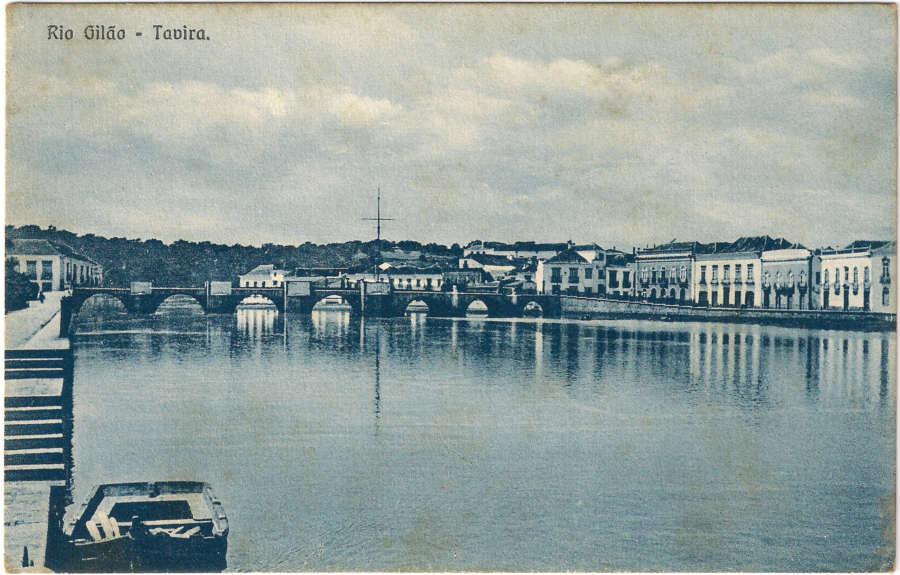
In 1886 the mayor, José Pires Padinha, a wealthy merchant, had the idea that Tavira should have a garden on the right bank of the river. The district's Junta Geral raised objections; the archive writes that he stubbornly pushed the project through anyway. The site was not empty before. The Ermida do Loreto and the Corte-Real family's palace had stood here, both demolished, and archaeologists think it likely that the town's old shipyard sheds were here; they have found no traces of housing. Work began in 1890, and the garden was inaugurated late in the year.
Iron from Porto
The bandstand is octagonal and was cast at the Fundição do Ouro in Porto. The drawing is in ink and dated 1888; who drew it is not known. On 11 January 1890 the foundry wrote that the coreto had been sent by steamship to Olhão, and the council minutes of 15 January say the rest of the way went overland. 1890 is also the year Fernando Pessoa had his heteronym Álvaro de Campos born in Tavira, and in 2016 the Arquivo Municipal wrote that "o progresso em Tavira assinalou-se … pela chegada do coreto". Iron from a factory as the town's sign of progress. It is an honest reading.
Straight lines, a pond and two busts
The first garden had winding paths. Around 1913, the year is an estimate, they gave way to a straight central avenue that only the bandstand interrupts. In 1944 the bandstand got a pond around it with fish, turtles, rocks and plants. It is a strange and good idea. The same year Raul Xavier's bronze bust of the mathematician António Cabreira, born in Tavira in 1868, was unveiled at his academic golden jubilee and with the man himself present; he gave his birthplace to the municipality, and today it is the town archive. In 1961 Xavier's bust of the poet and local politician Isidoro Manuel Pires followed.
Practical
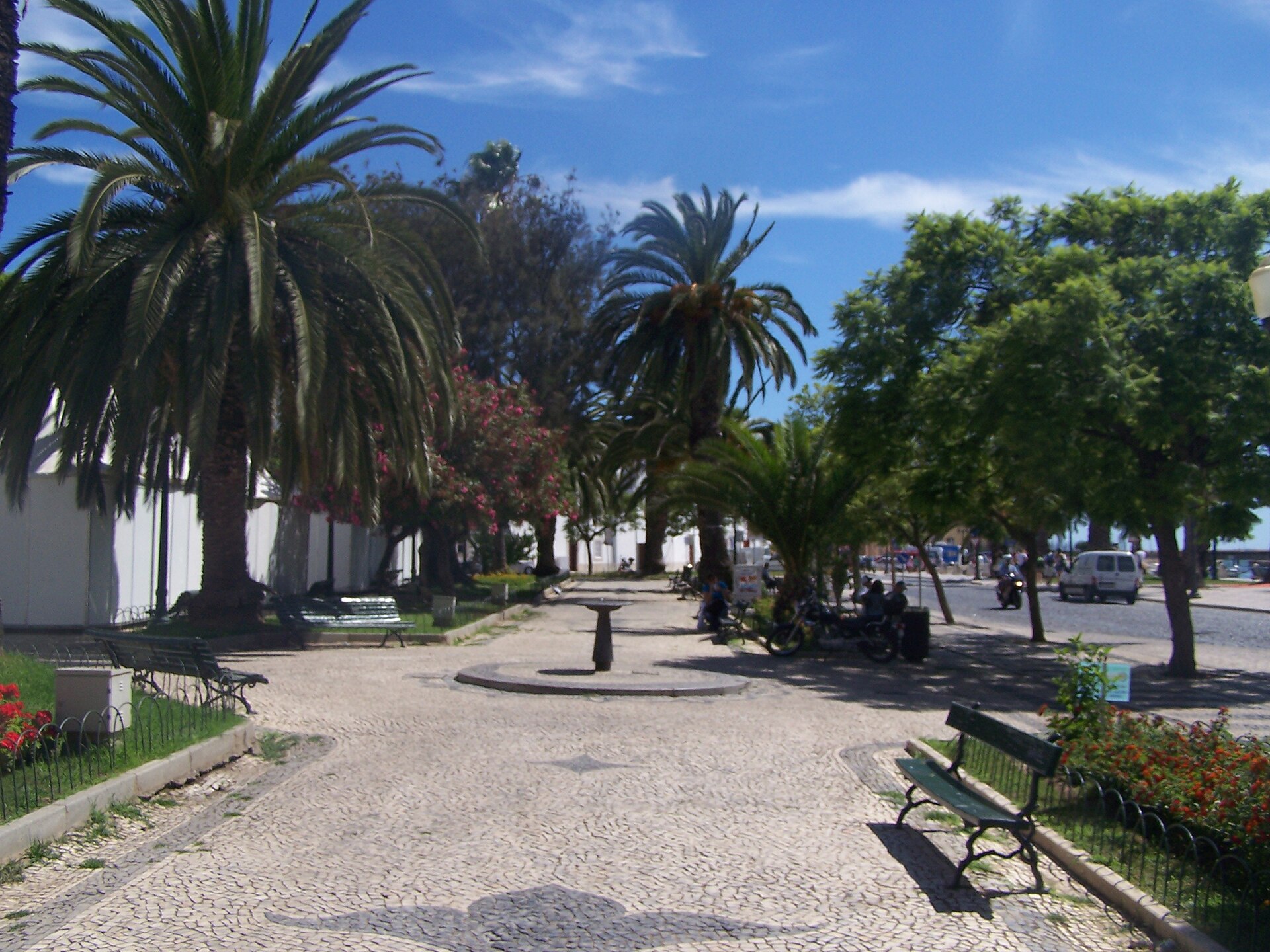
The garden is municipal and always open; the address is Rua José Pires Padinha, named after the man who wanted it. The Mercado da Ribeira is at the southern end. Look for the octagonal plan and the soft lines of the ironwork, the turtles in the pond, the two busts and the memorial inscription to the musician and poet Sebastião Leiria. The trees are date palms, Canary palms, white poplars and nettle trees. In summer the municipality holds Fado no Coreto and a summer ball in the garden; the book fair and the crafts market, on the other hand, are on Rua do Cais.
Timeline and context
Timeline
- Before the 19th century The Ermida do Loreto and the Corte-Real palace stand between Rua Direita and the river; the town's shipyard sheds were probably here.
- 1886 Mayor José Pires Padinha has the idea of a garden by the river; the district is against it.
- 1887 The Mercado da Ribeira is inaugurated at the southern end of the garden.
- 1888 Ink drawing of the coreto; the draughtsman is unknown.
- January 1890 The iron pieces are sent by steamship from Porto to Olhão and carted on overland.
- 1890 Construction begins; the garden is inaugurated late in the year.
- c. 1913 The winding paths give way to a straight central avenue; the year is an estimate.
- 1944 Pond around the bandstand; Raul Xavier's bust of António Cabreira is unveiled in his presence.
- 1961 Bust of the poet and local politician Isidoro Manuel Pires, also by Raul Xavier.
- 1976 Viana Barreto and Edgar Fontes draw up a remodelling plan for the garden and Praça da República.
- 2016 The town archive celebrates Álvaro de Campos' birth year with the arrival of the coreto as a sign of progress.
- 2025 Fado no Coreto and a summer ball.
Why the garden is here
The bank between Rua Direita and the river was the town's working edge, not its fine side. Chapel and noble palace were demolished, and in the 1880s Tavira got, within a few years, a railway, a new market, walled riverbanks and then the garden. Excavations in Rua José Pires Padinha have found layers of fill that probably date from when the garden and the wall were built. They raised the bank and laid a garden on top. Market and garden belong together: one for weekdays, the other for Sunday, both facing the river.
What remains
The bandstand is the one from 1890. The rest is younger: the avenue from around 1913, the cobbles, the pond from 1944, the busts. The garden is not listed in its own right, but lies within the inventoried historic town centre. The most important thing is that it is still used for what it was built for. The bands played from here for decades, and in summer there is fado on the coreto. A garden in use is better preserved than one that is only tended.