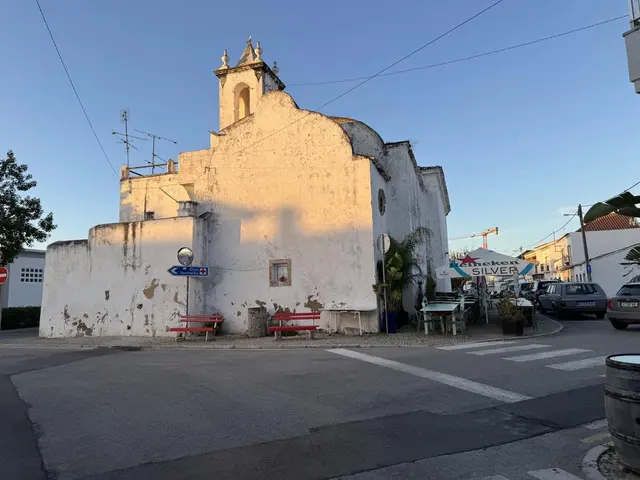
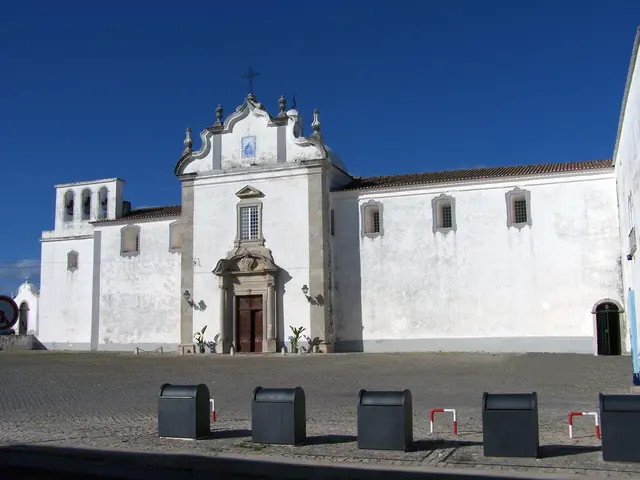
Baroque Tavira is the town of the architect Diogo Tavares e Ataíde: the painted chapel of São Sebastião, the octagonal hospital church, the church of Santiago and the grand façade of the Palácio da Galeria — and, across the river, São Brás and the gilded interior of the Carmelite church. Based on themes from Tavira's official historical guide.
Chapter 1
A Riot of Colour and Gilding
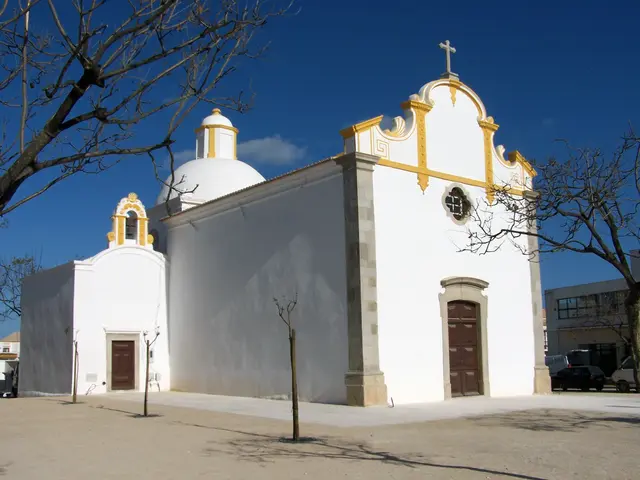
Founded in the late Middle Ages as a plague sanctuary dedicated to Saint Sebastian, this small chapel was in ruins by the early 1700s. In 1745 the town commissioned master builder Diogo Tavares e Ataíde and Manuel Aleixo to rebuild it — curving pediment, triumphal arch and domed chancel.
In 1759 the painter Diogo de Mangino added ten canvases narrating the saint's life, amid trompe-l'oeil marble and gilded angels — called the most complete painted life of the saint in Portuguese art. Restored after 2000, it now lives on as a cultural venue.
- 340 m
Chapter 2
The Miracle and the Octagon
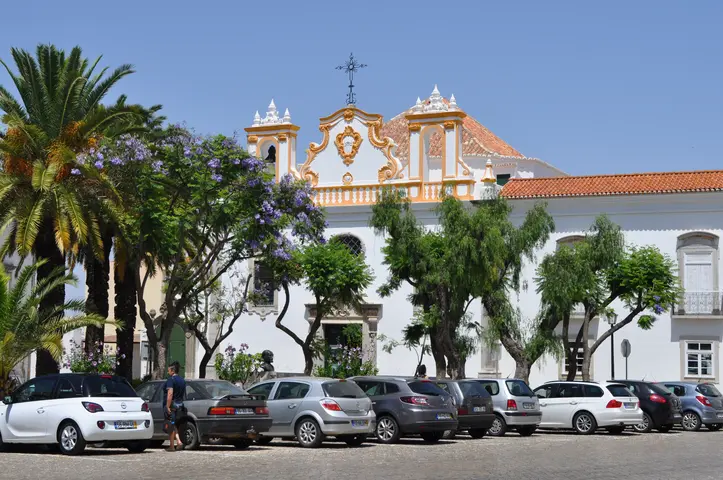
A hostel for the poor stood here from 1425, growing into Tavira's main hospital. In 1721 its wooden statue of Saint Joseph was said to have sweated blood; the miracle won royal favour, and in 1747 King João V made the church a Royal Chapel.
The 1755 earthquake ruined the old chapel. Diogo Tavares e Ataíde rebuilt it on a bold octagonal plan inspired by Lisbon's Menino Deus church, completed in 1768 — a Rococo façade outside, an octagonal vault and a trompe-l'oeil main altar, painted in 1805, within.
- 200 m
Chapter 3
Saint James on Horseback
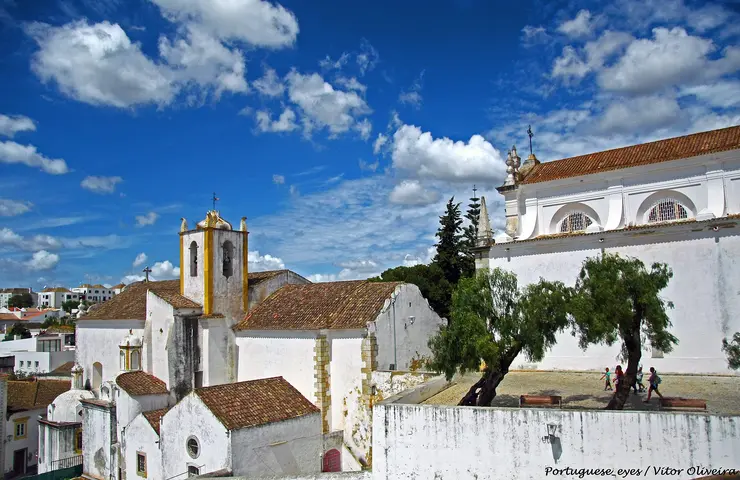
Santiago was born of the Reconquista: built by the Order of Saint James soon after Christian forces took Tavira in 1242, on a site believed to have held a mosque. Its simple Gothic nave served the town for five centuries.
The 1755 earthquake wrecked it. Rebuilding gave the church its plain Baroque-Neoclassical face, re-consecrated in 1777. Other parishes donated salvaged artworks, the gilded altars were restored, and a medallion of Saint James on horseback recalls the legend that the saint himself appeared at Tavira's siege.
- 150 m
Chapter 4
The Architect's Grand Façade
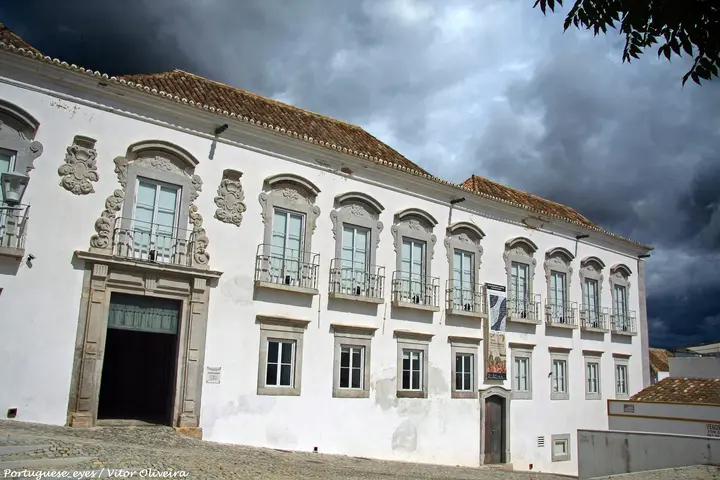
Tavira's finest civil building stands on its oldest sacred ground: beneath the atrium, archaeologists found Phoenician ritual wells dug for the storm god Baal in the 7th century BCE. A noble house rose here in the Middle Ages, taking its name from a 16th-century Renaissance gallery of arches.
Around 1745, magistrate João Leal da Gama e Ataíde had Diogo Tavares e Ataíde give the palace its Baroque face — the oyster-grey façade and ornate carvings — while keeping the Renaissance gallery. Since 2001 it has been Tavira's municipal museum.
- 460 m
Chapter 5
The Healer Outside the Walls
This small hermitage rose in the 15th century, just outside the old walls, dedicated to Saint Blaise — the healer saint invoked against throat ailments and plague. Its lay brotherhood kept the feast each February 3rd with the Blessing of the Throats.
After the 1755 earthquake, Diogo Tavares e Ataíde led the reconstruction: a wider nave, a curved Baroque pediment and a graceful Rococo stone portal. The neighbourhood of Alto de São Brás still bears the chapel's name, and the attached hermit's house recalls those who once kept vigil here.
- 130 m
Chapter 6
A Farewell in Gold
The Carmo church was a project of Tavira's own citizens: the lay Third Order of Carmel, who secured land near São Brás by deeds of 1737 and began building in 1744. The main structure was complete by the 1750s — Bishop Inácio de Santa Teresa was buried here in 1751 — though the façade, with its single espadaña belfry, was only finished in 1792.
Inside, a Latin-cross church glows with gilded altarpieces, polychrome carvings and illusionistic ceiling paintings — late Portuguese Baroque, shaped by local hands and local means.