1. Home
  2. Cities
List
Map
Timeline
Routes
Stories

Tavira

Ermida de São Sebastião

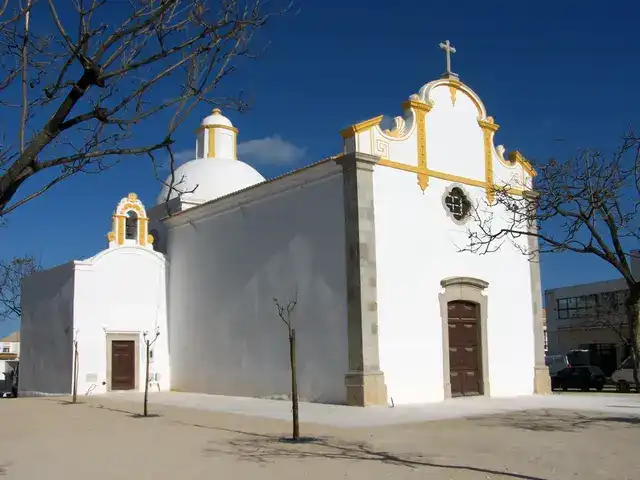
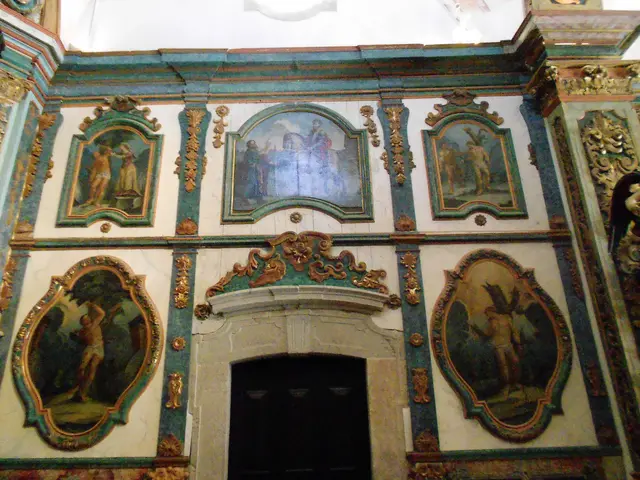
Plague chapel with ten canvases on São Sebastião, painted in 1759 by Diogo de Mangino from Seville.

Carlos, Public domain, Wikimedia Commons
© Carlos, Public domain, Wikimedia Commons (2008)

Periods

MedievalEnlightenmentContemporary

Tags

Photography SpotsScenic ViewGuided ToursPeaceful SpotChurch

Opening hours

Limited access There are no regular opening hours. The site opens only for services, exhibitions or events – ask locally before counting on getting in.

Website

https://museumunicipaldetavira.cm-tavira.pt/content/ermida-de-sao-sebastiao

Introduction

A small chapel on a square south of the river, some way from the centre, opposite the old prison that is now a library. From outside, a curved gable and a portal with an arched pediment. Inside hang ten canvases on the life of São Sebastião, painted in 1759 by Diogo de Mangino from Seville. The historian Daniel Santana calls the series the most complete pictorial account of the saint in Portuguese art. The chapel was built against plague; São Sebastião was the saint people invoked against epidemics. The building dates from 1745, the site is older and mentioned in 1548. Today it is a museum space and concert hall, and the door is only open when something is on the programme.

Historical highlights

Plague chapel on the edge of town

São Sebastião was the saint people invoked against epidemics, and the chapel has been his from the beginning. When that was, nobody knows. The municipality writes 15th century with a question mark, SIPA 17th century, with the sacristy as a possible remnant of an older chapel. Turismo de Tavira mentions a reference from 1548; Ferrari's town plan from around 1655 includes it. In 1682 it had a confraternity made up mostly of council officials. The town's own chapel, not the parish's.

The rebuilding of 1745

Around 1700 the walls of stone and clay were partly in ruin. In 1723 João V assigned 10$500 réis from the municipality's revenues. It did not go far. On 28 April 1745 the council put the work out to tender; the master masons Diogo Tavares de Ataíde and Manuel Aleixo got it for 600$000 réis, the carpenter Jacinto Pacheco the woodwork for 580$000. The walls were pulled down and built up again, sturdier. Gable, portal and vaults match Ataíde's style, and the design is probably his.

Mangino's ten canvases

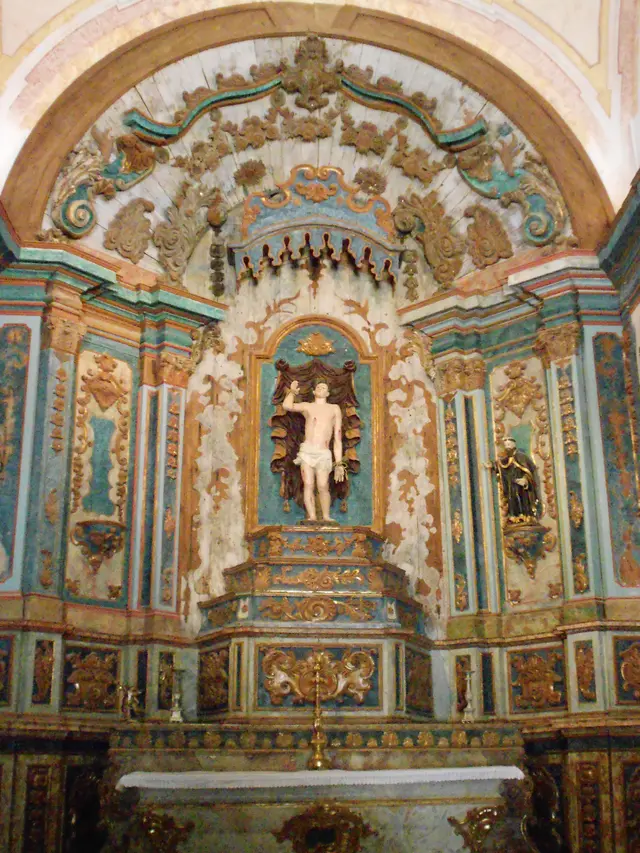
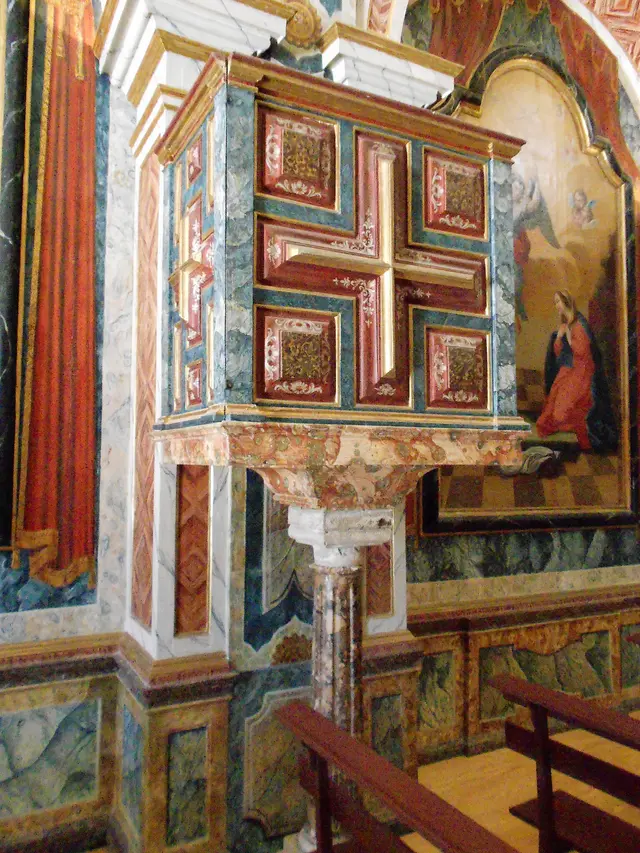
In 1759 the painter Diogo de Mangino committed himself to the confraternity to paint the chancel: ten canvases with the life of São Sebastião, painted marble on the walls and the polychromy of two angels above the triumphal arch. He was a Sevillian, settled in Tavira after 1754. The last picture is the saint after his martyrdom, with palm and a wreath of flowers. In the visitor guide from 2008 Daniel Santana calls it "the most complete pictorial recreation of the life of São Sebastião in Portuguese art". In the nave hang scenes from the life of Mary. The municipality calls it a total work of art. A big phrase for so small a room, but inside you understand it.

Garrison, decay, concert hall

After the earthquake of 1755 the governor of the Algarve moved to Tavira, and from 1756 the chapel belonged to his palace. Perhaps that is why the procession went to Santa Maria on 19 January and back on the 20th with the garrison's officers and the regiment's band, well into the 20th century. The municipality bought the building in 1936; by 1993 it was closed and derelict. Restored in stages from 2000, reopened on 25 April 2008 as a museum space and concert hall.

Practical

The chapel is only open for events: the concert series Música nas Igrejas and the museum's guided tours, most recently in 2024, sold out in advance. The address is Largo dos Mártires da Pátria, opposite the Biblioteca Álvaro de Campos. Gable, portal and dome can be seen from outside. If you get in, go up into the chancel to the ten canvases and look for the angels above the triumphal arch; the sacristy has azulejo panels and a 17th-century chest of drawers.

Timeline and context

Timeline

  • Late Middle Ages – Chapel for São Sebastião on Campo da Atalaia, in a time of epidemics.
  • 1548 Church mentioned, according to Turismo de Tavira.
  • c. 1655 Ferrari's town plan shows the building as no. 5, "S. Sebastian".
  • 1682 Confraternity of São Sebastião, mostly council officials.
  • 1723 João V grants 10$500 réis; walls partly in ruin.
  • 1745 The council puts the rebuilding out to tender to Ataíde, Aleixo and the carpenter Pacheco.
  • 1753 José I gives the confraternity market revenues for the decoration.
  • 1759 Mangino takes on the chancel paintings: ten canvases, painted marble, two angels.
  • 1936 The municipality acquires the chapel.
  • 1977 Listed by Decreto 129/77 "with all its contents"; since 2001 Monumento de Interesse Municipal.
  • 1993 Closed and falling into decay.
  • 2000-2008 Restoration in stages; theft in 2005; reopened 25 April 2008.

Why it is here

The chapel stands south of the Gilão on the old Campo da Atalaia, some way from the centre. DGPC dates its origin to the late Middle Ages, a time of great epidemics, and São Sebastião was the saint people prayed to against contagion. In 2018 the historian Santos described São Sebastião, São Roque and São Lázaro as a symbolic cordon around Tavira, three chapels with saints who all protect against plague. It is a modern interpretation, but it fits with the fact that it was the council's own people who kept the chapel and asked the king for money for it.

What remains

Almost everything. The listing in 1977 expressly covered the chapel "with all its contents", and the contents are the point: Mangino's ten canvases in the chancel, the Marian scenes in the nave, the painted marble, the angels, the azulejos and the chest of drawers in the sacristy. The building dates from 1745 with a possible older remnant in the sacristy. After the theft in 2005 some objects hang as reproductions. The museum has kept display cases and signs out; you are given a visitor guide and see the room as it was intended. The right decision for a room that is itself the exhibition.

Additional research material is available for this site.

Ermida de São Sebastião

Ermida de São Sebastião - Carlos, Public domain, Wikimedia Commons 1/4
©Carlos, Public domain, Wikimedia Commons (2008)
Ermida de São Sebastião - Ricardo Filipe Pereira, CC BY-SA 4.0 <https://creativecommons.org/licenses/by-sa/4.0>, via Wikimedia Commons 2/4
©Ricardo Filipe Pereira, CC BY-SA 4.0 <https://creativecommons.org/licenses/by-sa/4.0>, via Wikimedia Commons (2008)
Ermida de São Sebastião - Ricardo Filipe Pereira, CC BY-SA 4.0 <https://creativecommons.org/licenses/by-sa/4.0>, via Wikimedia Commons 3/4
©Ricardo Filipe Pereira, CC BY-SA 4.0 <https://creativecommons.org/licenses/by-sa/4.0>, via Wikimedia Commons (2011)
Ermida de São Sebastião - Ricardo Filipe Pereira, CC BY-SA 4.0 <https://creativecommons.org/licenses/by-sa/4.0>, via Wikimedia Commons 4/4
©Ricardo Filipe Pereira, CC BY-SA 4.0 <https://creativecommons.org/licenses/by-sa/4.0>, via Wikimedia Commons (2013)
Ermida de São Sebastião
Show on map
Photography SpotsScenic ViewGuided ToursPeaceful SpotChurch

Introduction

A small chapel on a square south of the river, some way from the centre, opposite the old prison that is now a library. From outside, a curved gable and a portal with an arched pediment. Inside hang ten canvases on the life of São Sebastião, painted in 1759 by Diogo de Mangino from Seville. The historian Daniel Santana calls the series the most complete pictorial account of the saint in Portuguese art. The chapel was built against plague; São Sebastião was the saint people invoked against epidemics. The building dates from 1745, the site is older and mentioned in 1548. Today it is a museum space and concert hall, and the door is only open when something is on the programme.

Research

Historical highlights

Plague chapel on the edge of town

São Sebastião was the saint people invoked against epidemics, and the chapel has been his from the beginning. When that was, nobody knows. The municipality writes 15th century with a question mark, SIPA 17th century, with the sacristy as a possible remnant of an older chapel. Turismo de Tavira mentions a reference from 1548; Ferrari's town plan from around 1655 includes it. In 1682 it had a confraternity made up mostly of council officials. The town's own chapel, not the parish's.

The rebuilding of 1745

Around 1700 the walls of stone and clay were partly in ruin. In 1723 João V assigned 10$500 réis from the municipality's revenues. It did not go far. On 28 April 1745 the council put the work out to tender; the master masons Diogo Tavares de Ataíde and Manuel Aleixo got it for 600$000 réis, the carpenter Jacinto Pacheco the woodwork for 580$000. The walls were pulled down and built up again, sturdier. Gable, portal and vaults match Ataíde's style, and the design is probably his.

Mangino's ten canvases

In 1759 the painter Diogo de Mangino committed himself to the confraternity to paint the chancel: ten canvases with the life of São Sebastião, painted marble on the walls and the polychromy of two angels above the triumphal arch. He was a Sevillian, settled in Tavira after 1754. The last picture is the saint after his martyrdom, with palm and a wreath of flowers. In the visitor guide from 2008 Daniel Santana calls it "the most complete pictorial recreation of the life of São Sebastião in Portuguese art". In the nave hang scenes from the life of Mary. The municipality calls it a total work of art. A big phrase for so small a room, but inside you understand it.

Garrison, decay, concert hall

After the earthquake of 1755 the governor of the Algarve moved to Tavira, and from 1756 the chapel belonged to his palace. Perhaps that is why the procession went to Santa Maria on 19 January and back on the 20th with the garrison's officers and the regiment's band, well into the 20th century. The municipality bought the building in 1936; by 1993 it was closed and derelict. Restored in stages from 2000, reopened on 25 April 2008 as a museum space and concert hall.

Practical

The chapel is only open for events: the concert series Música nas Igrejas and the museum's guided tours, most recently in 2024, sold out in advance. The address is Largo dos Mártires da Pátria, opposite the Biblioteca Álvaro de Campos. Gable, portal and dome can be seen from outside. If you get in, go up into the chancel to the ten canvases and look for the angels above the triumphal arch; the sacristy has azulejo panels and a 17th-century chest of drawers.

Research

Timeline and context

Timeline

  • Late Middle Ages – Chapel for São Sebastião on Campo da Atalaia, in a time of epidemics.
  • 1548 Church mentioned, according to Turismo de Tavira.
  • c. 1655 Ferrari's town plan shows the building as no. 5, "S. Sebastian".
  • 1682 Confraternity of São Sebastião, mostly council officials.
  • 1723 João V grants 10$500 réis; walls partly in ruin.
  • 1745 The council puts the rebuilding out to tender to Ataíde, Aleixo and the carpenter Pacheco.
  • 1753 José I gives the confraternity market revenues for the decoration.
  • 1759 Mangino takes on the chancel paintings: ten canvases, painted marble, two angels.
  • 1936 The municipality acquires the chapel.
  • 1977 Listed by Decreto 129/77 "with all its contents"; since 2001 Monumento de Interesse Municipal.
  • 1993 Closed and falling into decay.
  • 2000-2008 Restoration in stages; theft in 2005; reopened 25 April 2008.

Why it is here

The chapel stands south of the Gilão on the old Campo da Atalaia, some way from the centre. DGPC dates its origin to the late Middle Ages, a time of great epidemics, and São Sebastião was the saint people prayed to against contagion. In 2018 the historian Santos described São Sebastião, São Roque and São Lázaro as a symbolic cordon around Tavira, three chapels with saints who all protect against plague. It is a modern interpretation, but it fits with the fact that it was the council's own people who kept the chapel and asked the king for money for it.

What remains

Almost everything. The listing in 1977 expressly covered the chapel "with all its contents", and the contents are the point: Mangino's ten canvases in the chancel, the Marian scenes in the nave, the painted marble, the angels, the azulejos and the chest of drawers in the sacristy. The building dates from 1745 with a possible older remnant in the sacristy. After the theft in 2005 some objects hang as reproductions. The museum has kept display cases and signs out; you are given a visitor guide and see the room as it was intended. The right decision for a room that is itself the exhibition.

Research

AI-generated content

The text and narration were created with artificial intelligence — the voice is synthetic. The content is reviewed editorially, but errors may occur.