Twenty-five centuries of town lie beneath the streets. From the Islamic museum quarter by Praça da República, along Phoenician and Moorish walls, up the castle hill — and on to the Almohad quarter beneath the convent hotel. Based on themes from Tavira's official historical guide.
Chapter 1
The Town Beneath the Square
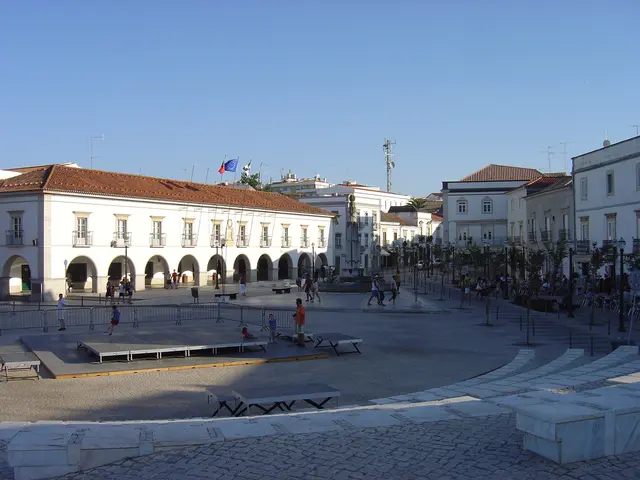
Tavira's main square looks thoroughly modern, but it sits on the seam between the Moorish walled town and the river. A horseshoe-arch gate stood nearby, and the octagonal Torre do Mar tower guarded the crossing until its demolition in 1883. After the 13th-century reconquest the square became Praça da Ribeira — the riverside market where fish, fruit and, for centuries, enslaved people were traded.
Renamed with each turn of Portuguese politics, it became Praça da República in 1910. Archaeologists still document finds here during every renovation — the first layer of a town built on layers.
- 90 m
Chapter 2
A Chapel Against the Wall
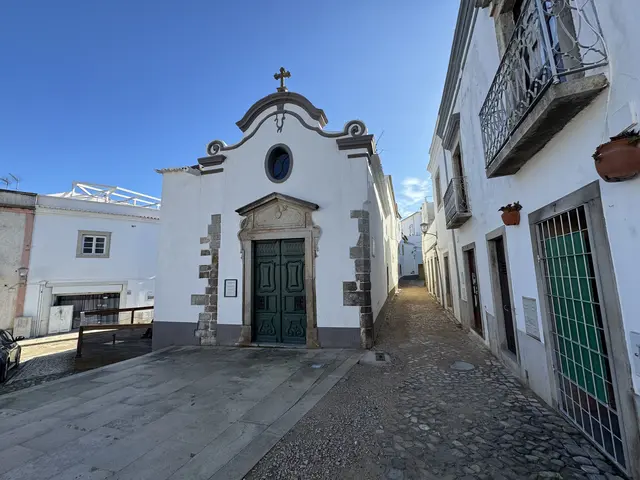
Built in 1758, three years after the great Lisbon earthquake, this small Baroque chapel was raised against the old castle wall by a lay brotherhood of local families. Above the door, a curved pediment and an oval oculus frame a sculpted flaming heart pierced by a dagger — the emblem of Our Lady of Piety. Inside, a gilded Rococo altarpiece glows in the plain nave.
The chapel also holds a quiet archaeological lesson: during a 1980s renovation, a gravestone lying before the altar was removed and lost. History vanishes in small ways as well as large ones.
- 110 m
Chapter 3
The Dig That Rewrote Tavira
Between 1998 and 2004, systematic excavations on Santa Maria hill rewrote Tavira's early history. Beneath the medieval town, archaeologists exposed a Phoenician settlement of the 8th century BCE: city walls up to 9.5 metres thick, stone-and-adobe houses, metal workshops, and pottery blending local and imported styles.
The finds are strikingly specific — a rare graffito in Phoenician script, a sacred betyl stone, even an ostrich eggshell from North Africa. Sediment studies explain the ending: by the 5th century BCE the harbour silted up, and the town fell silent.
- 70 m
Chapter 4
Wells of Baal, Floors of Glass
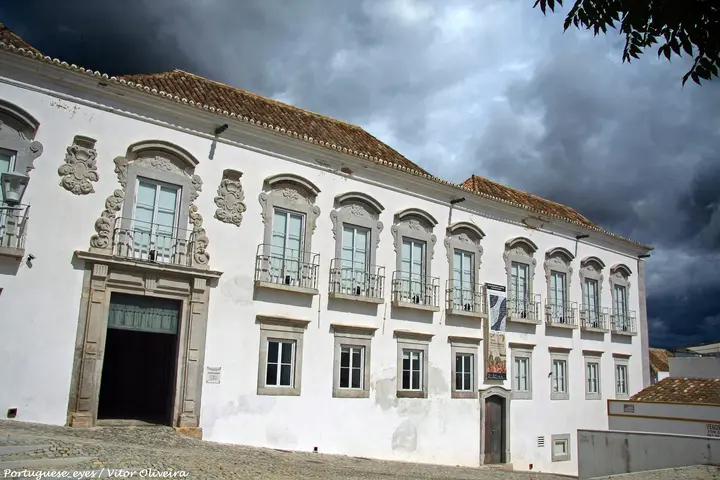
Palácio da Galeria is Tavira's municipal museum — and its own best exhibit. Excavations beneath the atrium revealed ritual wells dug by Phoenician settlers in the 7th century BCE, thought to honour Baal, storm god of sailors. Glass floor panels now let visitors look straight down into them.
The building above is a palimpsest: Gothic doorways from a medieval noble house, a 16th-century Renaissance gallery of arches that gave the palace its name, and a Baroque remodelling of around 1745 by Diogo Tavares de Ataíde. After lives as court, school and social club, it reopened as a museum in 2001.
- 80 m
Chapter 5
Reading the Ruins
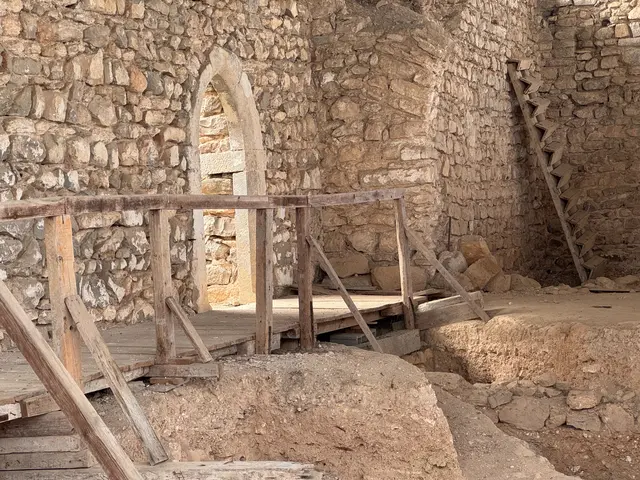
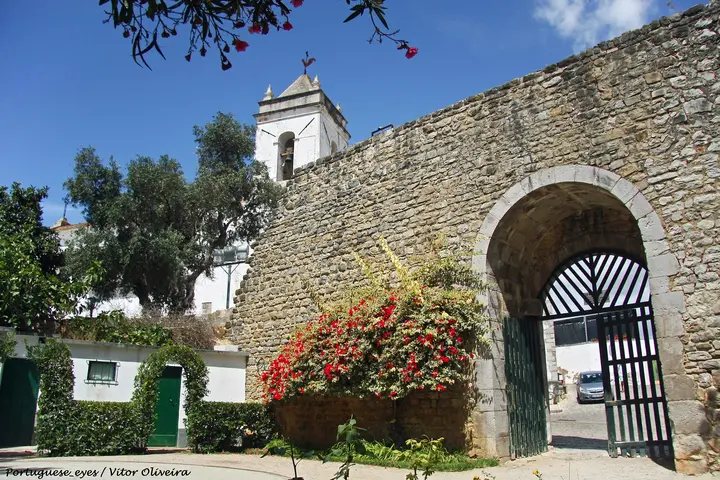
The castle tells archaeologists as much by absence as by presence: no pre-Islamic fortress has ever been found here, and the evidence shows substantial building began only in the 11th century, under Moorish rule. The Almohads raised walls of rammed earth — taipa — and the octagonal albarrã tower that still stands.
The ruin has its own afterlife. After the 1755 earthquake, fallen stones were carried off into town buildings, and in the 1800s the grounds served as a cemetery. Modern conservators chose to stabilize rather than reconstruct — letting the damage itself remain legible.
- 150 m
Chapter 6
History Under Glass
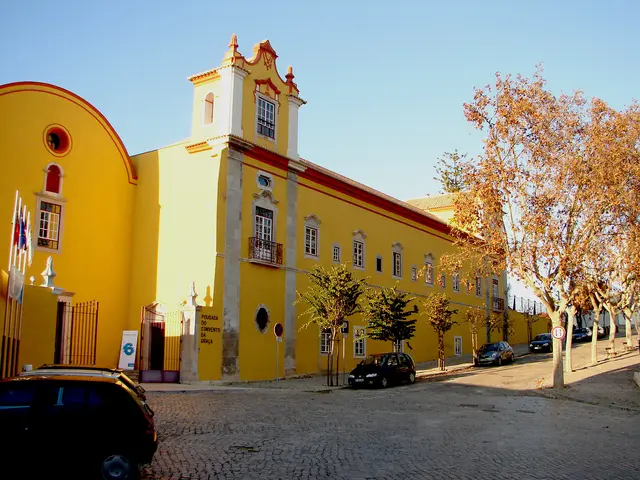
The walk ends beneath a hotel. Pousada Convento Tavira occupies the Convent of Nossa Senhora da Graça, founded in 1569 by King Sebastião on ground that had held the town's Jewish quarter until the expulsion of 1497. From 1837 the convent served as an army barracks for over 150 years.
When the building was restored as a historic inn, opened in 2006, archaeologists uncovered a 12th-century Moorish quarter beneath it, with artifacts reaching back to the 7th century BCE. The Almohad houses now lie under glass in the hotel bar — Tavira's layers, made visible at last.