©José Barreiro (2011)
©Flemming Berthelsen (2025)
©Flemming Berthelsen (2025)
©CC BY 2.0 (2017)
©<a href=https://www.flickr.com/photos/91241612@N00\>Jérôme Bon</a> (2009)
©Elisete Reis
(2011)
©Elisete Reis
(2011)
©Flemming Berthelsen (2025)
Pousada Convento Tavira
Introduction
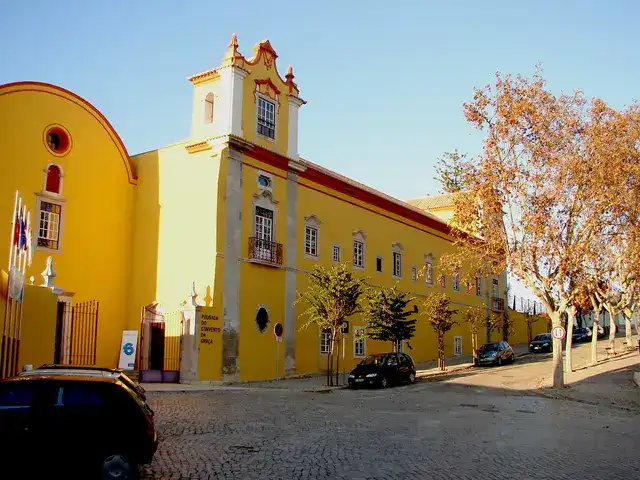
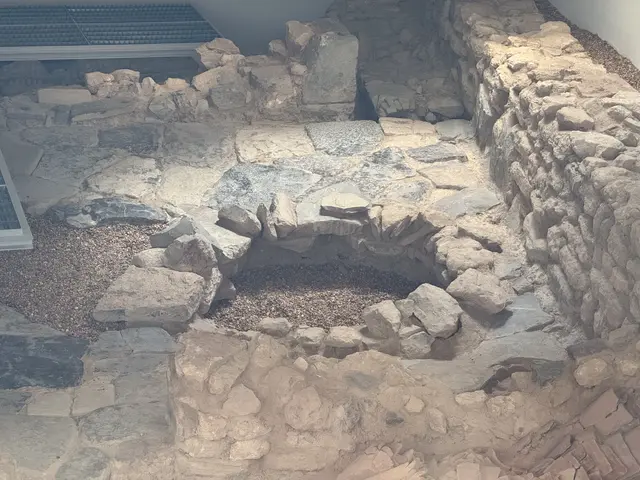
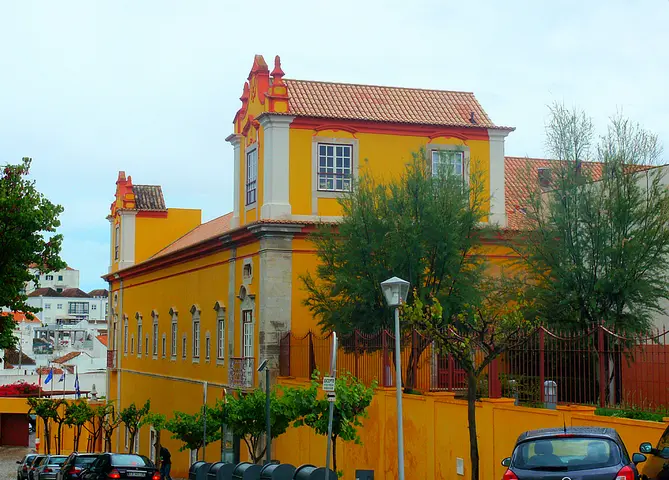
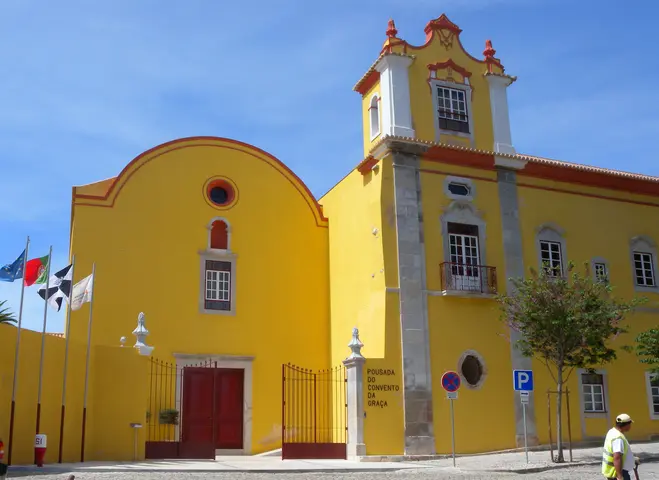
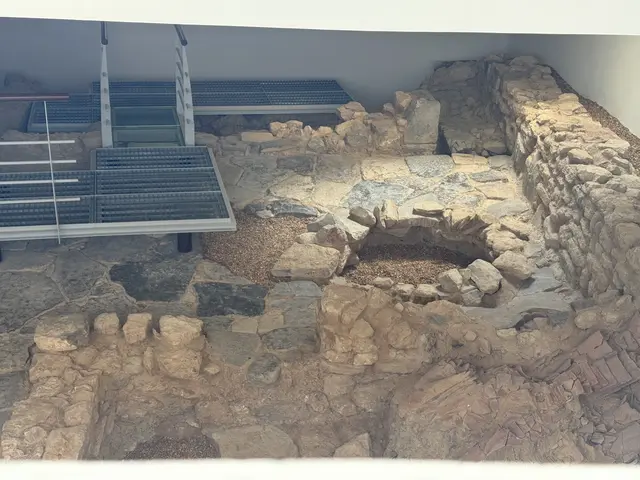
For almost three hundred years the hotel on the hill by the castle was a monastery of Discalced Augustinian friars, and before that Tavira's synagogue stood here. The friars were given the abandoned judiaria in 1542 and turned the synagogue into a church; the monastery itself was only begun in 1568-69. The facade with the two towers dates from the 18th century and is the largest baroque work in town. From 1839 the building was a barracks, and in 2006 it opened as the Algarve's first historic pousada. During the conversion the municipal archaeologists found a Moorish residential quarter from around the year 1200 and three urn graves from the Iron Age. Part of the quarter is on display by the bar, so you can see what the friars built on top of.
Historical highlights
The synagogue that became a church
In the 15th century Tavira's synagogue and Jewish quarter lay here inside the walls. In 1497 D. Manuel ordered the synagogues converted, and the quarter stood empty until the Discalced Augustinians were given it in 1542. Fr. Pedro de Vila Viçosa settled by a well that still exists inside the monastery wall, and "da esnoga fez igreja": out of the synagogue he made a church. The monastery itself was only begun in 1568-69, because no one could agree on the site. D. Sebastião gave 200 cruzados in 1573, and in 1598 the monastery, according to the bishop, was still "se vai fazendo", in the making.
The prior who was burned
The monastery's best-known name belongs to the time before the building work. Fr. Valentim da Luz came to Tavira in 1558 and became prior in 1560. In May 1562 he was burned at an auto-da-fé in Lisbon; a later account says the sentence was for Lutheran heresy. At that point not a stone had yet been laid of the monastery you are standing in front of.
Cloister and tower facade
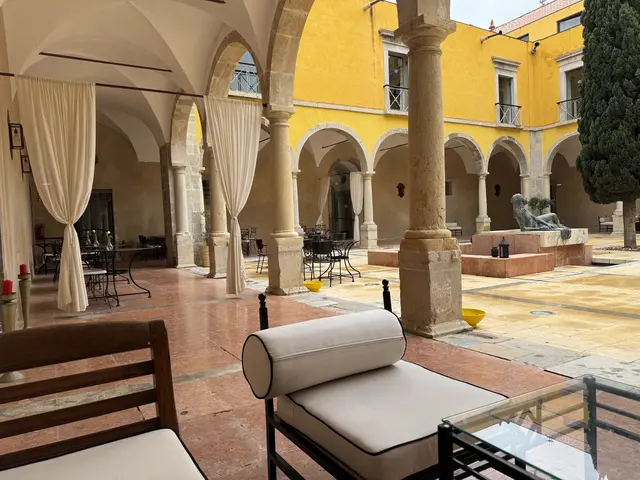
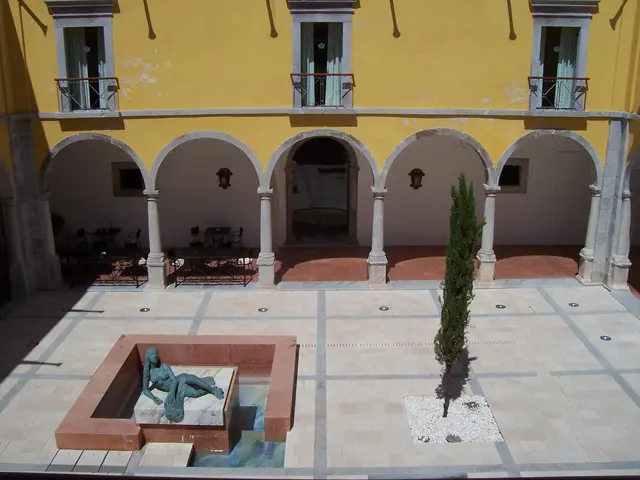
The church is a single nave with chancel in estilo chão, the plain style, one of the first in the Algarve. The cloister is square Renaissance with round arches on Tuscan columns. By the mid-18th century it was in decay, and the friars rebuilt in stages: in 1749 the cloister, which got a vaulted ground floor and a new monumental staircase; in 1758-78 a new dormitory and portaria. The dormitory is the facade you see today, two towers flanking a lower central section and large windows with carved surrounds. The drawing came from Lisbon, and the work is linked to the master builders Diogo Tavares de Ataíde and Bento Correa.
Soldiers, then archaeologists
The religious orders were dissolved in 1834. In 1837 or 1839 the Batalhão de Caçadores n.º 5 moved in, the building was known from then on as Quartel da Graça, and the church became a stable. From 1904 the monastery was a depot and the church a garage. The municipality bought the building in the 1990s and handed the running of it to ENATUR for 50 years. The town's archaeologists Jaquelina Covaneiro and Sandra Cavaco excavated here in 2002-06: around 35,000 sherds, an Almohad residential quarter from around the year 1200 and three urn graves from the 7th century BC. The pousada opened on 24 June 2006 with 36 rooms, some of them in the old friars' cells.
Practical
The Bairro Almóada is next to the hotel bar and can be seen free of charge by arrangement; the display shows parts of two houses and imported ceramics from the 14th to the 16th century. In the cloister, look for the 16th-century character of the ground floor, which the 1749 rebuilding left standing, and for the gate to the hospedaria with the order's arms in the tympanum, Diogo Tavares' hallmark.
Timeline and context
Timeline
- 7th century BC Three cremation graves in urns, interpreted as Phoenician.
- c. 1200 Almohad residential quarter on the hill.
- 1497 D. Manuel orders the synagogues converted; the judiaria is abandoned.
- 1542 Fr. Pedro de Vila Viçosa founds the monastery in the empty judiaria; the synagogue becomes a church.
- 1562 Prior Valentim da Luz is burned at an auto-da-fé in Lisbon.
- 1568-69 Building work begins; D. Sebastião gives 200 cruzados in 1573.
- 1598 The bishop reports to the pope that the monastery is still under construction.
- 1749 The cloister is rebuilt; new monumental staircase.
- 1758-78 New dormitory and portaria; the tower facade.
- 1834 The religious orders are dissolved.
- 1837/1839 Batalhão de Caçadores n.º 5 moves in; Quartel da Graça.
- 1990s The municipality buys the building from the state.
- 2002-06 Excavations and conversion into a pousada; opening on 24 June 2006.
- 2012 Monumento de Interesse Público.
Why the monastery is here
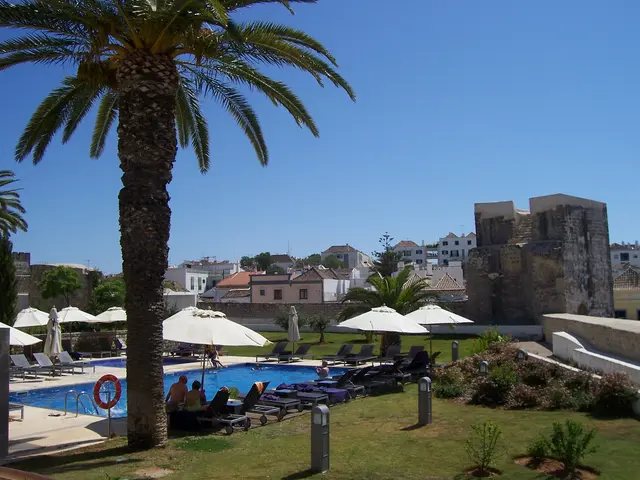
The friars did not choose the site. They were given it. The judiaria inside the walls stood empty after 1497, and an abandoned synagogue was a church no one needed to build. The order was young in Portugal after the reform of 1535 and growing, and it built where there was room: on the hill by the castle, side by side with Santa Maria do Castelo and Santiago, with the town wall as the monastery's own wall. That the brothers disagreed about the site for more than twenty years before they broke ground shows that the choice was not a given.
What you are standing on
When the friars built, they levelled what had been there before: the Almohad quarter and the judiaria were filled in and flattened. That is why the site's oldest layers lie under the floor and not in the walls. Above ground you see three periods: the 16th-century church and cloister, the 18th-century facade and staircase, and the 21st-century hotel. By the bar you see what the friars covered over. There is a neat irony in the monastery being preserved as a barracks, and in its best finds being made because it was to become a hotel.