Tavira
Roman Bridge (Ponte Antiga)
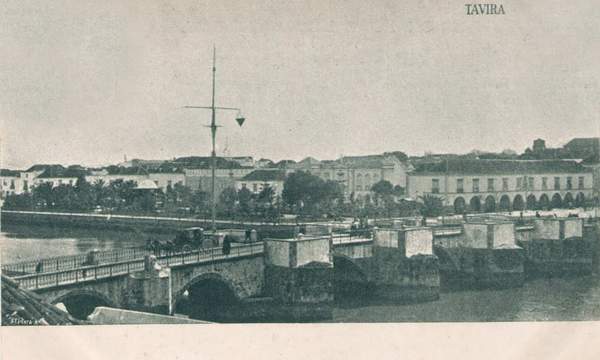
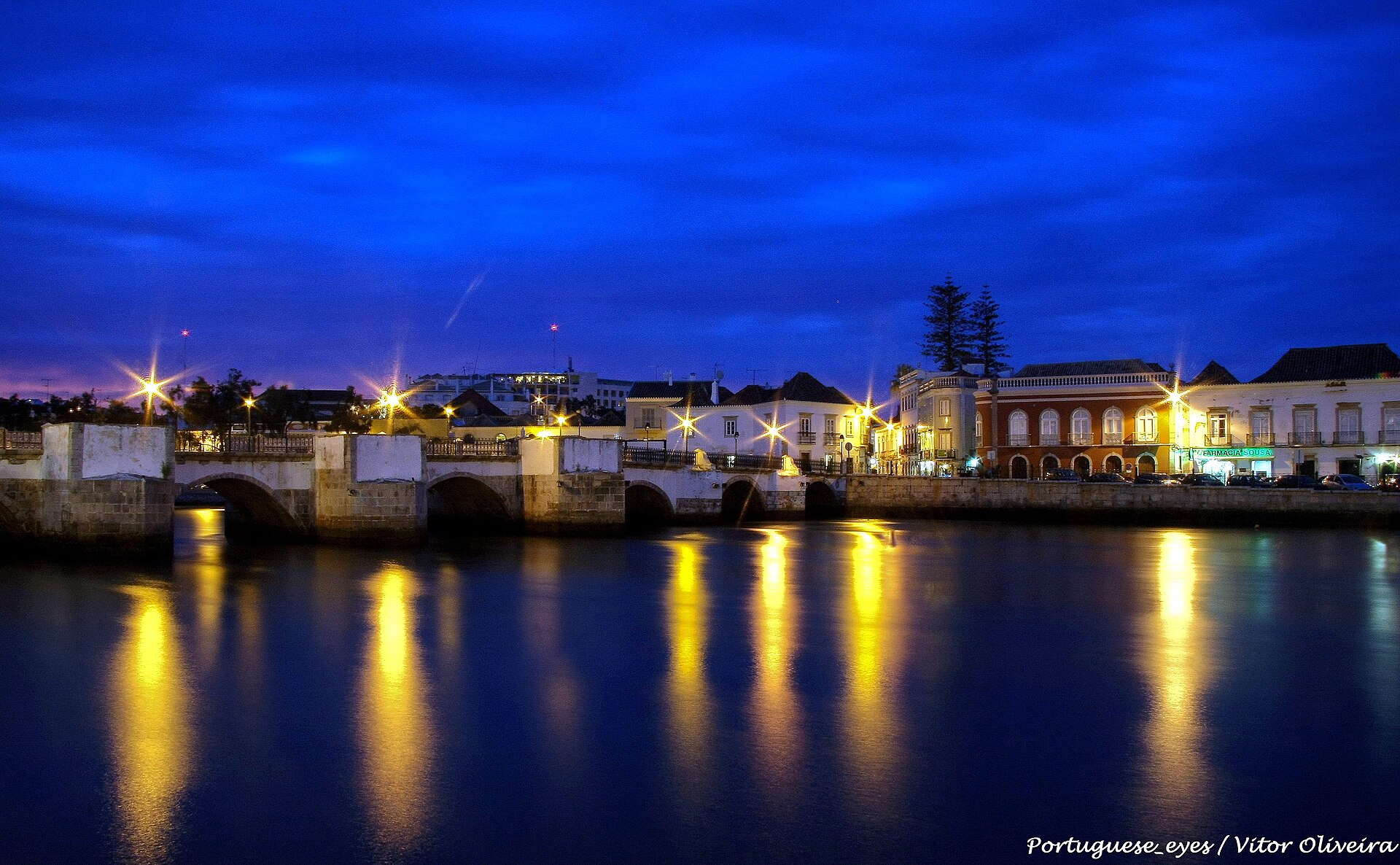
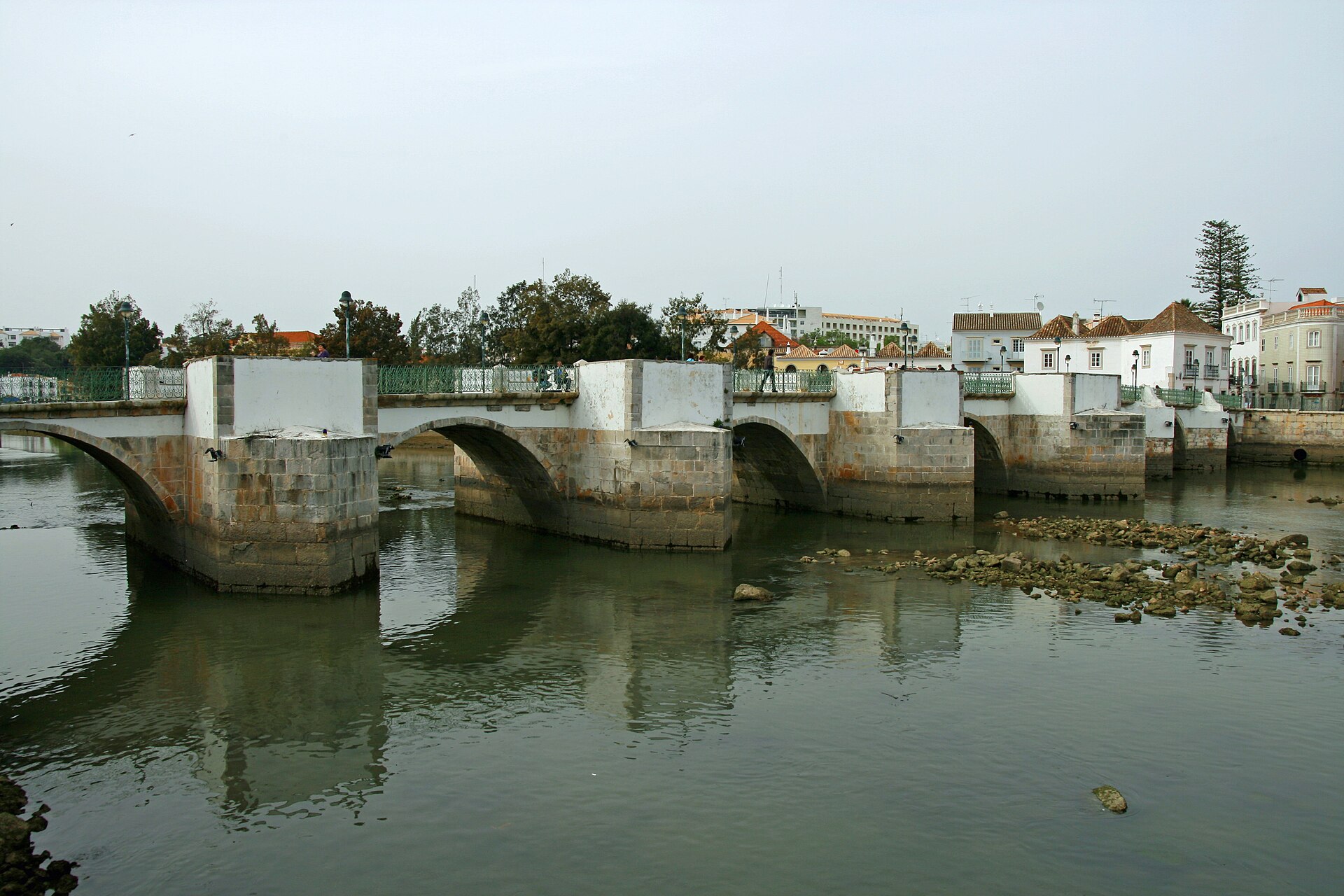
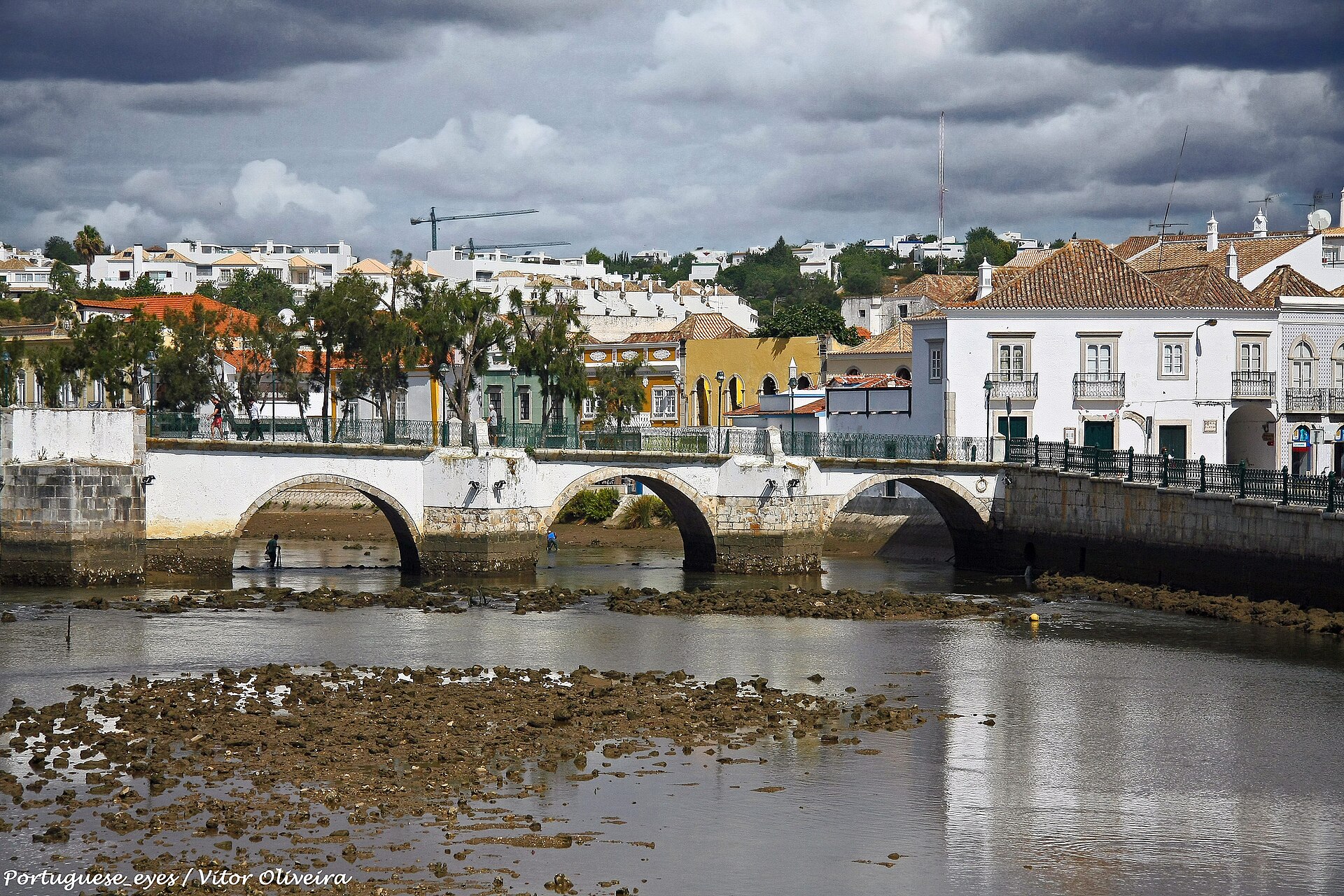
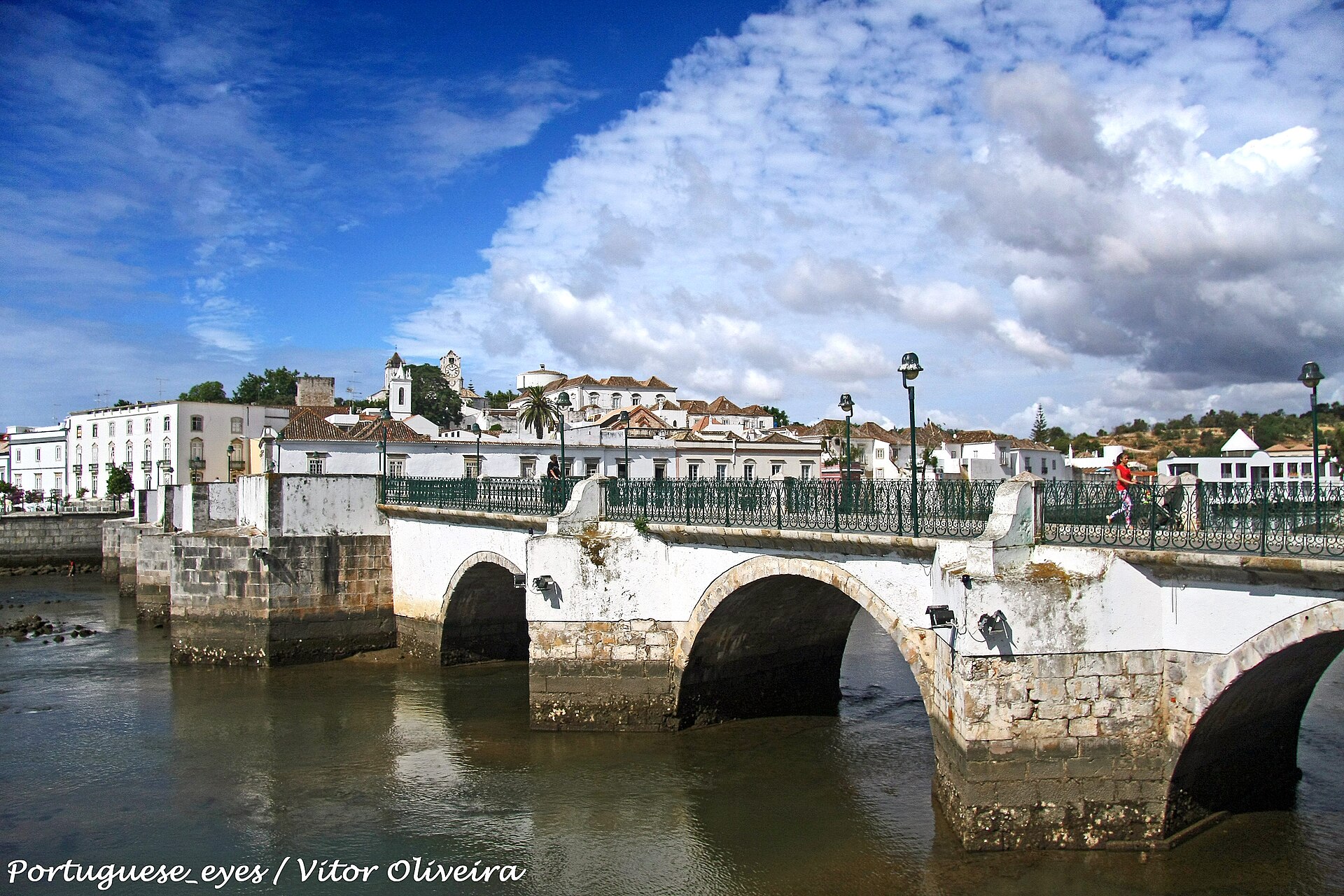
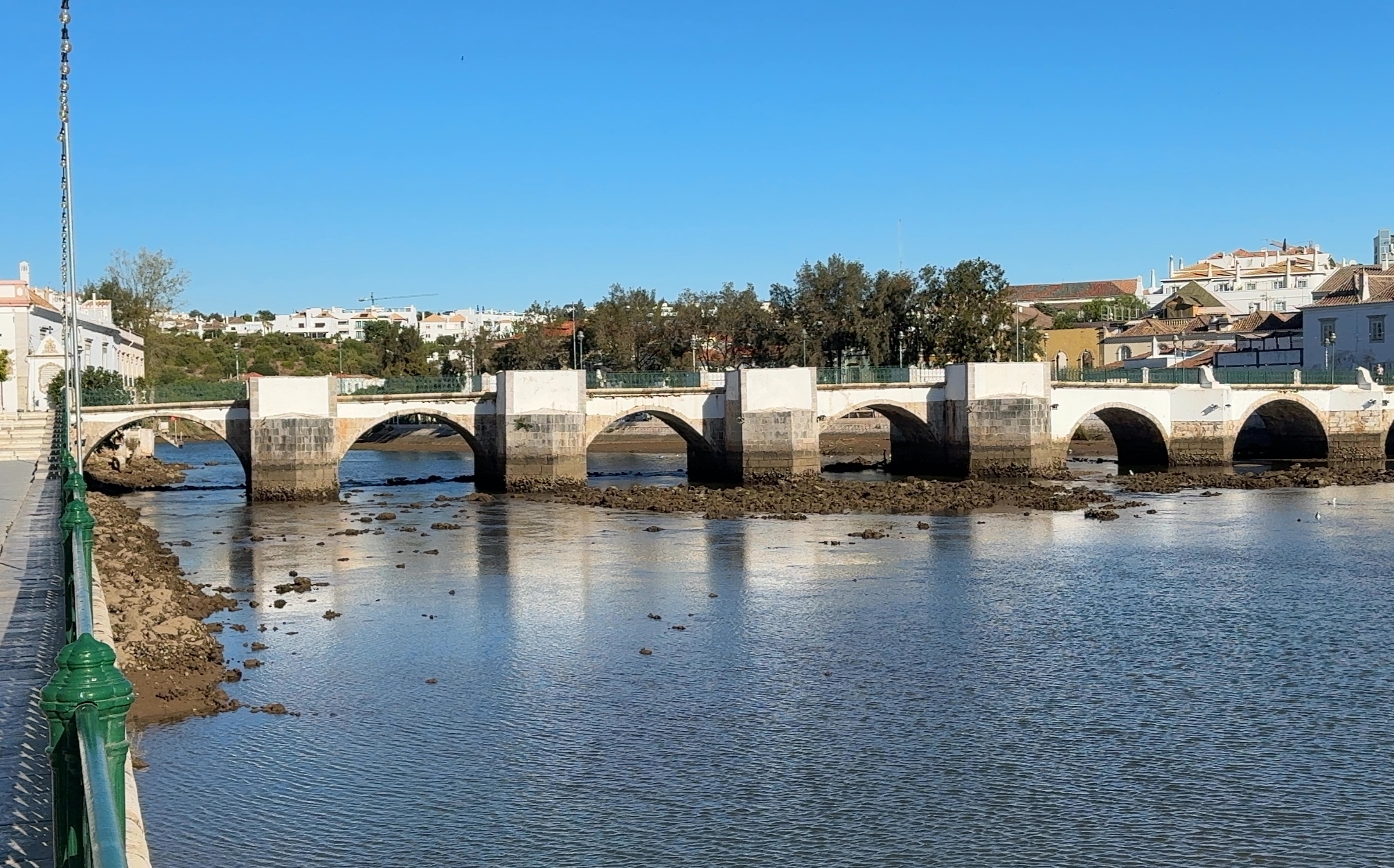
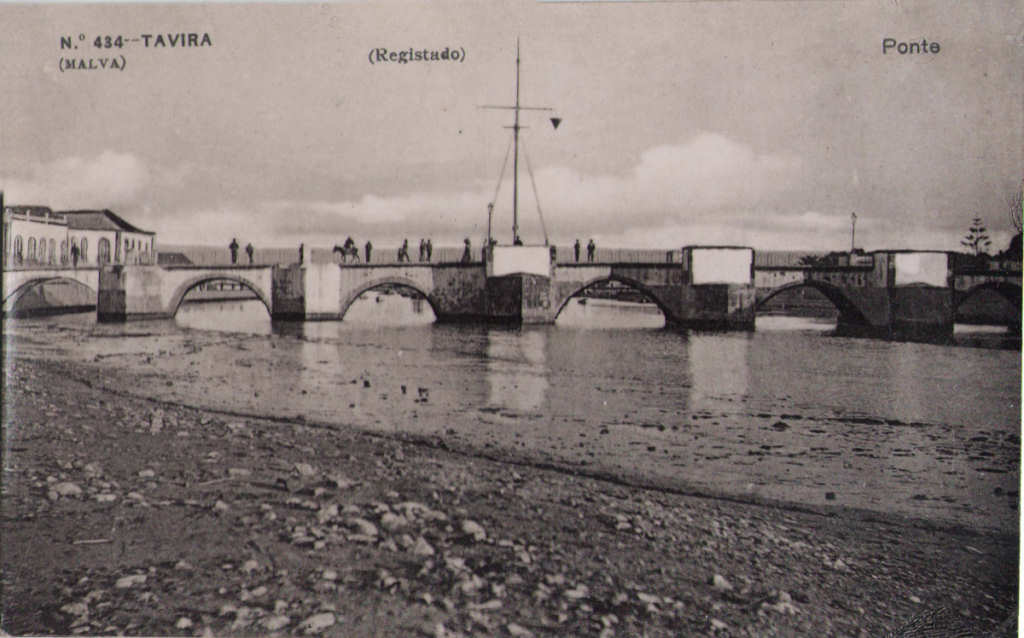
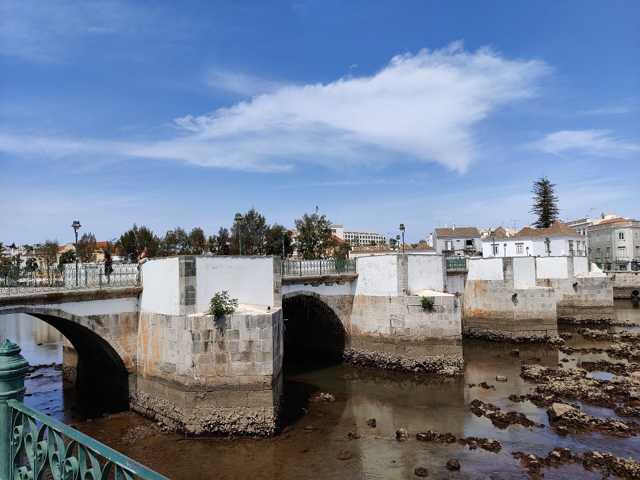
Seven arches over the Gilão, called Roman without evidence; rebuilt 1655-57 and after the flood of 1989.
Periods
Tags
Opening hours
Freely accessible The site is in the public space and can be visited at any time.
Introduction
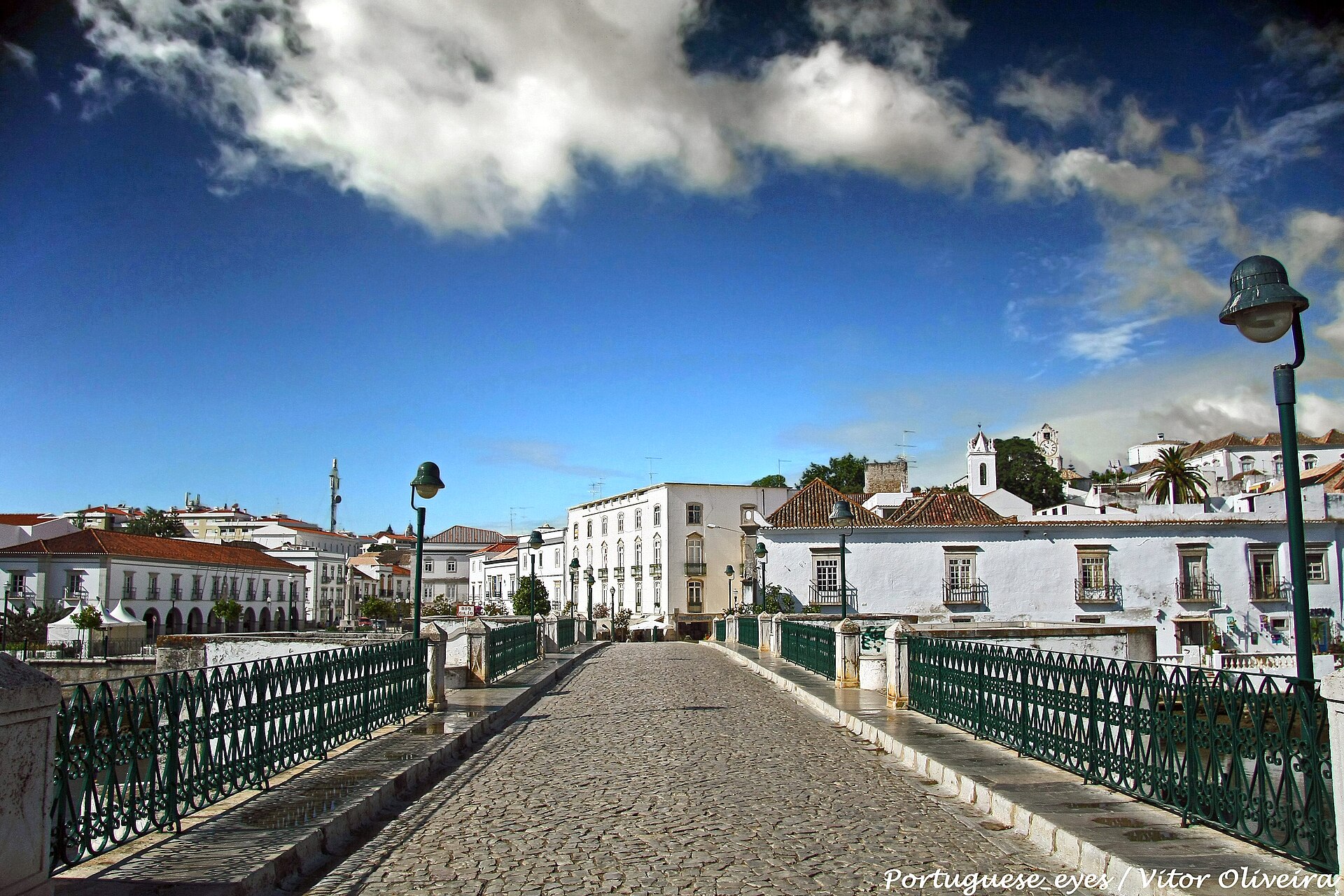
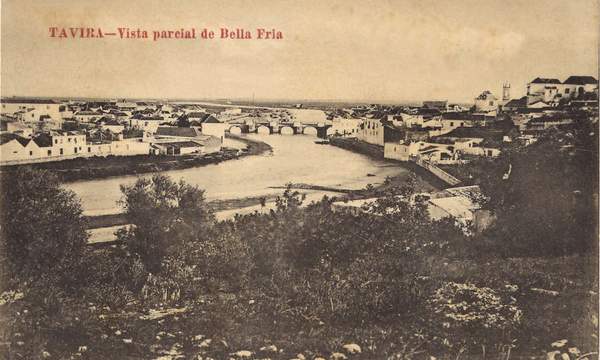
Everyone calls it the Roman bridge. No source can confirm it. The oldest thing that can be documented is medieval, and the bridge has been rebuilt several times, most recently after the flood on the night of 3 December 1989 destroyed a cutwater and two of the arches. Seven arches, 86 metres, pedestrians only. It is still the town's front door. It links the two banks of the Gilão, and the geographer Orlando Ribeiro called Tavira the only Portuguese town born at a ford that has spread across both banks without losing its unity. The bridge is the reason.
Historical highlights
Roman in name
The Romans had a road along the coast and the town of Balsa west of Tavira, so it is tempting to think they had a bridge here too. No historical source confirms it. The oldest firm evidence is from the 13th century, when the chronicle of the conquest of the Algarve mentions the bridge, and the historian Daniel Santana thinks it may have been built in the 12th century, after the castle had secured the ford. The name has stuck because the story is better than what we know.
Towers and houses on the bridge
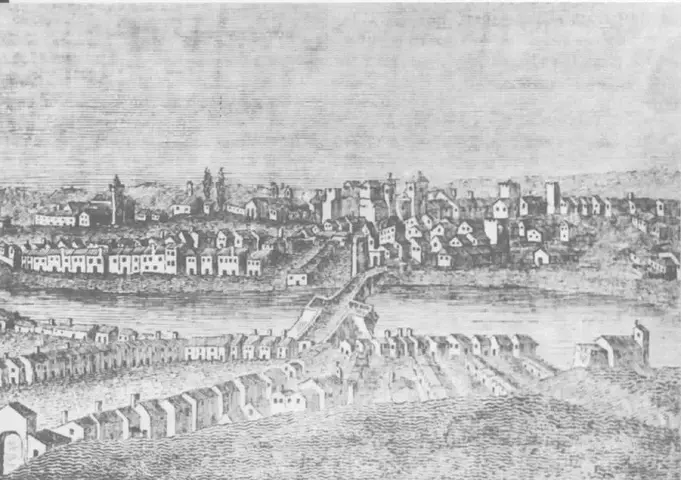
In 1600 the chronicler Henrique Fernandes Sarrão noted that there were houses on the bridge where people lived. At the western end stood the Torre do Mar, an octagonal Moorish tower in the town wall below the Santa Maria hill, and another tower formed a pair with it; Carvalho da Costa described in 1712 "a handsome bridge with seven arches and its towers". In 1763 the town's main guardhouse was built against the tower. The guardhouse was demolished from 1870 and the tower in 1886 to make room for a promenade that never came. The bridge is still in the town's coat of arms; it is on the title page of the Foral Novo of 1504.
The river takes, the town builds
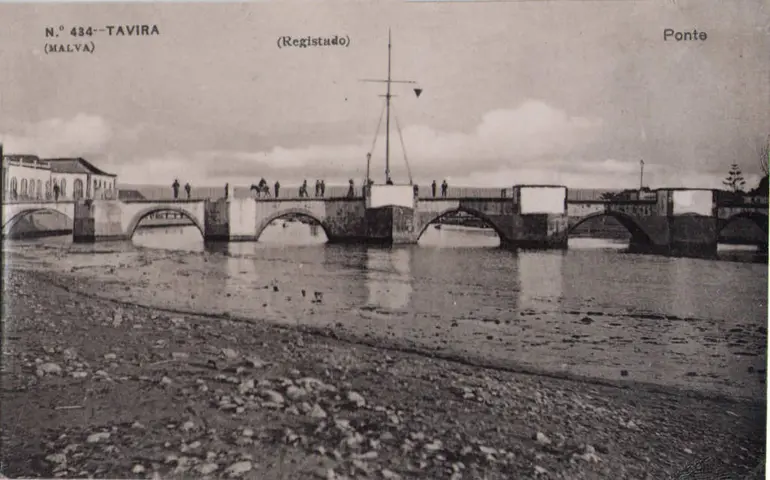
In 1655 the bridge collapsed from one of the southern arches. In July of the same year the contract for the rebuilding was signed in Lisbon, the court sent the architect Mateus do Couto and the French engineer Pedro de Santa Colomba, three master masons from Lisbon got the work for 8,500 cruzados, and the stone came from a quarry just upstream and from the town walls. The work was finished in 1656-57; four of the seven arches date from then, and Couto replaced the old central section with an arch. After that the bridge held for three hundred years. On the night of 3 December 1989 the river burst its banks, a cutwater was almost completely destroyed, and arches four and five were so badly damaged that they had to be rebuilt. For five days the town was cut in two; the army laid a pontoon bridge, and from 1990 a military bridge stood by the market for thirty years. Emergency shoring came in 1991, the project in 1992, and by early 1993 the bridge was back, now for pedestrians only.
Séqua and Gilão
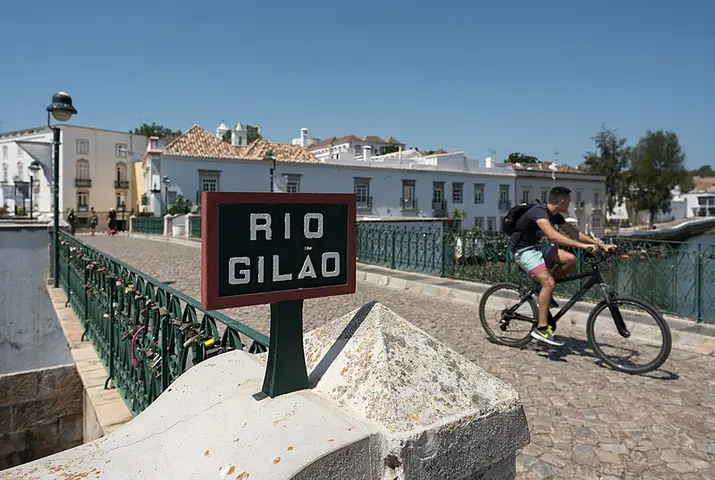
The river is called the Séqua upstream of the bridge and the Gilão downstream. Legend explains it with the Christian knight Gilão and the Moorish princess Séqua, who were discovered on the bridge by the two armies and leapt into the river, each to their own side, she upstream, he downstream. There is no historical basis for it, but it is the explanation you get in town.
Practical
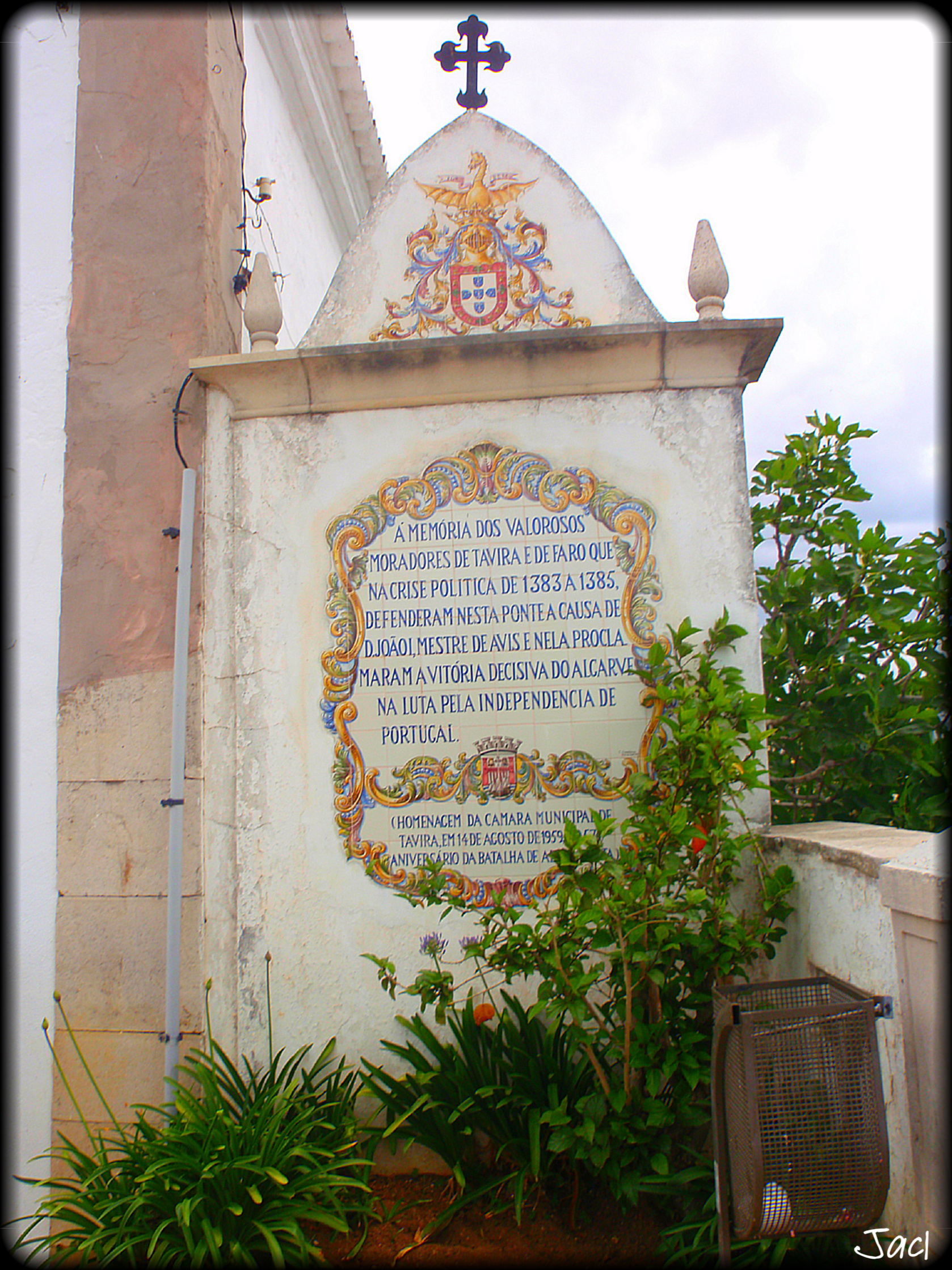
Stand in the middle of the bridge late in the day, when the sun hits the facades on the eastern bank, and look down the Gilão towards the lagoon. At the entrance to the bridge an azulejo panel commemorates the battle on the bridge during the succession crisis of 1383-85. Leonardo de Ferrari's plan of Tavira from 1655, with the bridge and the tower on it, can be seen in the app's time travel map.
Timeline and context
Timeline
- 12th century Possible first bridge, after the castle has secured the ford.
- 13th century The bridge is mentioned in the chronicle of the conquest of the Algarve.
- 1383-85 Battle on the bridge during the succession crisis.
- 1501 The residents "on the other side of the bridge" ask Manuel I for a parish of their own.
- 1577 Frei João de São José describes the town as divided in two "like Rome or Seville", joined by the bridge.
- 1600 Sarrão notes inhabited houses on the bridge.
- 1655-57 Collapse and rebuilding under Mateus do Couto and Pedro de Santa Colomba; four arches.
- 1763 The town's main guardhouse is built against the Torre do Mar.
- 1870 and 1886 The guardhouse and the Torre do Mar are demolished.
- 1966 A new bridge at Asseca relieves the old one; car traffic ends later.
- 1986 Listed as Imóvel de Interesse Público.
- 3 December 1989 A flood destroys a cutwater and two arches.
- 1991-93 Emergency shoring and rebuilding; pedestrians only from then on.
A town on both banks
Most Portuguese river towns grew up on one bank and only late got anything on the other. Tavira is different. Already in 1501 the suburb on the other side of the bridge was large enough to ask the king for its own parish, and in 1577 Frei João de São José wrote that the town is divided in two like Rome or Seville and has its bridge, which the residents cross without trouble. Orlando Ribeiro called Tavira the only Portuguese town born at a ford that has spread across both banks without a break in its unity. That takes a bridge you can rely on. Every time the bridge has fallen it has been built up again, not because it is beautiful but because the town does not work without it.
"Roman" as a mark of quality
Portugal has many "Roman" bridges that are not. Some are, like the Ponte de Trajano in Chaves with its inscriptions. Tavira's has grown in layers: three arches with small cutwaters, which may be older, four arches from 1655-57 with heavy ones, and a reinforced concrete core from 1992. You can see it if you look at the masonry from the riverbank; the stones change character from arch to arch. It is a more interesting bridge than the Roman one it perhaps never was.