The 1755 earthquake reached Tavira too. Follow the traces of rebuilding from the town hall arcades to the barracks and the chapel where the town found its footing again.
Chapter 1
Where the Rebuilding Began
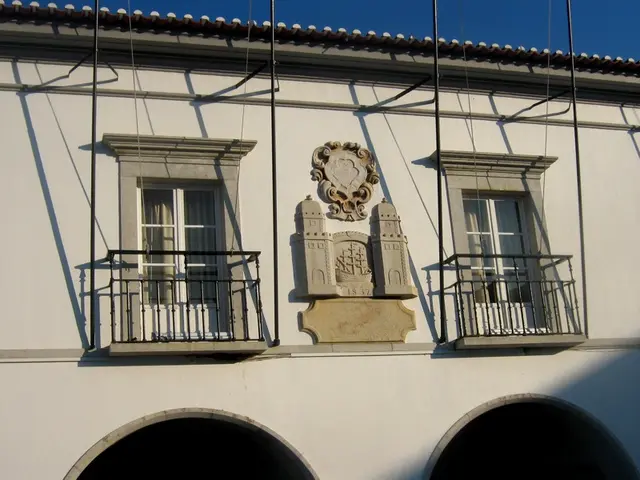
In 1755 the great Lisbon earthquake shook the Algarve — and Tavira with it. The Town Hall, whose arcaded façade dated to the town's 16th-century golden age as a port, was devastated along with much of the town.
Yet out of disaster came renewal. Tavira served as the Algarve's temporary capital in the 1760s and 70s, and the Town Hall was rebuilt in the sober Pombaline style: robust arches, whitewashed walls, wrought-iron balconies and a stone coat of arms. This is where the story of the rebuilding begins.
- 120 m
Chapter 2
A Chapel Built in Gratitude
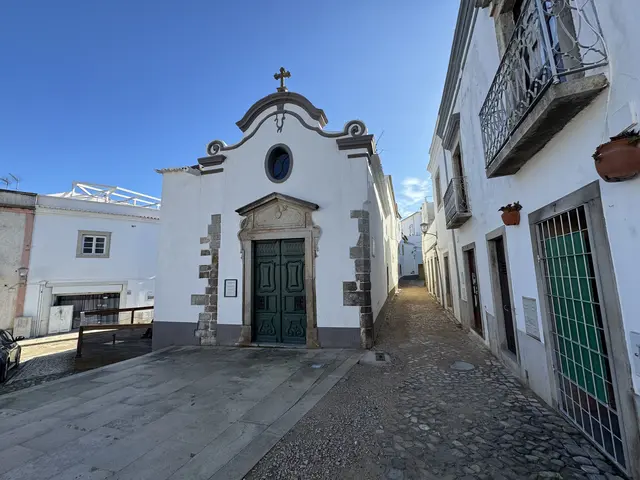
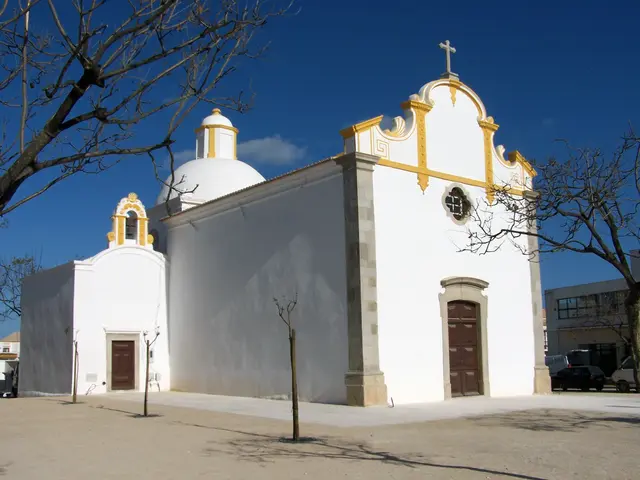
Three years after the earthquake, in 1758, this small Baroque chapel rose beside the old castle walls, near the medieval town gate. A lay brotherhood of local inhabitants pooled its resources to dedicate the space to Our Lady of Piety — an act of gratitude and renewed faith in the middle of recovery.
Above the door, a sculpted relief shows a flaming heart pierced by a dagger, the symbol of Mary's sorrow. Inside, a gilded Rococo altarpiece frames a painting of the Virgin cradling Christ — a jewel-like focal point in an otherwise simple nave.
- 280 m
Chapter 3
The Doorway That Survived
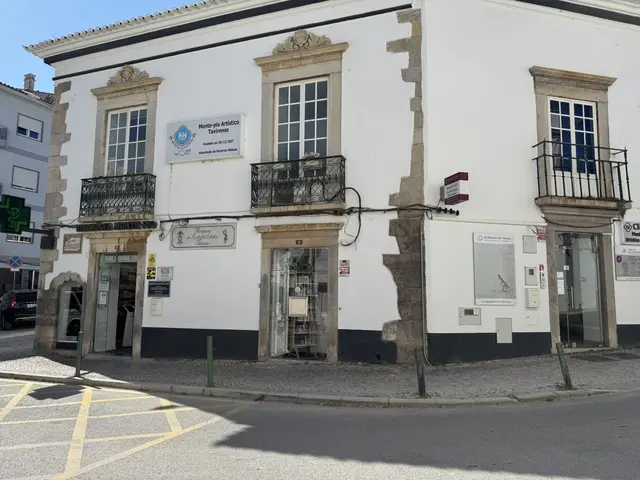
The doorway of this building is far older than the earthquake. Its Manueline portal, with rope-like stone mouldings, was carved in the early 1500s, when Tavira flourished as a Renaissance trading port. It survived 1755 — and when the house was remodelled in the 18th and 19th centuries, the builders kept it.
The rest of the façade tells the story of the rebuilt town: neoclassical windows, white plaster walls, a terracotta roof. In 1857 local artisans founded a mutual aid society here, the Montepio Artístico Tavirense, whose pharmacy has cared for Tavirenses ever since.
- 210 m
Chapter 4
Barracks for a Garrison Capital
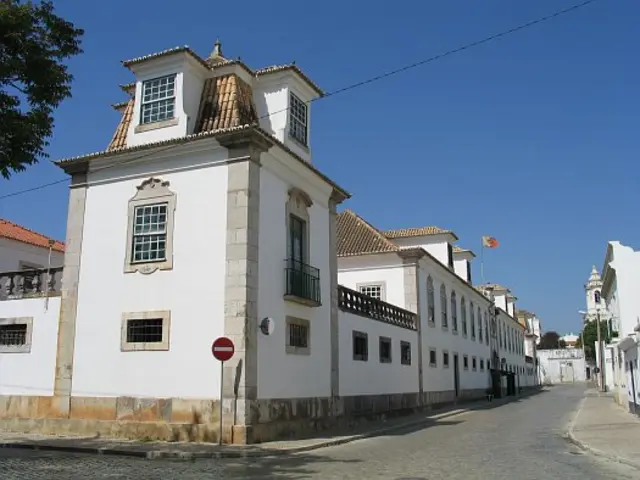
The earthquake did more than topple buildings — it shifted the Algarve's military focus to Tavira. In 1795, Queen Maria I ordered a great barracks built here at Quinta da Atalaia, on the edge of town. The name means watchtower.
Designed in the rational Pombaline style, likely by José de Sande Vasconcelos, the Quartel combined sturdy masonry, geometric planning and watchful corner towers. Tavira's infantry regiment trained here before marching against Napoleon's armies, and in 1897 King Carlos I came in person to honour its soldiers.
- 240 m
Chapter 5
Colour After the Catastrophe
This chapel is older than the disaster. Founded in the late Middle Ages as a sanctuary against plague, it was rebuilt in Baroque style in 1745 by master-builder Diogo Tavares de Ataíde — ten years before the earthquake struck.
Its glory, though, belongs to the recovery years. In 1759, painter Diogo de Mangino filled the chapel with ten canvases telling Saint Sebastian's life, framed by trompe-l'oeil marble and gilded angels. While the Algarve was still rebuilding, Tavira filled this small space with colour — a fitting place to end the walk.