Tavira
Mercado da Ribeira (The old market)
Tavira's first covered market, an iron hall from 1887; today shops and restaurants.
Periods
Tags
Opening hours
Freely accessible The site is in the public space and can be visited at any time.
Introduction
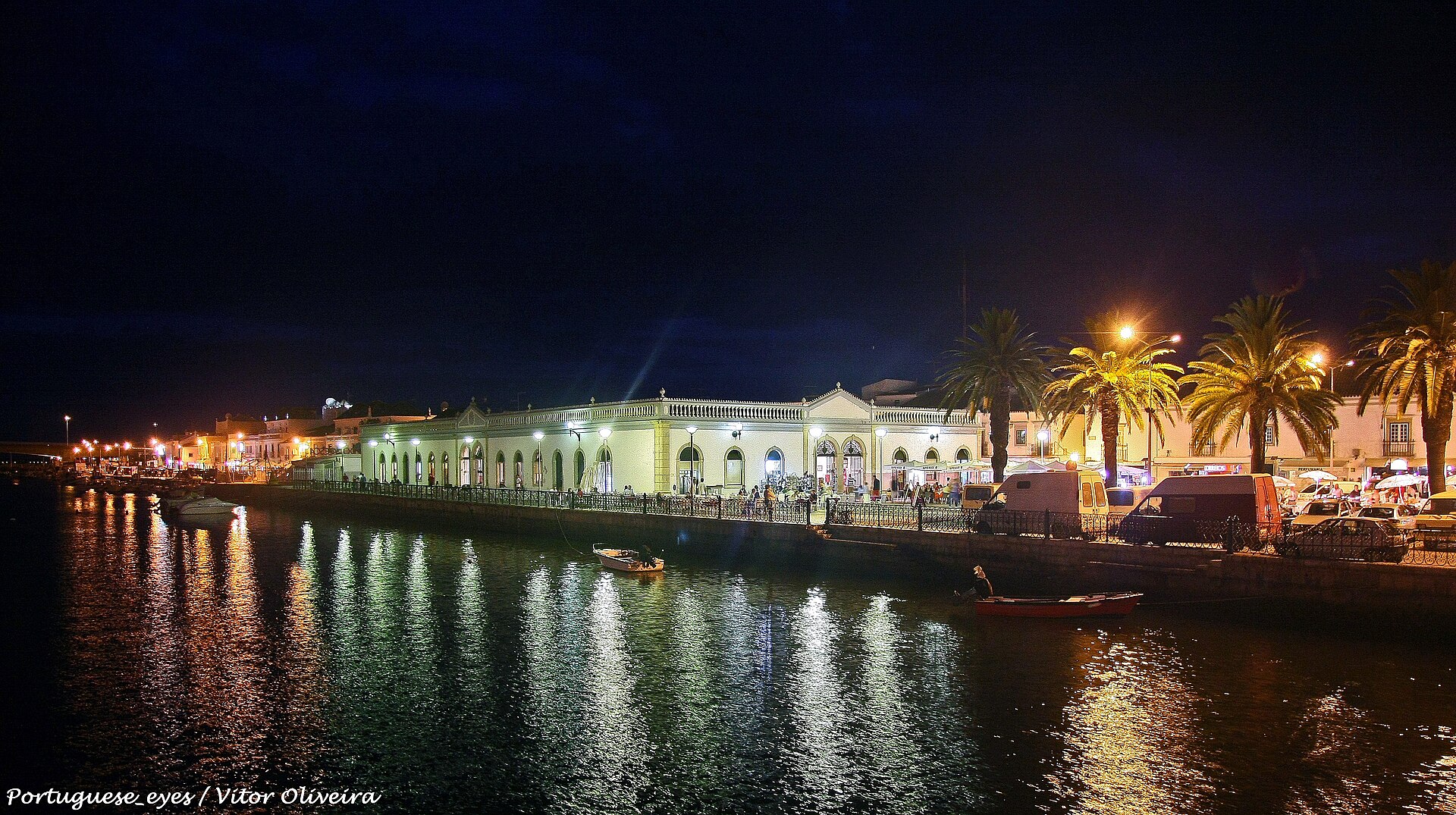
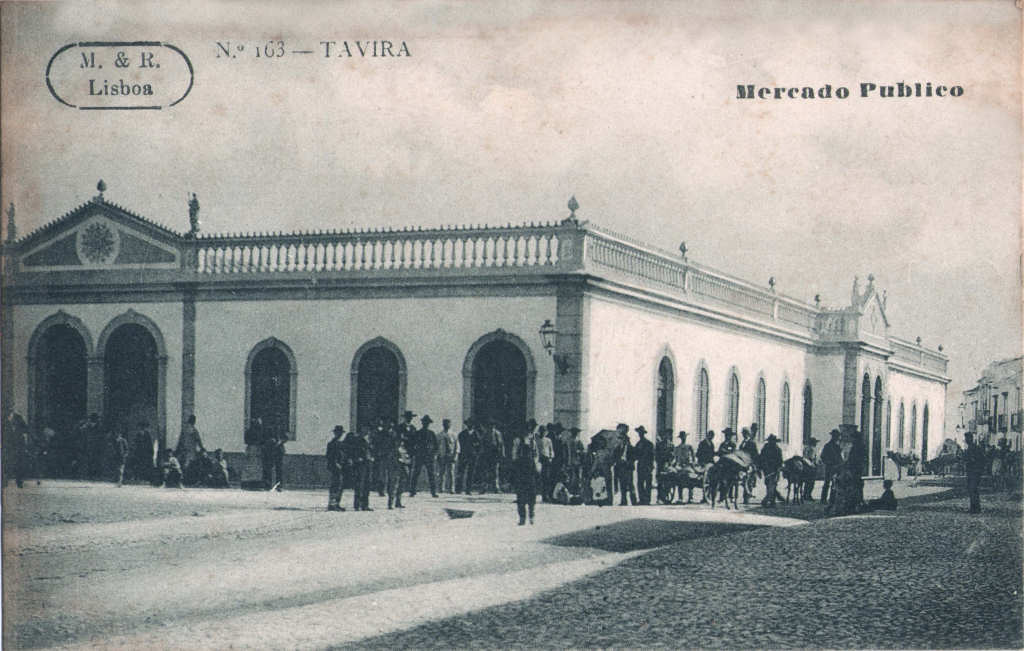
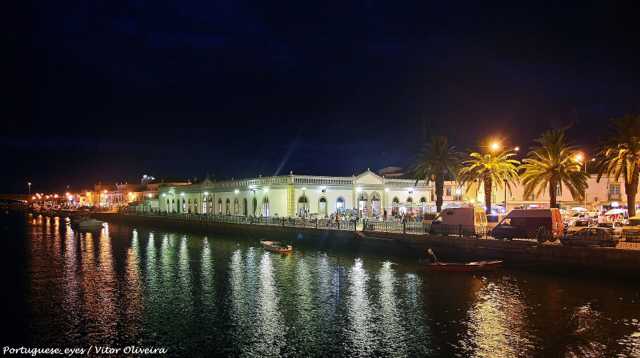
The low iron hall at the end of Jardim do Coreto is Tavira's first covered market. It was inaugurated on 30 June 1887 after two years of building and was a general food market, not a fish market; the fishing industry's own building, the Lota, stood next door to the east. Today the hall is called Mercado da Ribeira and holds shops and restaurants, and the courtyard is used for concerts. Trading moved in 1999, when the new Mercado Municipal opened. Look at the south gable before you go in. It carries the plaque "MM / INAUGURADO / EM / 1887", and the dark green cast-iron gates were made in town.
Historical highlights
Wooden stalls and a chapel that had to go
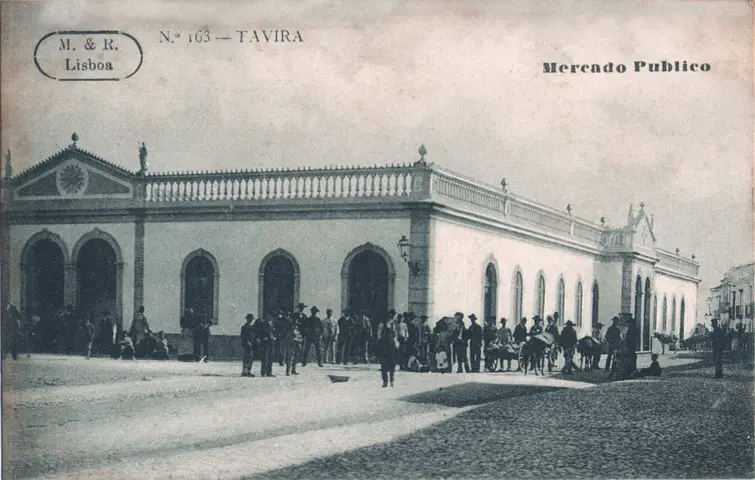
Before 1887, trading took place in wooden stalls. DGPC says on the square itself, Largo do Açougue dos Mareantes; the municipality says by the town hall and on Praça da Constituição, today's Praça da República. The problem was hygiene, and the answer was a covered market. The project dates from 1876, the site was chosen in 1879, and building lasted from 30 June 1885 until the inauguration on the same day two years later. It cost a chapel. Nossa Senhora do Loreto, from the 1500s, and some old harbour buildings were demolished to make room.
The iron hall
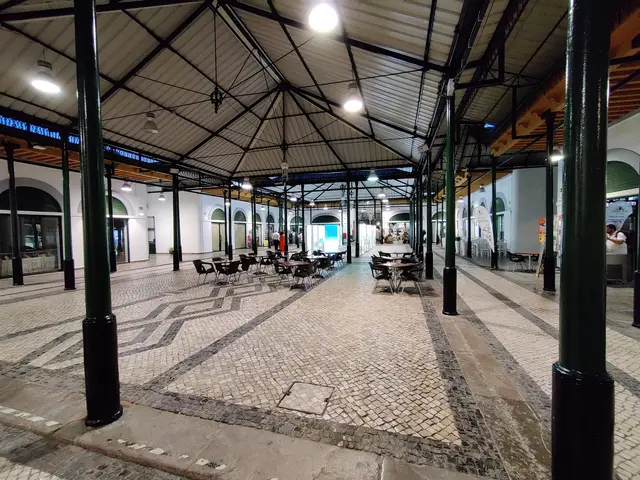
The hall is on one level on a low stone plinth. Inside, cast iron and timber carry a roof of tile and glass with a lantern that sends light down only into the aisles around the two iron pavilions in the middle. The main facade faces the garden to the west, with pilasters and a triangular pediment around a double round-arched gateway; the east gable, towards the Lota, is the plainest. The gates were made at Serralharia do Largo do Trem here in town. SIPA calls it an ordinary market of the kind Portugal built up to the 1950s.
Who designed it
It is unclear. SIPA and the municipality name infantry lieutenant José Inácio de Melo Pereira Vasconcelos; DGPC names architect António da Silva Meira, and a later account has Meira supervising the work and drawing the final version. Perhaps both. The hall belongs with the garden next to it. Garden, market and the fishing quarter to the east were the last stage of the 19th-century plan for the riverbank, and the coreto in the garden, cast in Porto, arrived in 1890.
From market to gallery
The market was in use until 1999, when the new Mercado Municipal opened on Avenida D. Manuel I. In July 1998 the municipality had signed an agreement with Instituto Superior Técnico for a plan for the building, and in 1999-2000 the hall was converted into shops and restaurants; the small rooms along the outer wall became shops, open both to the street and to the hall. It was never listed. The municipality asked for it in 2007, and in 2010 the case was shelved because the building has no national value. That is probably right. It is local, and that is the point.
Practical
Go in through the gate from the garden and look up. The light comes from the lantern above the two pavilions, and the floor is calçada portuguesa. Find the plaque on the south gable and the medallions "CM / 1887" in the fanlights of the arches. Feira da Dieta Mediterrânica, in 2026 from 3 to 6 September, uses the hall for gastronomic demonstrations, and the old Lota next door is a concert stage.
Timeline and context
Timeline
- 1876 Project for a covered market.
- 1879 The site is chosen, Largo do Açougue dos Mareantes by the river.
- 30 June 1885 Building starts; the chapel of Nossa Senhora do Loreto and old harbour buildings are demolished.
- 30 June 1887 Inauguration; the plaque on the south gable and the medallions "CM / 1887" date from then.
- 1890 The coreto in the garden next door, cast in Porto, is put up.
- 1990 The military bridge after the flood is placed by the market; it stays for thirty years.
- 1998-2000 Study by Instituto Superior Técnico; the hall is converted into shops and restaurants.
- 1999 New Mercado Municipal on Avenida D. Manuel I; trading moves.
- 2007 The municipality asks for listing.
- 2010 The case is shelved, "por não ter valor nacional"; the municipality formally closes it in 2017.
- 2013 The Mediterranean diet on UNESCO's list, with Tavira as Portugal's representative.
- 2013-14 The riverbank along Rua Dr. José Pires Padinha is restored.
- 2026 XII Feira da Dieta Mediterrânica, 3 to 6 September, with demonstrations in the hall.
Why the market is here
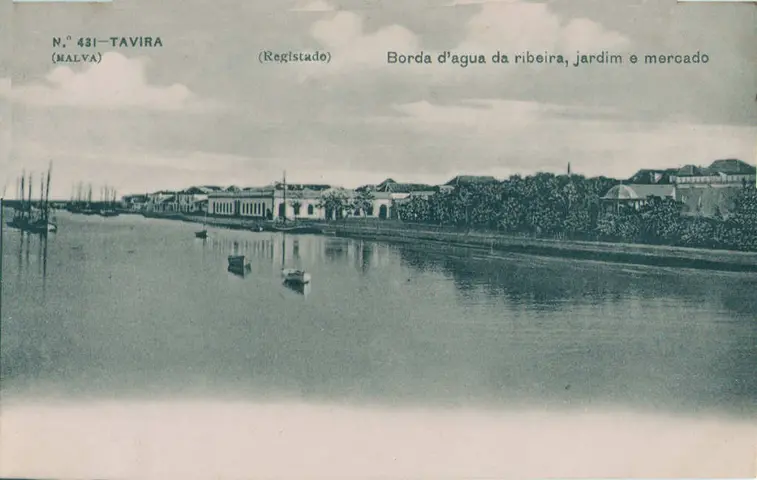
The riverbank was the town's workplace. The 19th-century plan for the right bank of the Gilão put the garden between the main square and the market, and the market between the garden and the fishing quarter with the Lota to the east. The fish came in right next door. That is also why the site was already built on, with harbour buildings and a chapel that had to be demolished. The low stone plinth is there; why, the sources do not say.
An ordinary market
SIPA calls it an ordinary market of the kind Portugal built up to the 1950s, and the state shelved the listing case in 2010 because the building has no national value. Both are true. But the hall is still here with its cast iron, its gates and its plaque from 1887, and because it became a gallery instead of being demolished, you can walk around a perfectly normal Portuguese town market as it looked when that kind of thing was built. That is more interesting than IGESPAR thought.