Medieval Tavira survives only in fragments: two vaulted chapels in the castle church, the Franciscan convent by the town garden, a sixteenth-century chapel in the hospital church and the portal of the Bernardas convent. Watch for pointed Gothic doorways along the way. Based on themes from Tavira's official historical guide.
Chapter 1
Gothic Bones Beneath the Baroque
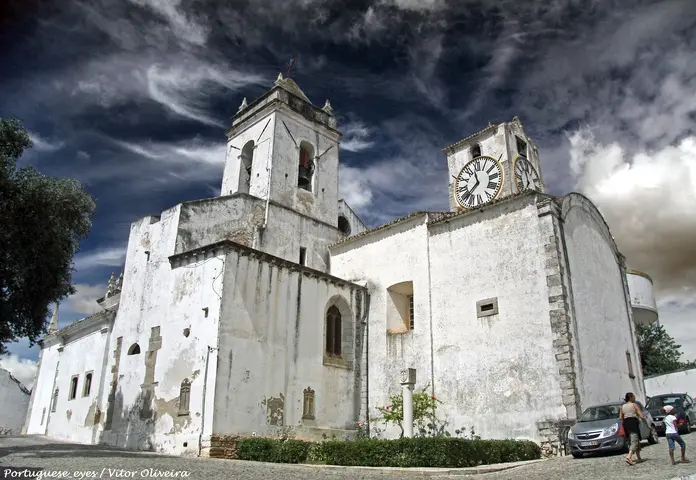
This church has been rebuilt so often that its medieval self survives only in fragments — and finding such fragments is the theme of this walk. The great survivor is the main portal: an ogival Gothic doorway with carved foliate capitals, crowned by a rose window. Both outlasted centuries of alteration and the earthquake of 1755.
Inside, seek out the Capela do Senhor dos Passos, given a ribbed vault in the 1500s when late Gothic met the new Manueline style. The Baroque rebuilding of the 1790s wrapped itself around these Gothic bones rather than erasing them.
- 250 m
Chapter 2
Chapels Open to the Sky
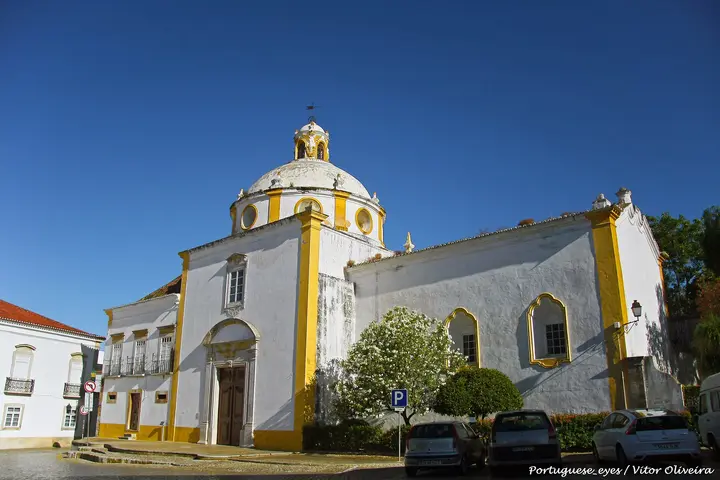
São Francisco is the oldest religious establishment in Tavira, begun in the late 1200s as a Franciscan convent after the Christian conquest of the Algarve. Its medieval form was typical mendicant Gothic: a single nave, simple vaults and burial chapels for noble families.
Little of that survives in the twin-domed church you see today — the nave collapsed in 1843 and the whole plan was rotated ninety degrees. But in the adjacent garden, two medieval Gothic chapels stand open to the sky, rib-vaulted spaces that once held the tombs of leading families.
- 50 m
Chapter 3
A Chapel Hidden in the Hospital
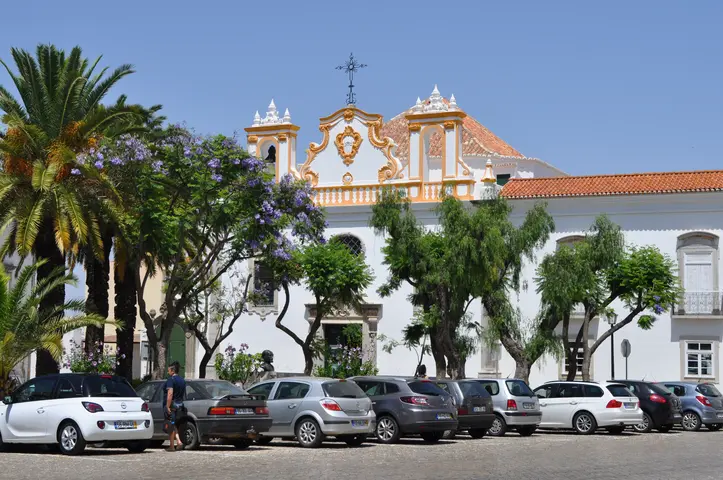
This octagonal Baroque church belonged to Tavira's main hospital, founded as a hostel for the poor in 1425 and enlarged after King Afonso V donated land in 1454. The 1755 earthquake ruined the old chapel, and by 1768 the church had been rebuilt to its unusual eight-sided plan.
Yet inside survives the oldest structure on the site: a funerary chapel of 1541, its Gothic-Manueline ribs and heraldic shields a rare fragment of Tavira's late medieval world, quietly enclosed by the Baroque rebuild.
- 470 m
Chapter 4
The Portal That Outlived Everything
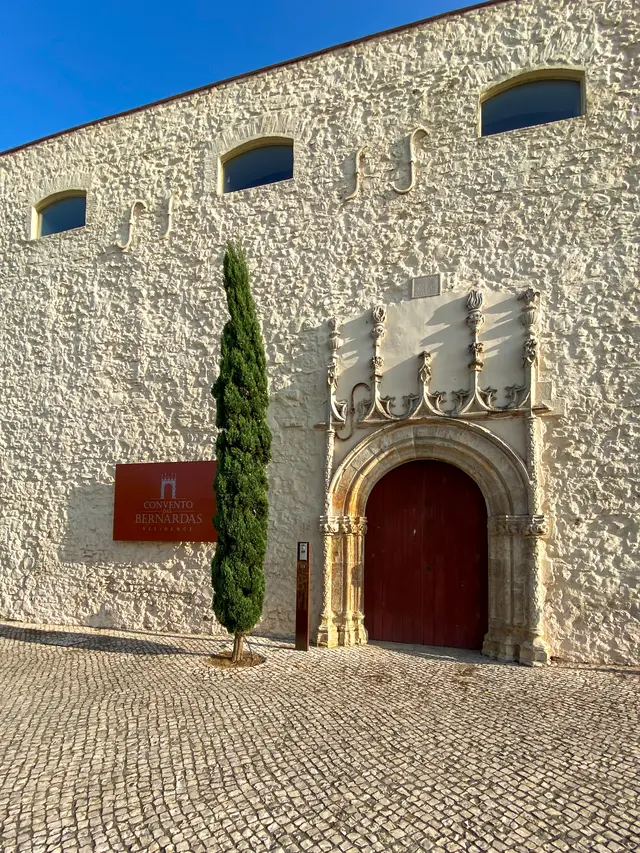
King Manuel I founded this convent in 1509, in gratitude after a victorious siege in Morocco, and Cistercian nuns — the Bernardas — lived here for over three centuries. Its Manueline-Gothic stone portal and double-square cloister spoke the architectural language of the founder's age.
The building endured the 1755 earthquake, the dissolution of religious orders in 1834 and a spell as a steam-powered milling and pasta factory from 1890, before Eduardo Souto de Moura turned it into homes in 2006–2012 — keeping the portal, cloister and arches that carry its Manueline beginnings.