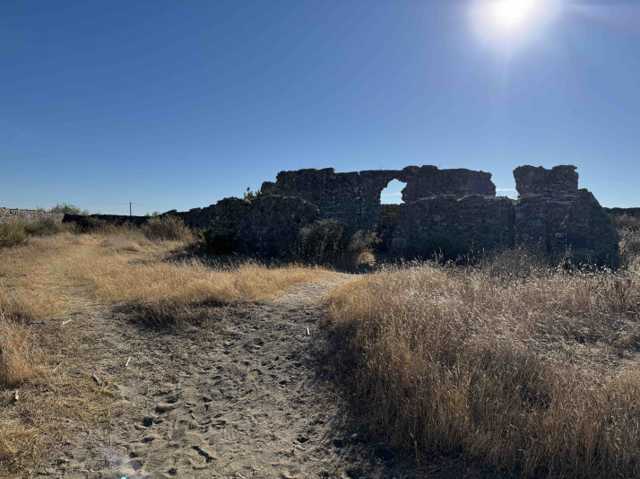
©Flemming Berthelsen (2025)
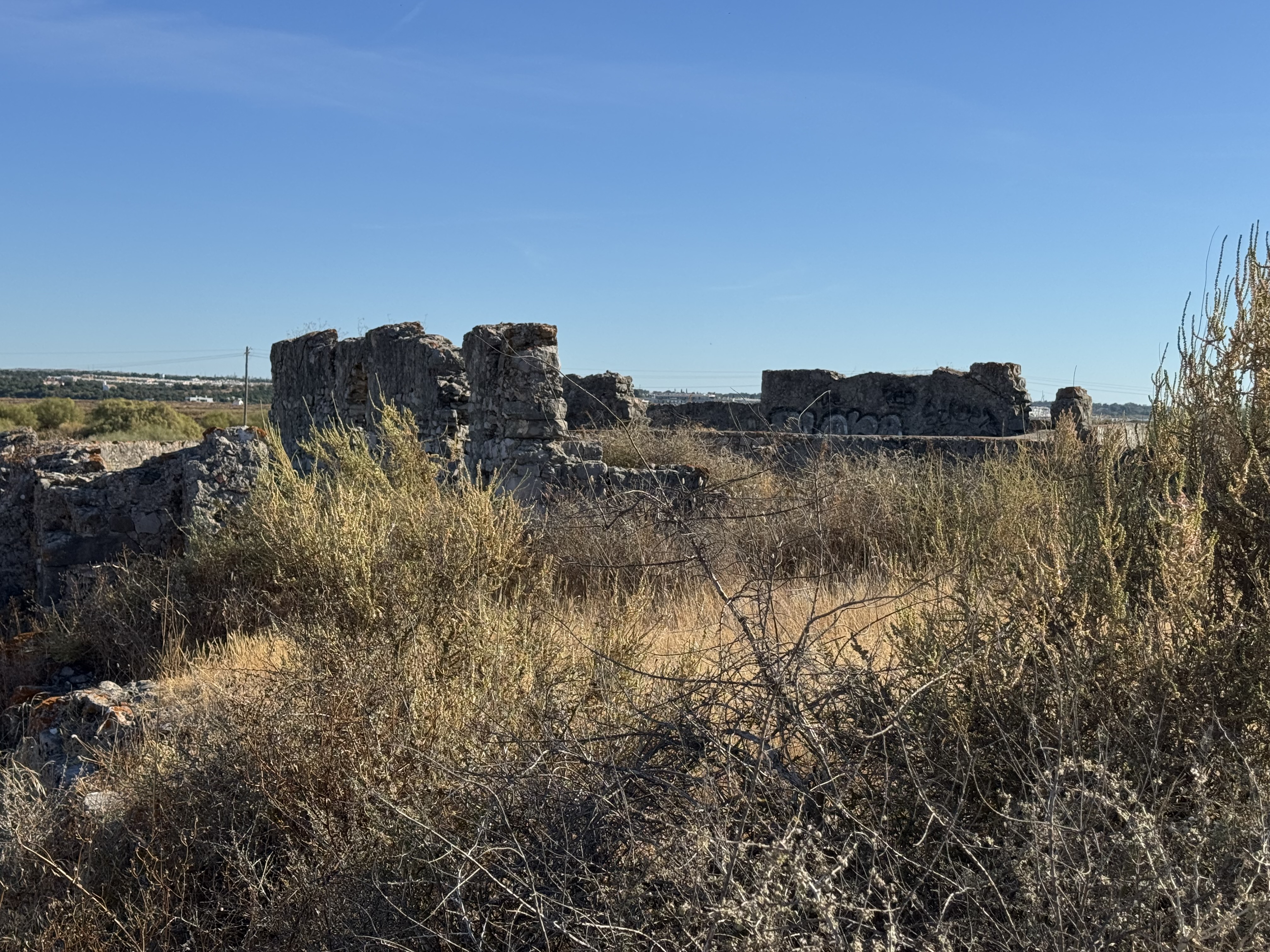
©Flemming Berthelsen (2025)
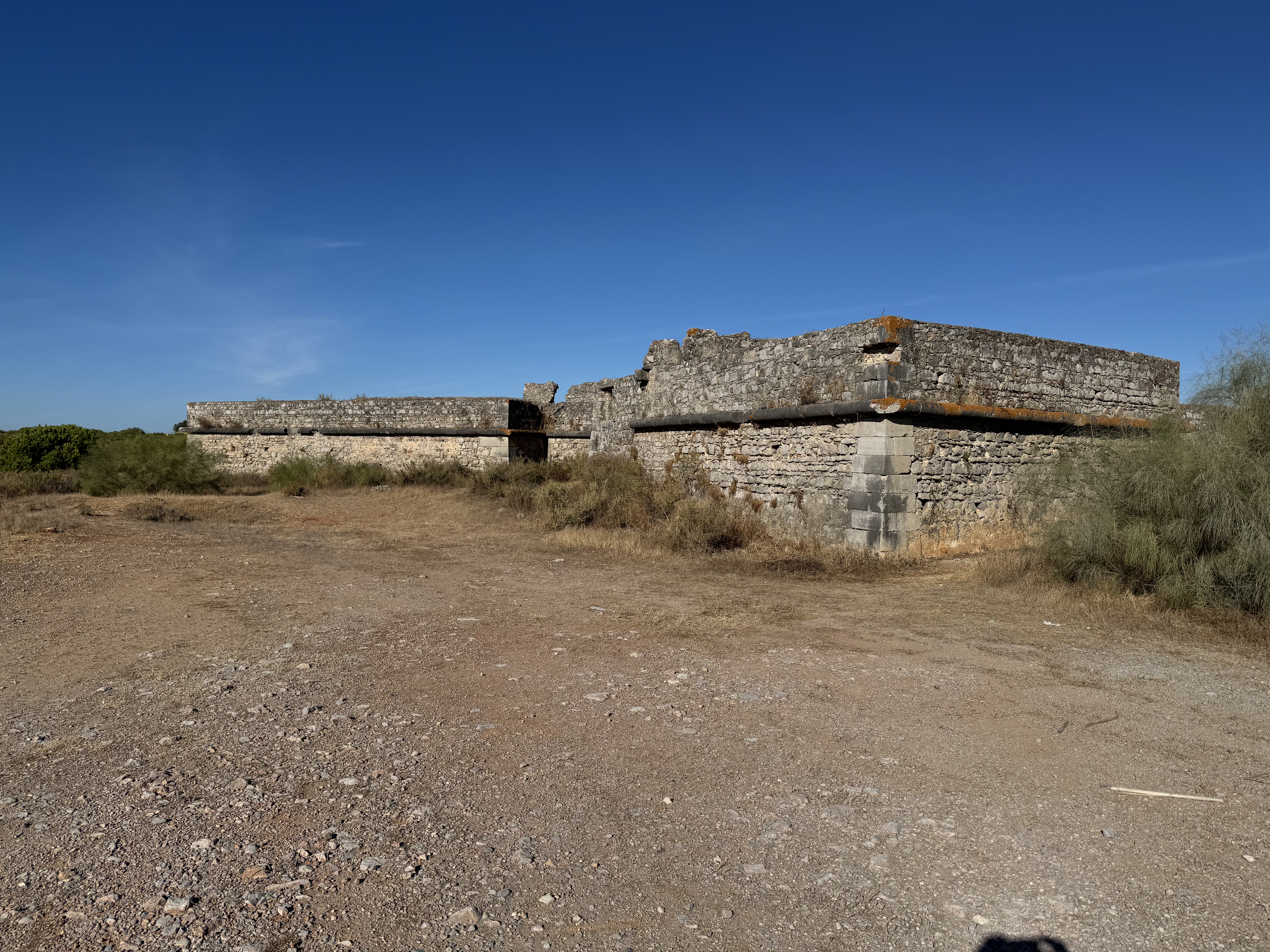
©Flemming Berthelsen (2025)
Forte do Rato / Forte de Santo António de Tavira
Photography SpotsScenic ViewGuided ToursPeaceful SpotMyths & LegendsMaritime History
Introduction
Out in the marsh, two kilometres south-east of the town, lies a ruin that, as far as anyone knows, never fired a shot. Forte do Rato was begun in the 1570s under D. Sebastião to cover the entrance to Tavira's harbour. While it was being built, the bar drifted east, and the fort stood at an entrance the ships no longer used. In 1753 an engineer called it a small fort that is no defence at all, and from 1792 it was only a powder store. Three bastions, a gateway and a masonry bridge across the ditch remain, with salt pans and the Ria Formosa all around. It is worth walking out there precisely because it failed.
Historical highlights
A bar that moved
In 1530 Tavira asked D. João III for four caravels against Algerian pirates and was refused. In the 1570s work began on Ilha das Lebres, an island opposite the new bar, where the Gilão ran out into the sea. When the king visited the town in 1573, D. Duarte sailed down the river to see the site. The project is attributed to an Italian engineer, João Maria Beneditte; the drawing has not survived. The plan was five bastions. The problem was the bar. It drifted east while the building went on, and took the fort's purpose with it.
Massai's verdict
In 1617 the military engineer Alexandre Massai wrote that there was "principiado um forte de cinco baluartes", three towards the sea and two low ones towards the land. In 1621 he recommended pulling it down and using the stone elsewhere. It never came to that, but the two land bastions vanished without trace; hence three bastions today, not five. In 1654 D. João IV had the work resumed, and the fort was given the name Forte de Santo António de Tavira. It did not help. In 1656-72 Forte de São João da Barra was built at Gomeira, where the bar now lay.
No defence
In 1753 the engineer Pedro de Santa Colomba called the place a "Fortim o qual não é defensa nenhuma", a small fort that is no defence at all: the bastions were too low for artillery, and the governor had to pay for a bridge himself so that the fort could be reached on foot at low tide. In 1792 there were nine men and two cannon, one of them without equipment; the fort was only a powder store. In 1821 the artillery was gone and the gate half destroyed.
Rye, cattle and fig trees
When the fort was abandoned, the sources disagree: 1830, 1840 or as early as 1825-26. Then comes the part I like best. In 1863 the land around it was under cultivation and gave good rye. In 1875 the ashlar, paving and tiles had been stolen, and the roots of the fig trees were eating the rest. From 1882 to 1938 the place was let for grazing, for a time for the cattle of the poor. In 1981 the state consolidated the walls and felled the fig trees; listed in 1983. Since 2016 the fort has been on the Revive list for leasing, still "in preparation".
Practical
Drive or walk from the roundabout at the end of Rua Almirante Cândido dos Reis; the last stretch is a dirt track. The fort is state-owned and stands empty in the Parque Natural da Ria Formosa. Look for the gateway in rusticated ashlar, the masonry bridge across the ditch, the central bastion with its raised battery and the well that Massai mentioned in 1617. The salt pans next to it are officially called "Salinas perto do Forte do Rato".
Timeline and context
Timeline
- 1530 Tavira asks the king for four caravels against pirates and is refused.
- 1570s Building begins on Ilha das Lebres under D. Sebastião.
- 1573 D. Duarte sails down the river to see the building site.
- 1617 Massai: five bastions begun, the bar moved east.
- 1621 Massai proposes demolition; the two land bastions disappear.
- 1654 D. João IV resumes the work; the name Forte de Santo António de Tavira.
- 1656-72 Forte de São João da Barra is built at Gomeira.
- 1753 Santa Colomba: no defence, the bastions cannot carry artillery.
- 1792 Nine men, two cannon, only a powder store.
- 1825-40 Abandoned; the sources mention 1825-26, 1830 and 1840.
- 1863-1938 Rye field, stone theft, fig trees, grazing.
- 1981-83 The state consolidates the walls; listed as Imóvel de Interesse Público.
- 2016 On the Revive list; still in preparation.
Why it stands where it stands
The fort stands where the bar lay in the 1570s. If you wanted to cover the entrance to Tavira's harbour, Ilha das Lebres was the right place. But the bars of the Ria Formosa do not stay still. As early as 1617 Massai wrote that the bar had moved east, and by 1717 it lay off Gomeira, where São João da Barra had been built. The sand has since joined the island to the mainland, so today you walk out there across the marsh. The site was not badly chosen. The coast simply moved faster than anyone could build.
What is left
Three bastions facing south-east, the middle one the largest with a raised battery; a land front facing north-west with a gateway in rusticated ashlar and a masonry bridge across a half-filled ditch; remains of the powder magazine, guardhouse, barracks and governor's house; the well from Massai's time. All of it is ruin, and that is no accident. No fighting is recorded, and what the neighbours did not carry off in the 1800s, the fig trees took. The state consolidated it in 1981 and has been looking for a tenant through Revive since 2016. Until then you share it with the salt pans and the birds.