Tavira
Arraial Ferreira Neto
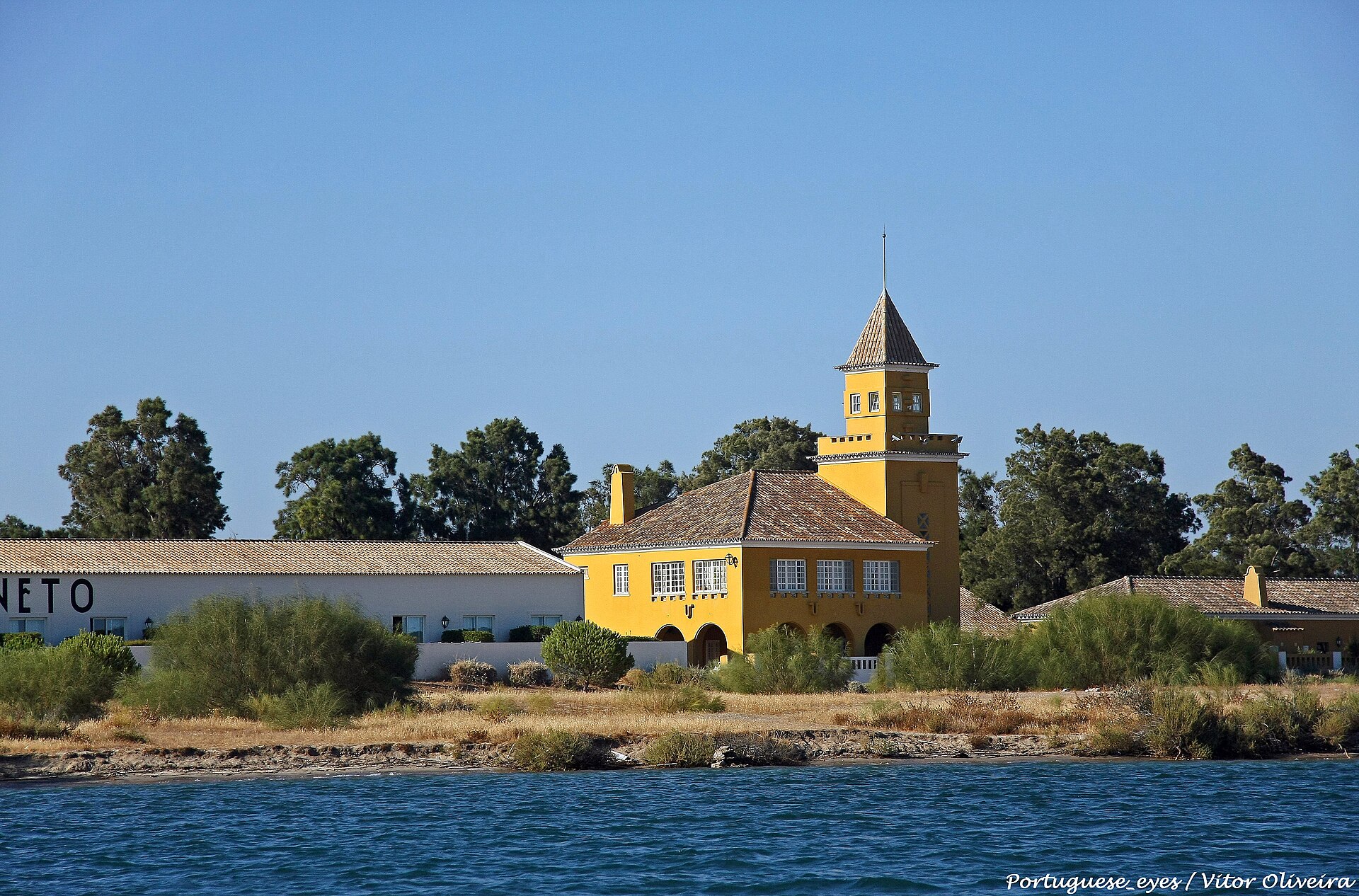
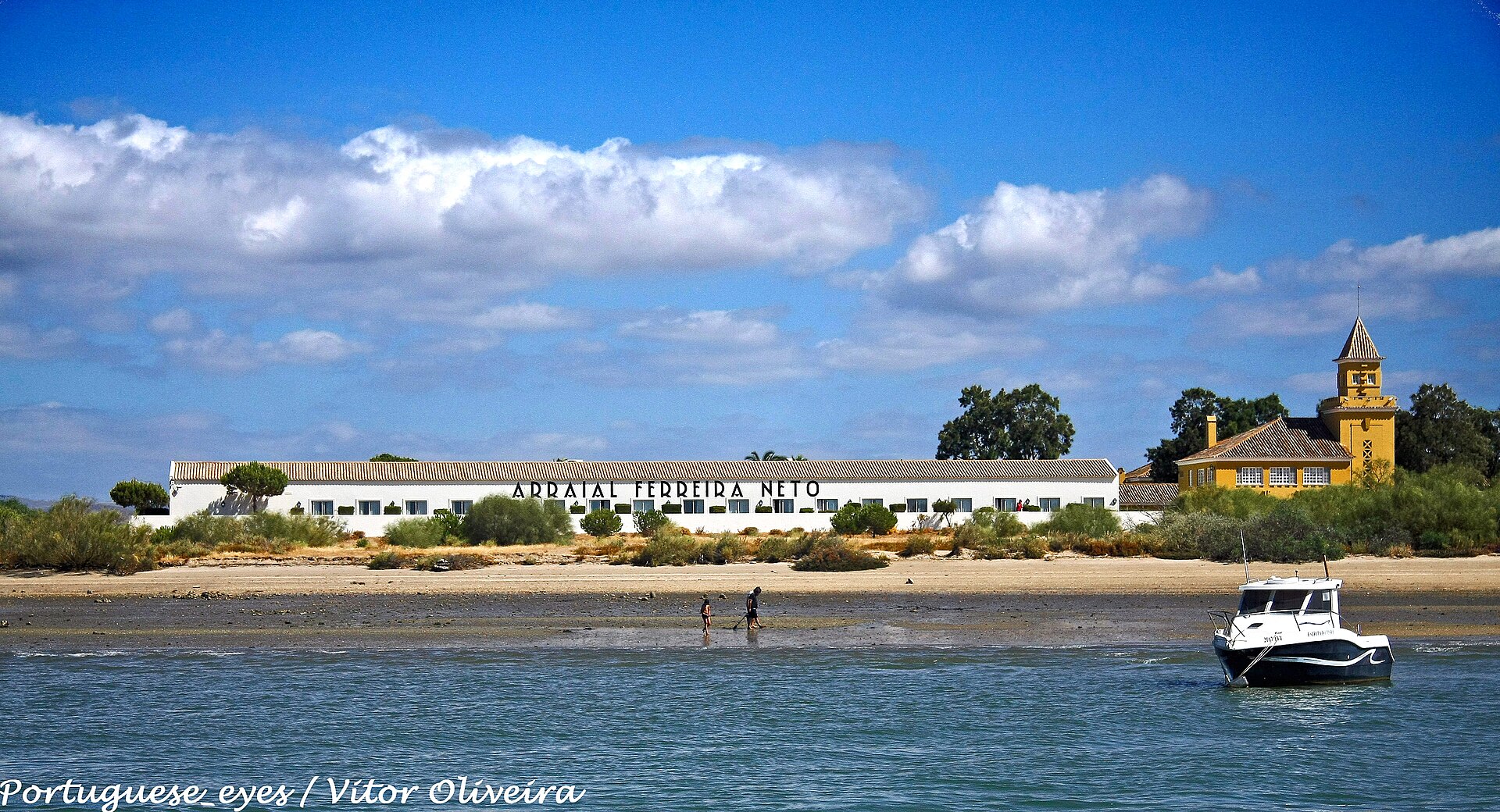
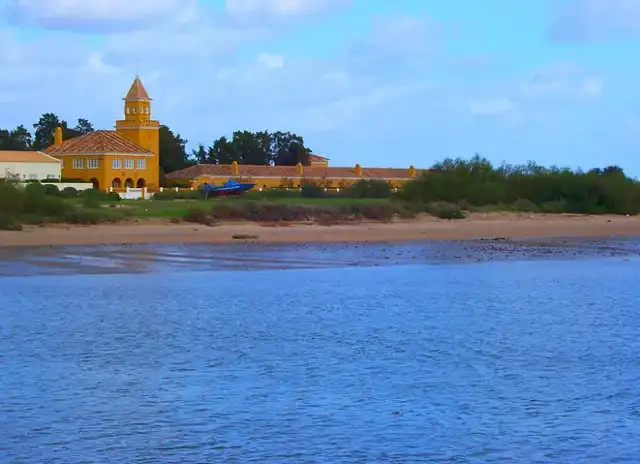
Tuna fishermen's camp from 1945 behind a wall at Quatro Águas; today a hotel with a tuna museum.
Periods
Tags
Opening hours
Limited access There are no regular opening hours. The site opens only for services, exhibitions or events – ask locally before counting on getting in.
Website
https://www.vilagale.com/Introduction
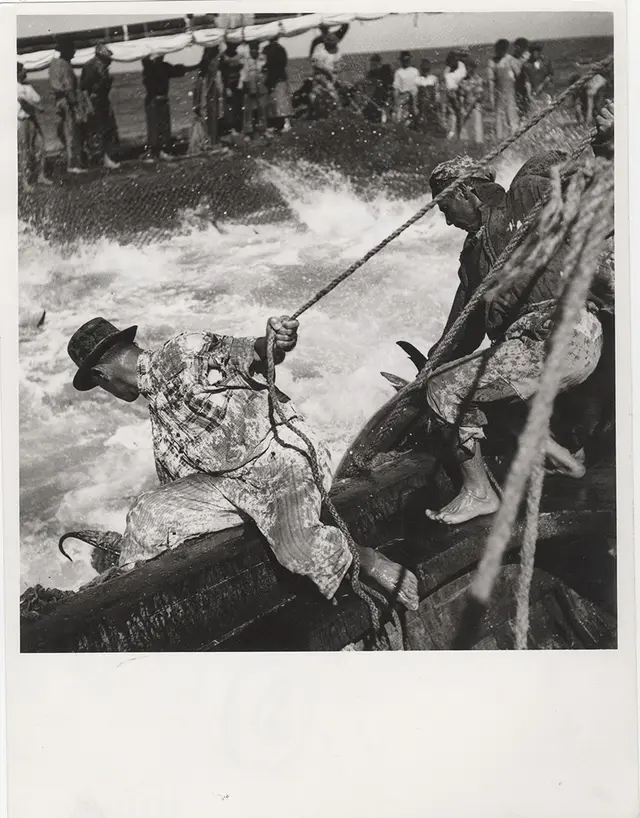
The walled village out at Quatro Águas is a hotel, and before that it was a tuna fishermen's camp. Companhia de Pescarias do Algarve built it in 1943-45, after the sea had eaten the company's old camp on Ilha de Tavira, and inaugurated it on 15 April 1945. Inside the wall there were houses for around 150 families, a school, a bakery, a chapel and a medical post, in use only from spring to late summer, when the tuna passed by. In 1971 the last armação went out from the quay, in 1972 the camp closed, and since 2000 it has been Hotel Vila Galé Albacora. The museum in the old bakery is free, and it is the reason to drive out here.
Historical highlights
A camp the sea took
Companhia de Pescarias do Algarve was founded in 1835 and ran the armação Medo das Cascas, a fixed net installation off Forte do Rato. The fishermen lived on Ilha de Tavira. After the artificial bar of 1926 the sea began to eat away at the island. Marco Lopes has read the company's minute books: houses were destroyed in March 1936, in April 1941 the camp was "condenado a desaparecer", and a storm in June 1942 took the rest. The company leased a plot in Sapal do Rato and asked the engineer José Sena Lino to design a new camp on solid ground. The name is Comendador Ferreira Neto's, the company's head until his death in 1935.
A town for one season
Building began in May 1943, and on Sunday 15 April 1945 the camp was inaugurated with Secretary of State Castro Fernandes, while the parish priest António do Nascimento Patrício blessed camp and nets. The school came in 1947, the chapel in 1949. The site is 37,500 square metres, fully walled with two gates. The tower building divides it into one half with warehouses and workshops and a residential part with two squares and five streets. Urbano Rodrigues called it in Diário de Notícias "o acampamento da tribo que vai arrancar aquela riqueza ao mar", the camp of the tribe that will wrest that wealth from the sea.
One tuna a year, then a hotel
Every spring the parish priest blessed the nets with salt and water, and the Carmelites in Tavira and Faro received the sale value of the first tuna; Marco Lopes has the ritual from the company's papers. Catches fell from 1961. In 1970 and 1971 one tuna was taken a year, and in 1972 the company closed. From 1975 to 1994 the municipality let the houses to returnees from the colonies. Vila Galé bought the complex in 1997, and the hotel opened after the conversion of 1999-2000, according to Faísca in 2001. The listing came only in 2002, after the conversion. SIPA's verdict is sober: the volumes are preserved, the interior of the dwellings is totally changed.
Practical
The museum, Núcleo Museológico da Pesca do Atum, is in the old bakery and is free: a model of an almadrava, photos and documents from the company and Hélder Mendes' RTP documentary "Almadrava" from 1968. Look for the azulejo panel with São Gonçalo de Lagos in the chapel, the inscription ESCOLA on the old school, now a children's club, and the tower on the administration building that divides the camp in two. Forte do Rato is close by, out in the dunes.
Timeline and context
Timeline
- 1835 Companhia de Pescarias do Algarve is founded; it runs the armação Medo das Cascas off Forte do Rato.
- 1892-1935 Comendador Ferreira Neto heads the company; the camp is later given his name.
- 1926 The artificial bar is opened; the sea begins to eat away at the camp on Ilha de Tavira.
- 1936-42 Houses are destroyed and the camp is abandoned (SIPA dates the destruction to February 1941).
- 1942-43 José Sena Lino designs the new camp; building starts in May 1943.
- 15 April 1945 Inauguration with Secretary of State Castro Fernandes and blessing of camp and nets.
- 1947-49 School and chapel are built; the complex is complete.
- 1961 Catches begin to fall.
- 1970-71 One tuna a year; last armação from the quay in 1971.
- 1972 The camp closes.
- 1975-94 The municipality lets the complex to returnees from the colonies.
- 1987 Ria Formosa becomes a nature park.
- 1997-2000 Vila Galé buys the complex and converts it into a hotel.
- 2002 Listed as Imóvel de Interesse Público.
Why the camp is here
The nets lay off Forte do Rato, and the fishermen had to live close to them in the months when the tuna passed by. As long as the island held, they lived out there. When the sea began to eat the island after the bar of 1926, the dunes at Quatro Águas were the nearest solid ground; the company leased the plot from Direcção Hidráulica do Guadiana in 1941. The address is dictated by the distance to the nets, not by the view.
What is left
The walls, the gates, the tower, the streets and the squares, the chapel with its azulejo panel and the school with its inscription. Inside, the dwellings have been converted into 161 hotel rooms, and SIPA calls the change to the interior total. So the place has to be read from outside, as a plan: the industrial part, the residential part and the tower building that separates them. DGPC calls it a village in rustic Portuguese style, Estado Novo rationalism in "materiais portugueses". What went on behind the walls in 26 seasons lies in the company's archive, given to the municipality in 2000: 8 boxes, 27 books and 55 notebooks.