Tavira
Tavirense, the old canning factory
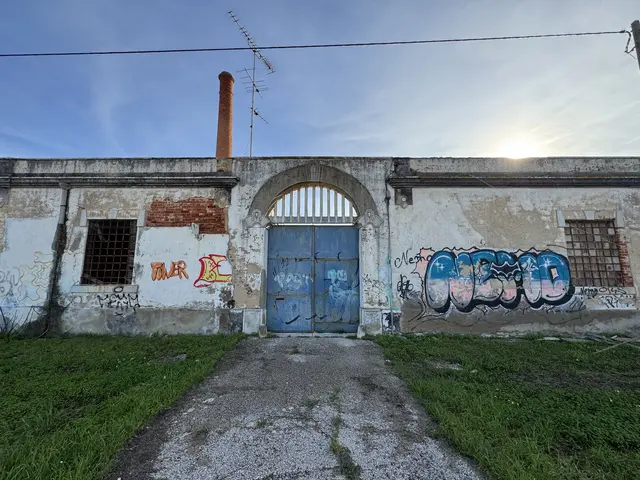
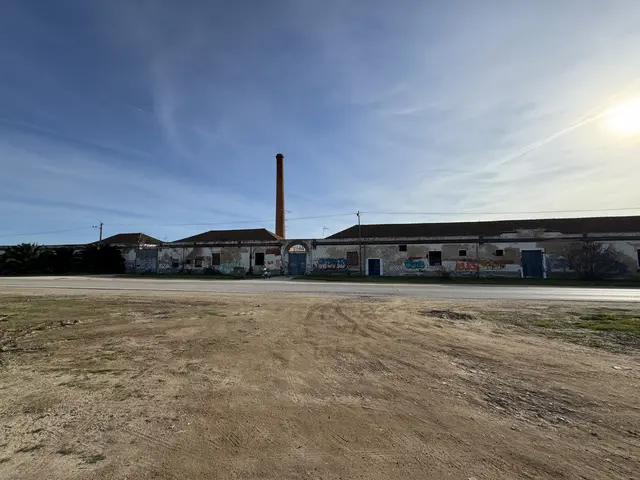
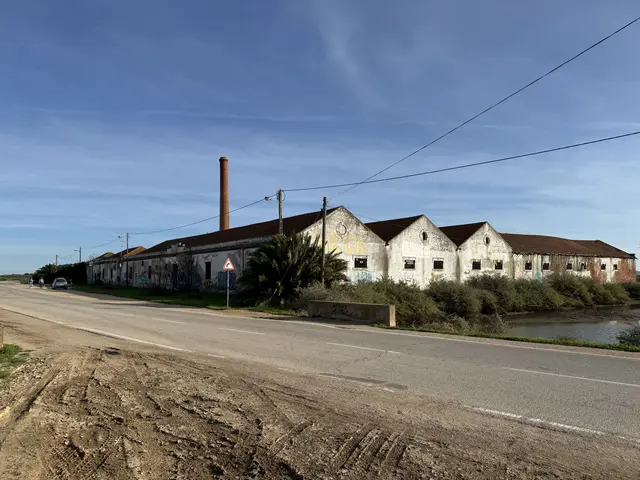
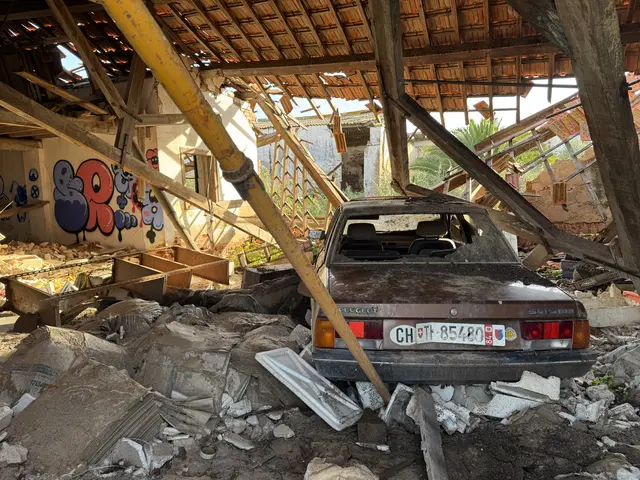
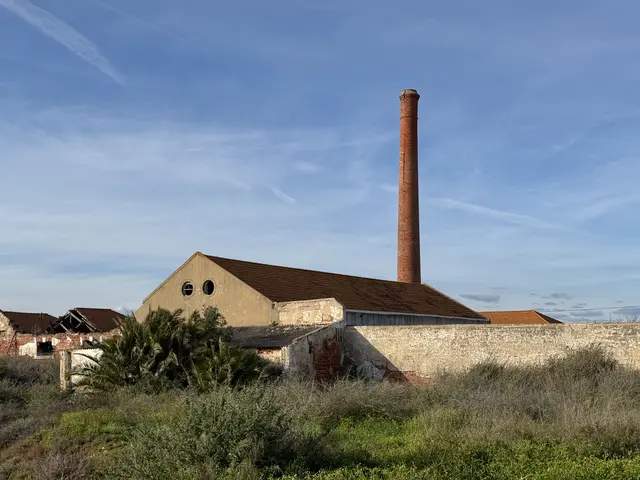
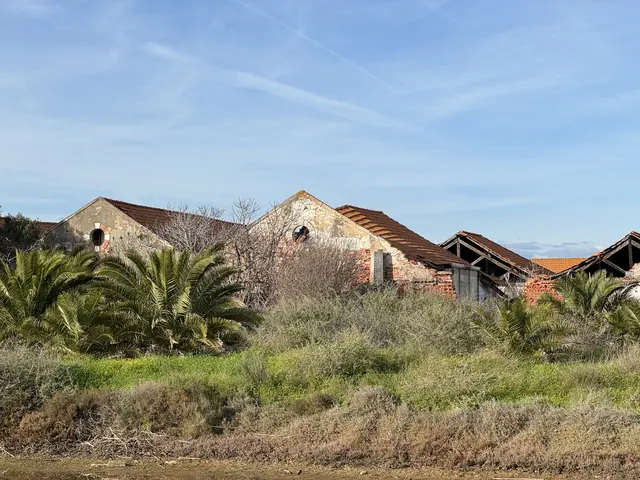
Cannery from 1917 at Quatro Águas, today a ruin with a chimney inside the nature park.
Periods
Tags
Opening hours
Exterior only The building is not open to the public – the site is experienced from the outside.
Introduction
From the road to Quatro Águas you see a tall chimney above a ruin, on the right bank of the Gilão a kilometre from town, inside the nature park. It is the Companhia de Conservas de Peixe "A Tavirense", one of the two large canning factories the First World War gave Tavira. The shareholders met at the end of 1915, the factory started up in June 1917, a month after Balsense on the opposite bank, and in 1923 the owners asked for permission to put the town's coat of arms on the tuna tins. When it closed, no source says. The land is still owned by a company bearing the factory's name, and since 2021 it has been working to turn the ruin into a hotel.
Historical highlights
The tuna went to Vila Real
The canning industry was on Tavira's wish list long before the factory was built. Dr. António Padinha mentioned it as early as 1911, and in August 1915 Colonel José Vicente Cansado, director of the future Balsense, complained that the tuna from Tavira's armações went to the auction in Vila Real de Santo António. The fish was here, the work was somewhere else. In November A Tavirense called its shareholders together to found the company and buy land. The war drove it. According to Carlos Faísca, the Algarve had 184 canning factories with more than 14,500 employees in 1917; tinned fish had become necessary food at the front.
June 1917
In 1916 and 1917 two large factories grew up with only the river between them, Balsense on the left bank and Tavirense on the right. Balsense was inaugurated on 9 May 1917 with Tavirense's management among the guests; Tavirense itself only got going in mid-June, because some suppliers had not honoured their contracts. Tavira then had four canning factories, and Província do Algarve wrote that this "within a few years will bring great progress to this town". The sentence is quoted by Marco Lopes in the museum's catalogue Tavira, Patrimónios do Mar.
The town's arms on the lid
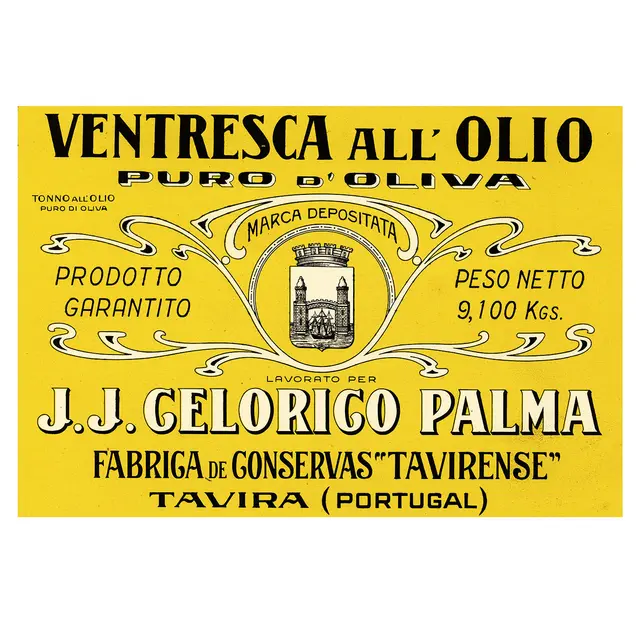
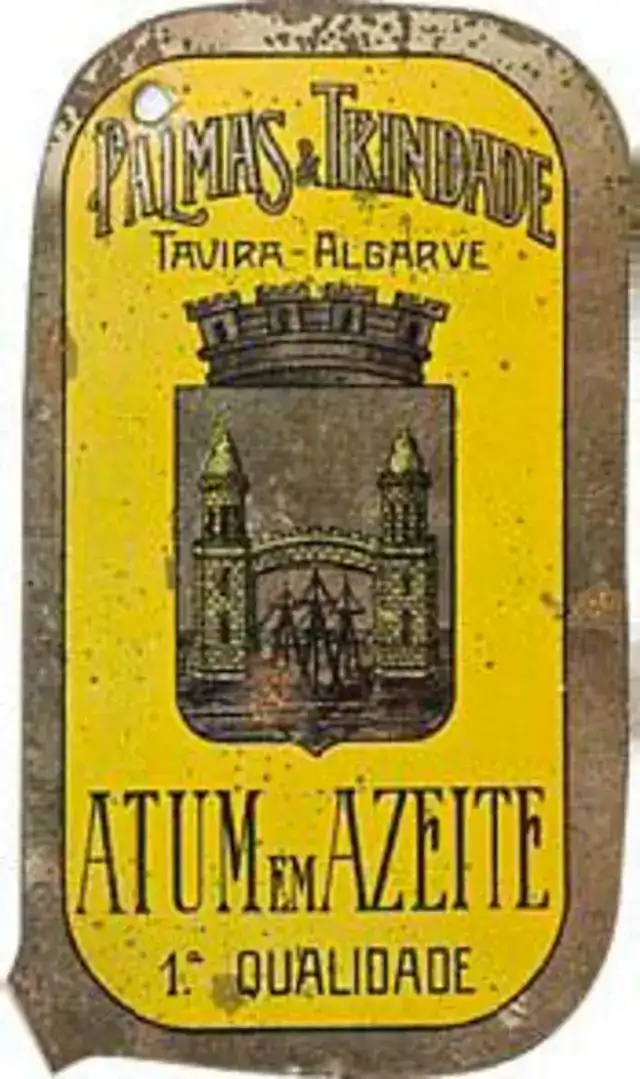
On 21 July 1923 Joaquim Barrote Trindade, partner in the firm Palmas e Trindade, which now owned the factory, wrote to the mayor asking for permission to use the town's coat of arms on some of his brands. Enclosed was a proof print of the lid for "Atum em Azeite, 1ª Qualidade", tuna in olive oil. It shows the old town arms with a single-arched bridge, two towers and a sailing ship; ten years later the arms got their present form with seven arches. The letter is in the Arquivo Municipal de Tavira, and the lid is the only product from the factory the sources show.
Closed, nobody knows when
The tuna disappeared. Catches fell through the first half of the 1900s, the armações closed, and the factories followed, writes Jorge Queiroz. Carlos Faísca mentions that the neighbour Balsense closed in 1971 with a state subsidy. Tavirense's closing year is not given in any of the sources read. The land is owned by Tavipesca, a company bearing the factory's name, which since 2021 has applied to convert the ruin into a hotel with 45 rooms. The environmental approval came in 2022, the execution project in October 2024 with a requirement to secure the chimney. Whether building work has begun is not clear.
Practical
The ruin lies south of Estrada das Quatro Águas, 800 metres before the quay, on private land inside the nature park. See it from the road or from the water, and do not go in. The chimney is what you look for; on the other bank stood Balsense. The tin lid from 1923 and a photo of the factory are reproduced in the museum's catalogue Tavira, Patrimónios do Mar, which is freely available online.
Timeline and context
Timeline
- Nov. 1911 Dr. António Padinha mentions the canning industry among the town's priorities.
- Aug. 1915 Balsense's director complains that Tavira's tuna goes to Vila Real de Santo António.
- Nov. 1915 A Tavirense calls its shareholders together to found the company and buy land.
- 1916-17 Tavirense and Balsense are built on opposite banks of the Gilão.
- June 1917 Tavirense starts work, a month after Balsense.
- 1917 The Algarve has 184 canning factories with more than 14,500 employees (Carlos Faísca).
- 1923 Palmas e Trindade asks for permission to put the town's arms on the tuna tins.
- 1936 A memorial tribute to Padinha mentions A Tavirense among his initiatives.
- 1971 Balsense closes with a state subsidy; Tavirense's closing year has not been found.
- 2021 Tavipesca applies for a hotel on the site.
- 2022 Environmental approval with 14 conditions; at most 90 beds.
- Oct. 2024 The execution project is approved; the chimney must be stabilised.
Why the factory is here
Tavira had the tuna but not the factories. The fish from the town's armações was sent to Vila Real de Santo António, and that was what Tavirense and Balsense were meant to change. They were placed down the river towards the lagoon, a kilometre from the town centre, each on its own bank. The catalogue from 2008 says the two factories changed the look of the town. You can still see that from the road. The land has been private property since before 1865, a court ruling established in 2022.
What remains, and what we do not know
The buildings are ruins, and the chimney is the only thing the papers mention by name. Jorge Queiroz in 2008 mentions both factories as visible traces of the fishing industry of the 1900s. No heritage listing has been found. The hotel project promises to reuse the buildings without extending them and to tell the story of the canning industry on site. The gaps are large: how many people worked here, when the last of them went home, and who "Fábrica de Conservas Leandro 1906" was, a name that appears in the project papers without explanation. Less is known about the factory than its size suggests.