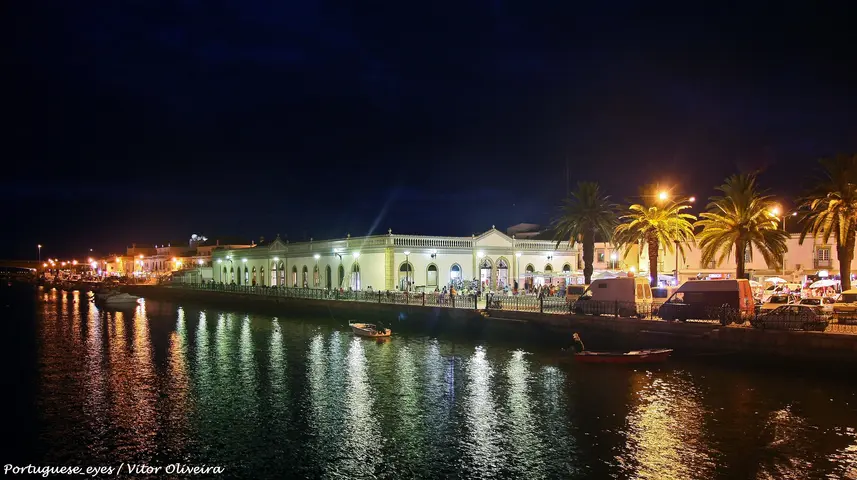
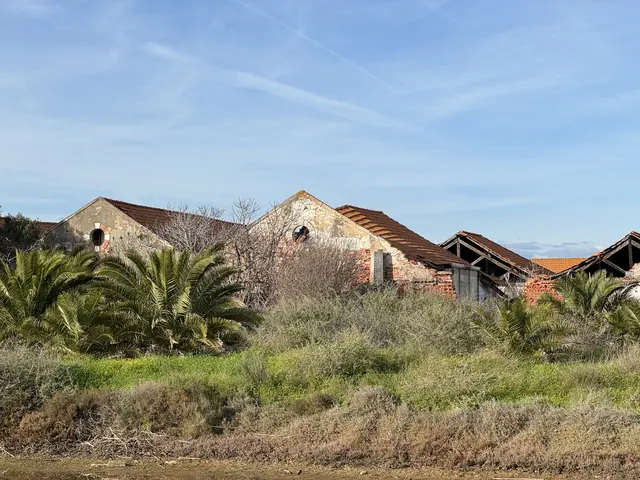
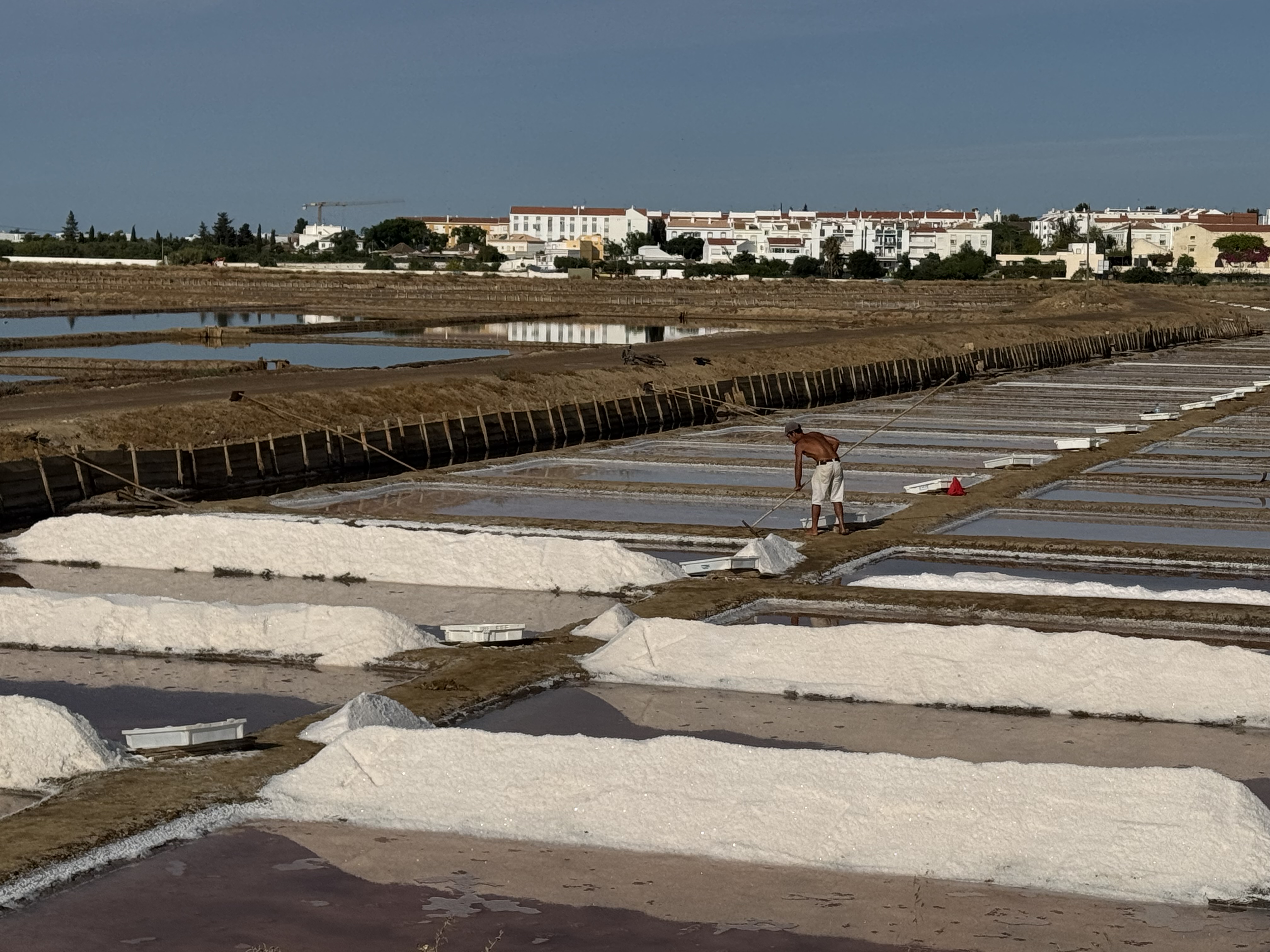
Southeast along the Gilão river: from the old fish market past the cannery and salt pans to the ferry terminal at Quatro Águas.
Chapter 1
Gateway to the Working River
Tavira's working river begins here. When the Mercado da Ribeira opened in 1887, it gave the daily fish trade a proper home: an iron hall with neoclassical details, designed by António da Silva Meira and raised on masonry after the flood of 1876 had shown what the Gilão could do.
For 112 years the catch landed, was sold and carried off through these halls, until trade moved to a new municipal market in 1999. Restored in 2000 as a cultural venue, the old market is now the gateway to the river that fed it — cannery, salt pans, sea.
- 840 m
Chapter 2
The Cannery and the Conserveiras
Tavirense opened in June 1917, in the middle of World War I, when demand for canned fish was booming. Where Tavira had lived by the seasonal tuna catch, the cannery offered year-round work — above all to women, the conserveiras, who cleaned, boiled and packed tuna and sardines on its lines.
From 1923 the tins carried Tavira's coat of arms. The factory modernized through the mid-20th century but closed in the early 1970s as tuna stocks declined. Its brick chimney and outer walls survive, now being preserved within a new hotel project.
- 340 m
Chapter 3
White Gold by the Lagoon
The salt pans are Tavira's oldest industry. Phoenicians harvested sea salt here from the 8th century BCE; the Romans gave the salinas their grid pattern, supplying the fish-processing works of nearby Balsa and the makings of garum. A charter of 1266 reserved every pan for the Crown.
In 1532 King João III ordered 28 new salinas built, and Tavira's "white gold" preserved cod and herring across Europe. Industrial salt and refrigeration nearly ended the craft, but a handful of pans survived — today they produce prized artisanal salt and shelter flamingos.
- 830 m
Destination
Quatro Águas
Estrada das 4 Águas, 8800-602 Tavira, Portugal